PARIS · EST. 2013
Plan a Paris proposal: where you ask, dine, and stay
Planning a Paris proposal? Start with Eiffel Tower or not, public or private. Then plan dinner, budget, transport, and your first night engaged.
As Seen In





Chapters
You are planning to propose in Paris. Before you choose a venue, decide what matters most: Eiffel Tower view or not, public or private, who should be involved, what you want to spend, and what should happen after she says yes.
There is no single best Paris proposal. The right plan depends on her, your priorities, your date, and your budget. This guide walks through those decisions in the order we use with our clients, from the proposal setting and cover story to dinner, transport, and your first night engaged. It also points you to the detailed pages when you want the details.
If you have ten minutes, read it from top to bottom. If you already know what you need, use the jump links on the right side of the page. If your date is close or you want a quick answer, WhatsApp an expert now.
Eiffel Tower or not, public or private?
Do you want the Eiffel Tower as the backdrop when you ask, or a Paris setting without it? Then decide how much privacy you want: a public place, accessible to everyone else, or a private setting where you decide who has access to the proposal area.
Budget is usually the right place to start. It determines whether a private terrace, hotel suite, yacht, salon, museum, or château makes sense, or whether a beautiful public location is the better use of your money. Then come your date, headcount, and the amount of room the plan needs.
Headcount includes everyone who needs access: the two of you, guests, photographer, filmmaker, musicians, planner, and other vendors. Space is a separate issue. Florals and musicians need somewhere to go, service paths need to stay clear, and the photographer and filmmaker need enough distance to step back rather than photograph you from a few feet away.
| Eiffel Tower view | Paris or France without the Eiffel Tower | |
| Public | Trocadéro · Bir-Hakeim · Champ de Mars · Seine riverbanks | Tuileries · Luxembourg Gardens · Louvre · Montmartre |
| Private, by time slot | Secret Table · private rooftop or terrace | Palace salon · art-gallery takeover · museum |
| Private, overnight | Shangri-La · Peninsula Rooftop Garden Suite · Four Seasons George V · Bulgari · Marignan | Le Bristol, Ritz, or Saint James suite · château |
| Private, on the Seine | Proposal with the Tower behind you | Proposal elsewhere on the river, with the Tower appearing later |
Eiffel Tower view or a Paris proposal without it?
Few landmarks identify a city as quickly as the Eiffel Tower. In a photograph or film, it says Paris immediately.
For some gentlemen, that settles the question. They want the Tower behind them when they ask, and anything else would feel like a compromise. For others, Paris matters more than having the Tower in the proposal itself. They still want to be able to say years later, “We got engaged in Paris,” with all the cachet, history, and romance associated with the city, but they would rather ask somewhere less expected.
An Eiffel Tower proposal can be completely private. It can also happen in full public view at Trocadéro. A non-Eiffel Tower proposal can be equally private or take place in a busy public garden. The real decision is where you want the Eiffel Tower to appear: during the proposal, later in the photographs, at dinner, from your hotel terrace, or simply as part of the wider Paris trip.
Is an Eiffel Tower proposal cliché?
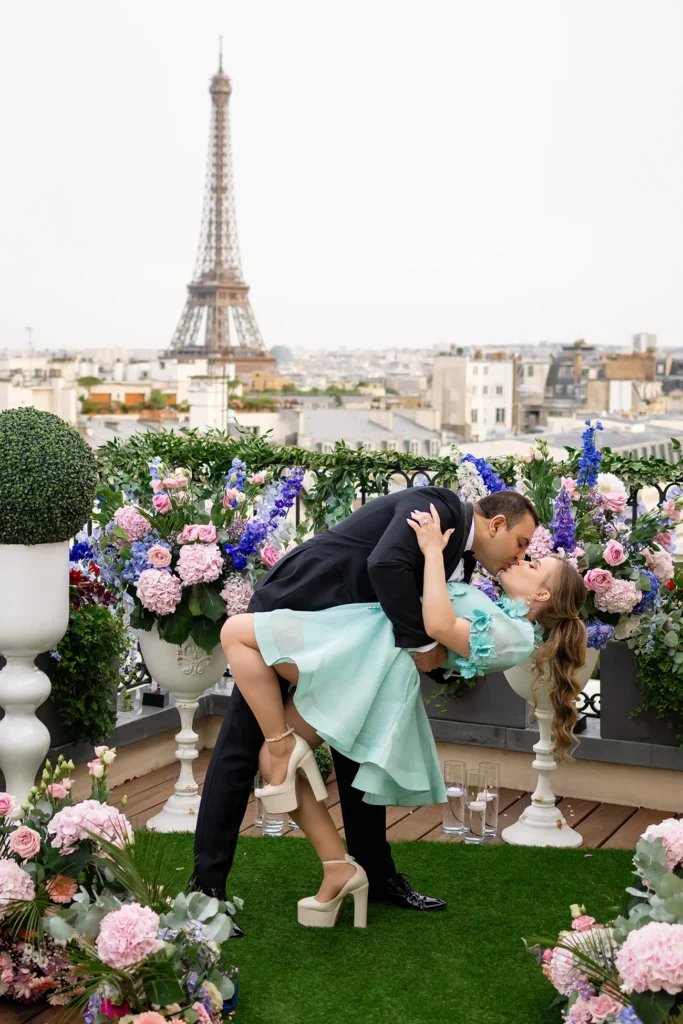
Sometimes. That does not make it a bad idea. There is a reason the Eiffel Tower appears in so many proposals. A diamond catching the Tower’s sparkle while the two of you kiss beside the Seine is romantic. Paris and the Eiffel Tower did not become symbols of romance by accident.
The problem begins when the setting is expected to replace thought and effort. During peak season, it is not unusual to see near-identical illuminated MARRY ME letters, red carpets, floral hearts, and musicians along the same stretch of the Seine. If your proposal is simply another version of the setup beside it, with nothing that speaks specifically to your partner, it can feel formulaic.
So use the Eiffel Tower confidently if that is what she would love. Then take one step further. Think about her expectations, her tastes, what she will recognize as effort, and how the two of you will want to remember getting engaged years from now.
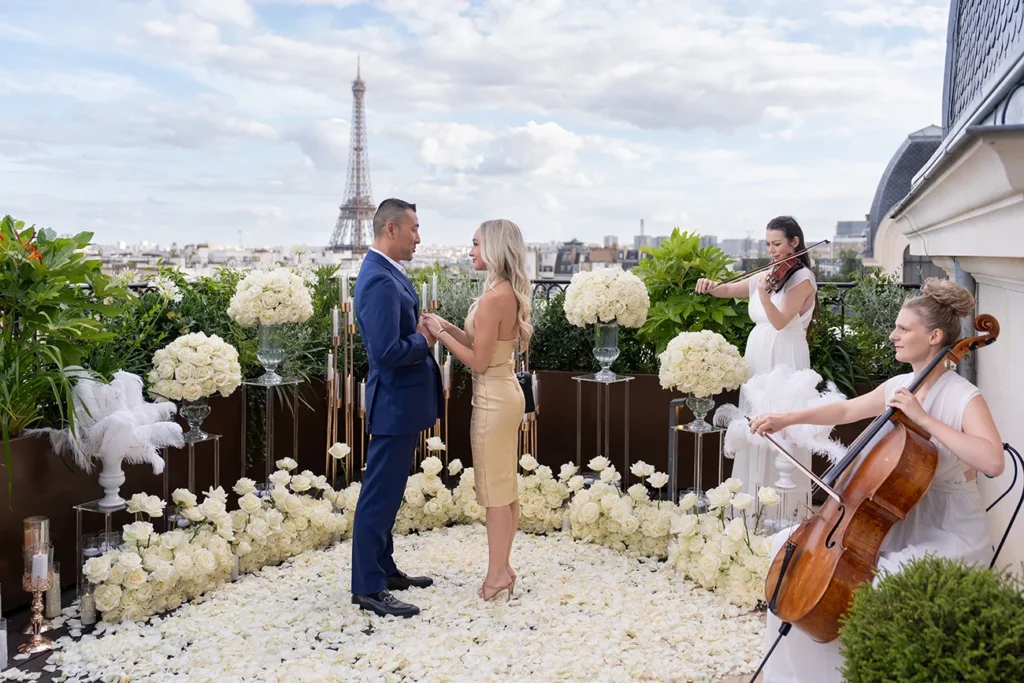
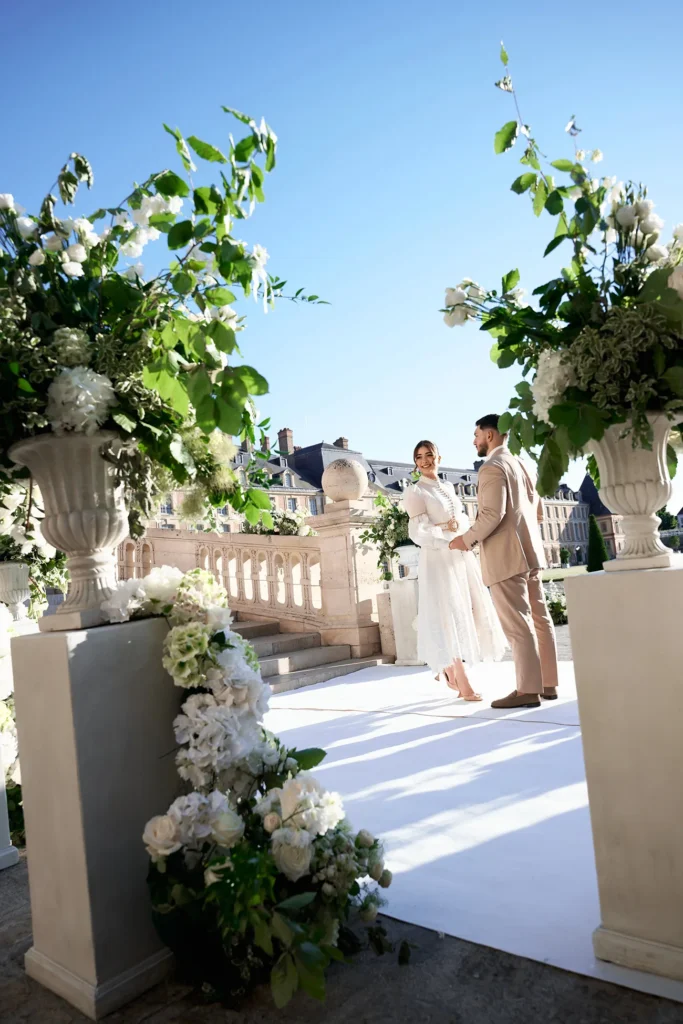
We are also seeing more gentlemen who consider the Tower too familiar for the proposal itself but still want it in the photographs. There is a simple answer: propose somewhere else in Paris, or at a French château, then photograph at the Eiffel Tower later that evening or the following morning. The proposal and the photographs do not have to do the same job.
And when you are undecided, come back to her. A gentleman may tell us photography or film does not matter much to him. It may matter enormously to his fiancée, to her parents who were not there, or eighteen months later when she wants part of the proposal film at their wedding.
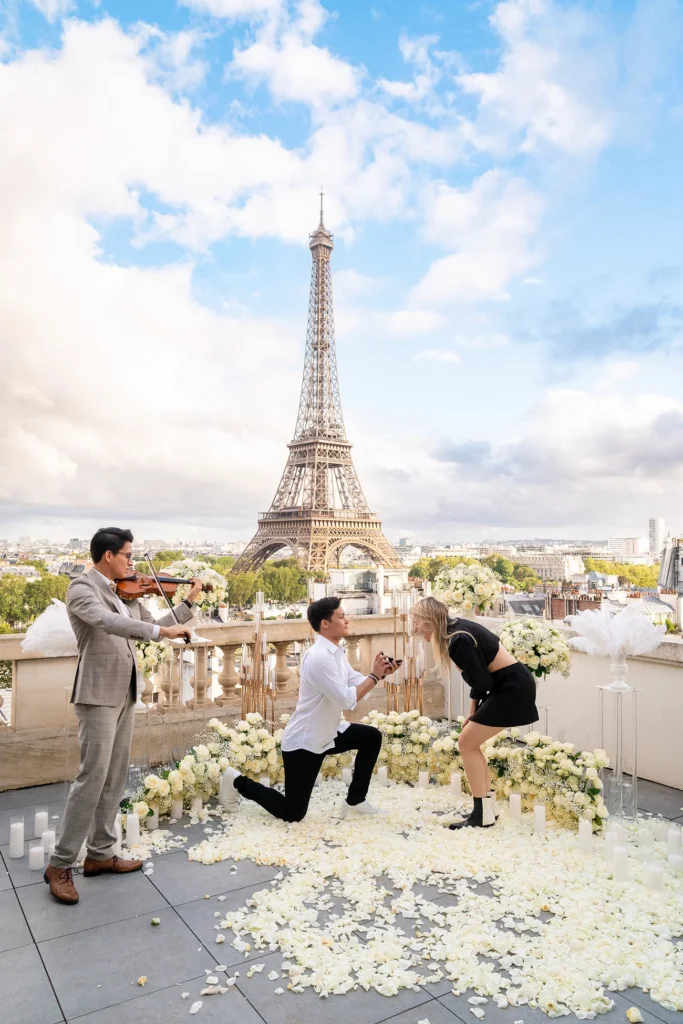
How to propose in Paris without the Eiffel Tower
Inside Paris, you might choose a Palace salon at Le Bristol, the Ritz, or Saint James; take over a private art gallery; use a museum or period ballroom; or propose in a public setting such as the Tuileries, Luxembourg Gardens, the Louvre, or Montmartre. These places still say Paris. They do it through the architecture, art, gardens, history, or address rather than one landmark.
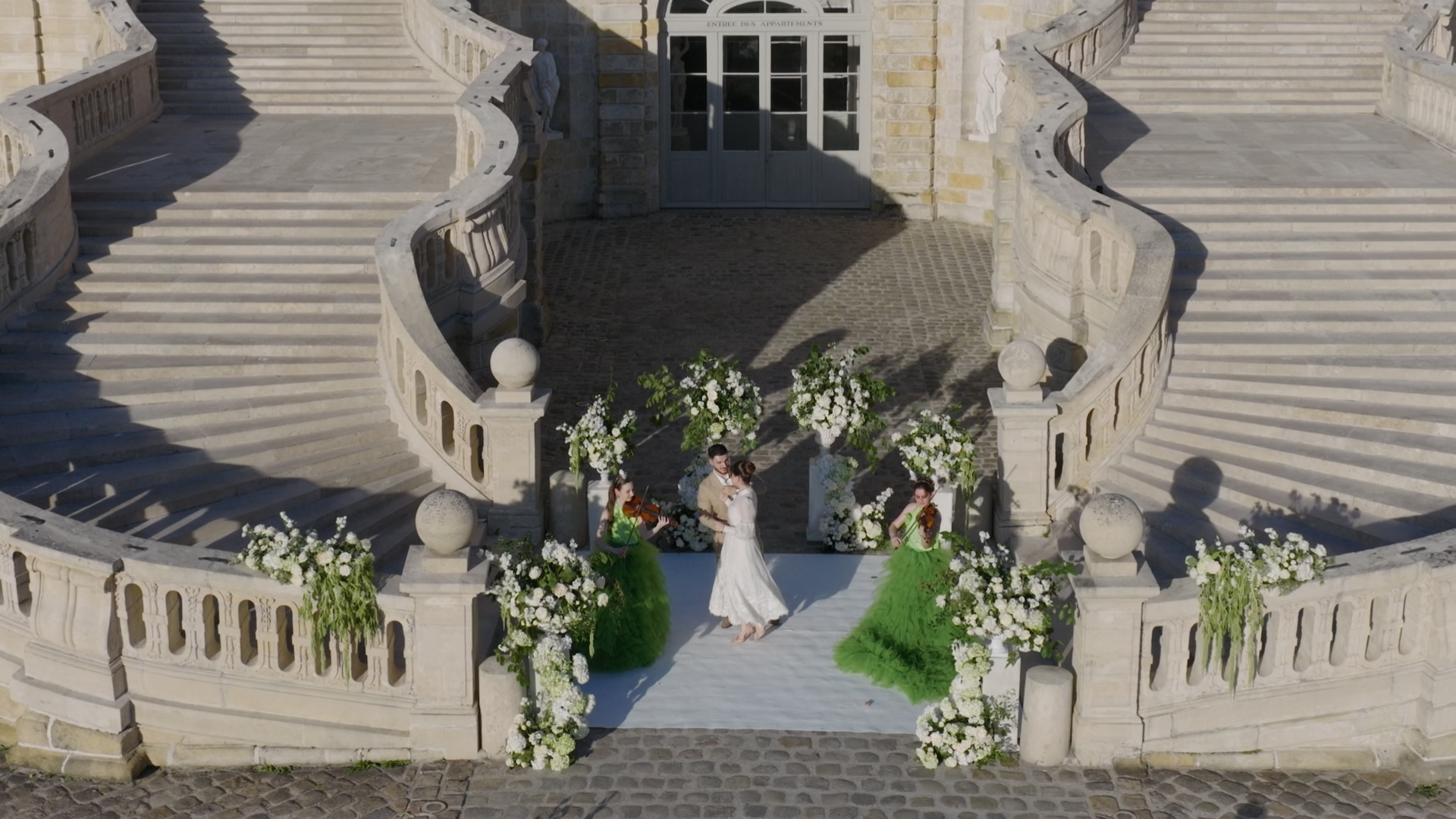
Outside Paris, the proposition becomes much larger. For some couples, simply being able to say “We got engaged at a French château” is the point. You have historic rooms, formal gardens, expansive grounds, and far more space than a city rooftop or salon.
Depending on the estate and permissions, that can also open possibilities for larger floral installations, drone filming, fireworks, live music, and a proposal that moves through several parts of the property. At a château such as Villette or Bouffémont, the proposal, dinner, and first night can all happen on the estate. Vaux-le-Vicomte, Château de Villette, Fontainebleau, and the gardens of Versailles serve very different plans.
Leaving Paris adds travel and transport, and sometimes an overnight stay. A château should therefore be planned as part of the full evening, not treated as a prettier address outside town.
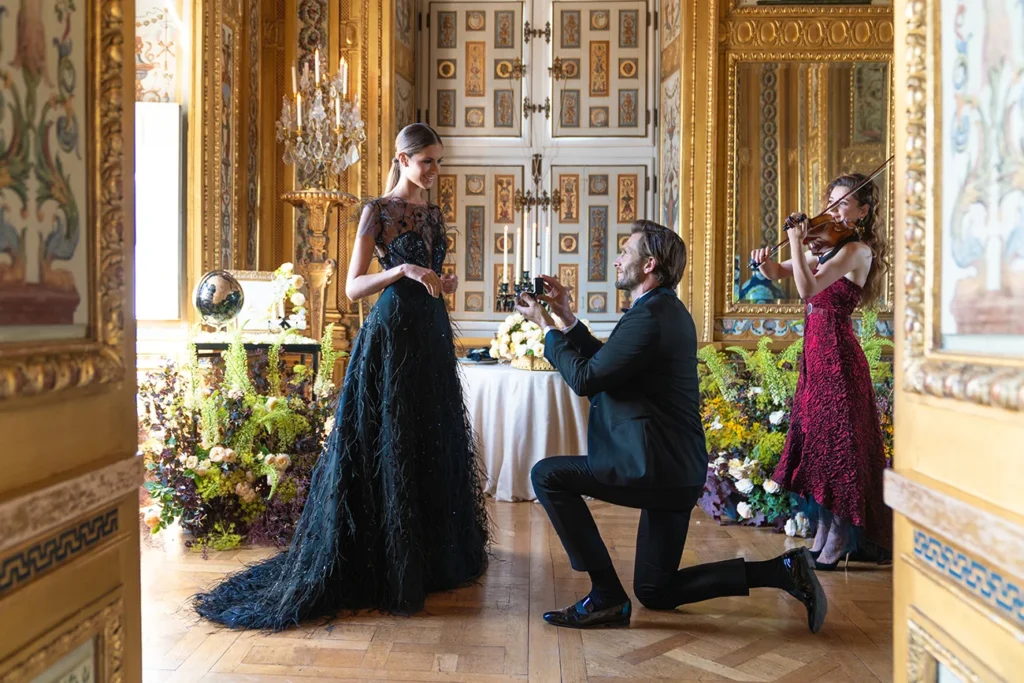
What to expect from a public Paris proposal
A public proposal usually has no venue rental. It is also open to everyone else. That can mean tourists, curious onlookers, other couples being photographed in the same place, street vendors, smokers, litter, pickpockets, and normal city movement through the setting. Someone can walk into the frame. Another couple can be standing exactly where you planned to ask. At a popular location, you may have to wait.
There is also no private setup window, no controlled place for family to wait, and no indoor room attached to the plan if the weather changes.
Most public proposals are photographer-led, and there are two common approaches. In a proposal photoshoot, she believes you booked a couple photo session in Paris. The session is real, you propose during it, and the remaining time becomes your engagement shoot. With discreet coverage, she does not know a photographer or filmmaker is present. They document the proposal from a distance, give the two of you a little time alone after she says yes, and introduce themselves afterward.
When there are few moving parts and the proposal is public, an experienced local proposal photographer is often the right level of help. They know where to position you, when the light works, how crowds behave, and how to stay out of sight until you are ready.
Public also does not mean unrestricted. You may see large floral hearts, furniture, illuminated letters, and other installations along parts of the Seine. Do not assume that means the same setup is permitted anywhere you choose. Rules vary by location, and security can ask for authorization or stop an installation. Permits can take time and cost money, and a permit makes the production authorized; it does not make the space private or stop strangers entering the area. For a substantial setup, that time and money can sometimes be better spent on a private rooftop, boat, or other controlled setting.
See how Paris proposal photography works
What you gain from a private Paris proposal setting
A private setting gives you practical control over access: who is invited into the proposal area, when vendors enter, and when the setting is ready.
Take the Medici Fountain in the Luxembourg Gardens. You know what it looks like. What you do not know is whether fifteen people will be standing around it when you arrive, another photographer will be using the same position, or you will have to wait. Private access lets you use the setting on agreed terms.
The team can prepare before you arrive. Florals can go up. Musicians, photographers, and filmmakers can take their positions. Family can wait out of sight. You are not standing nearby hoping strangers move before you can begin.
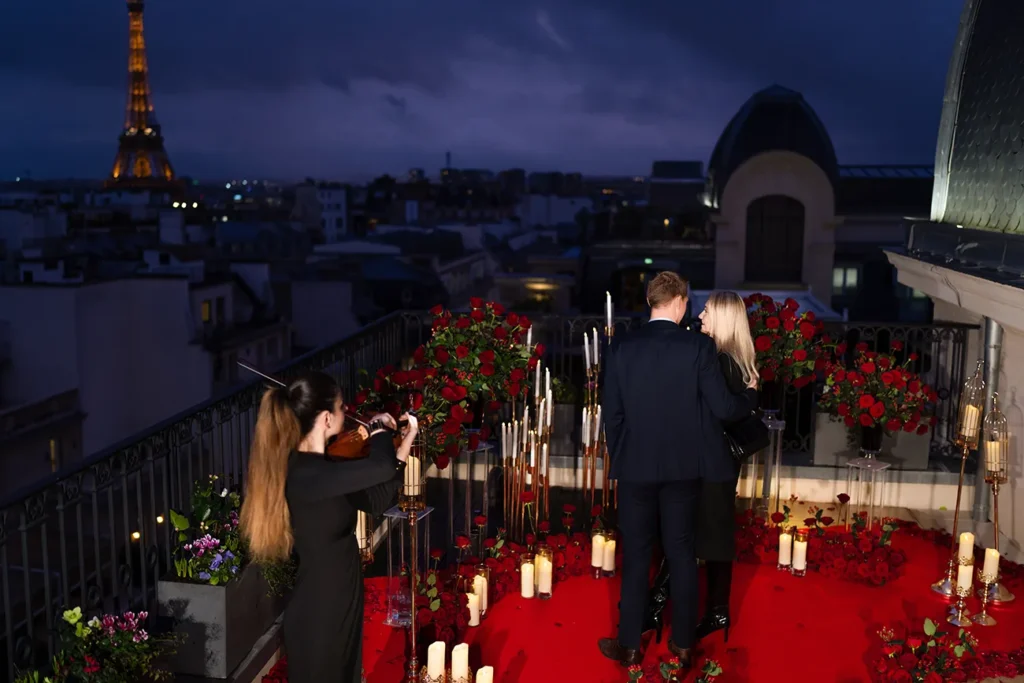
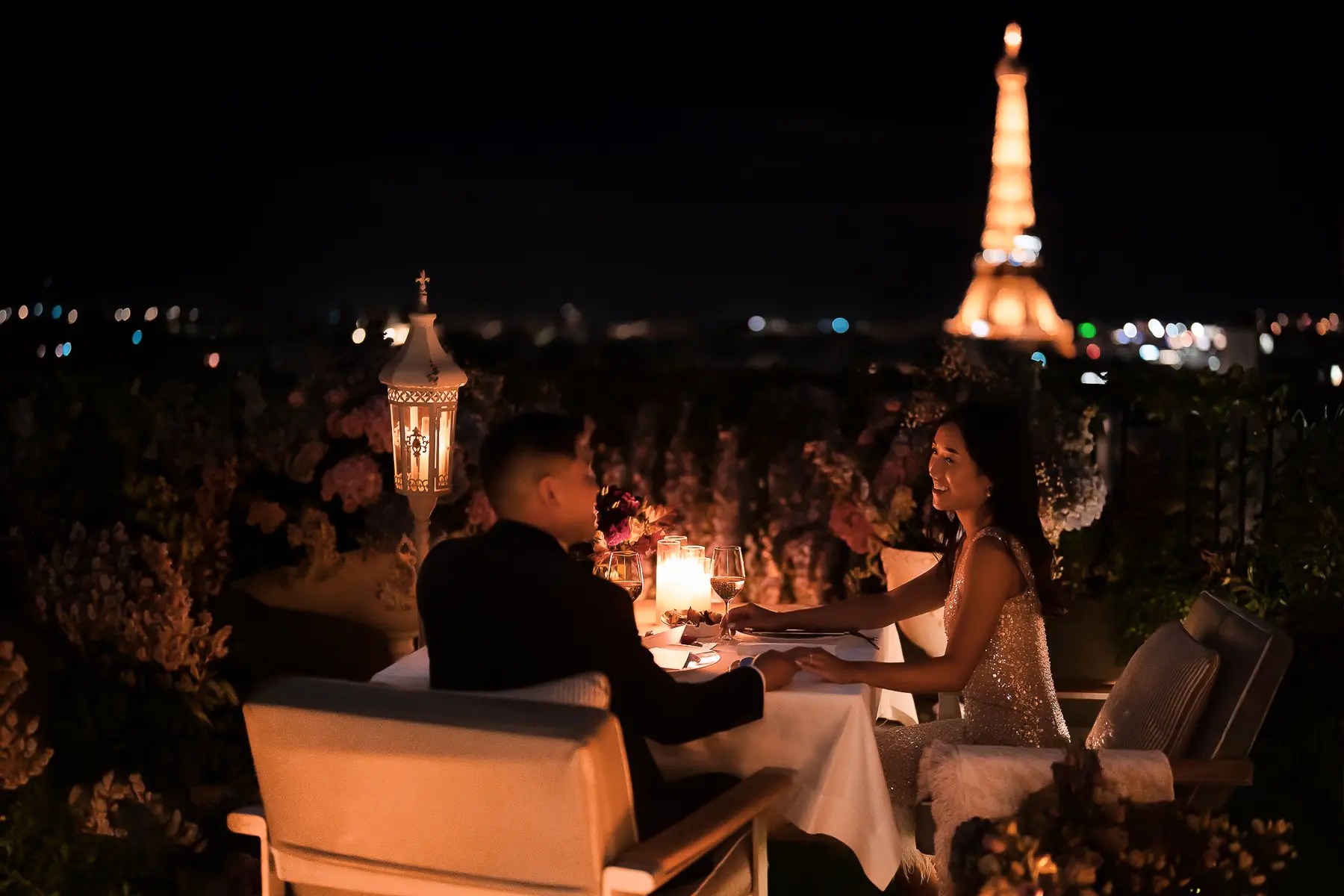
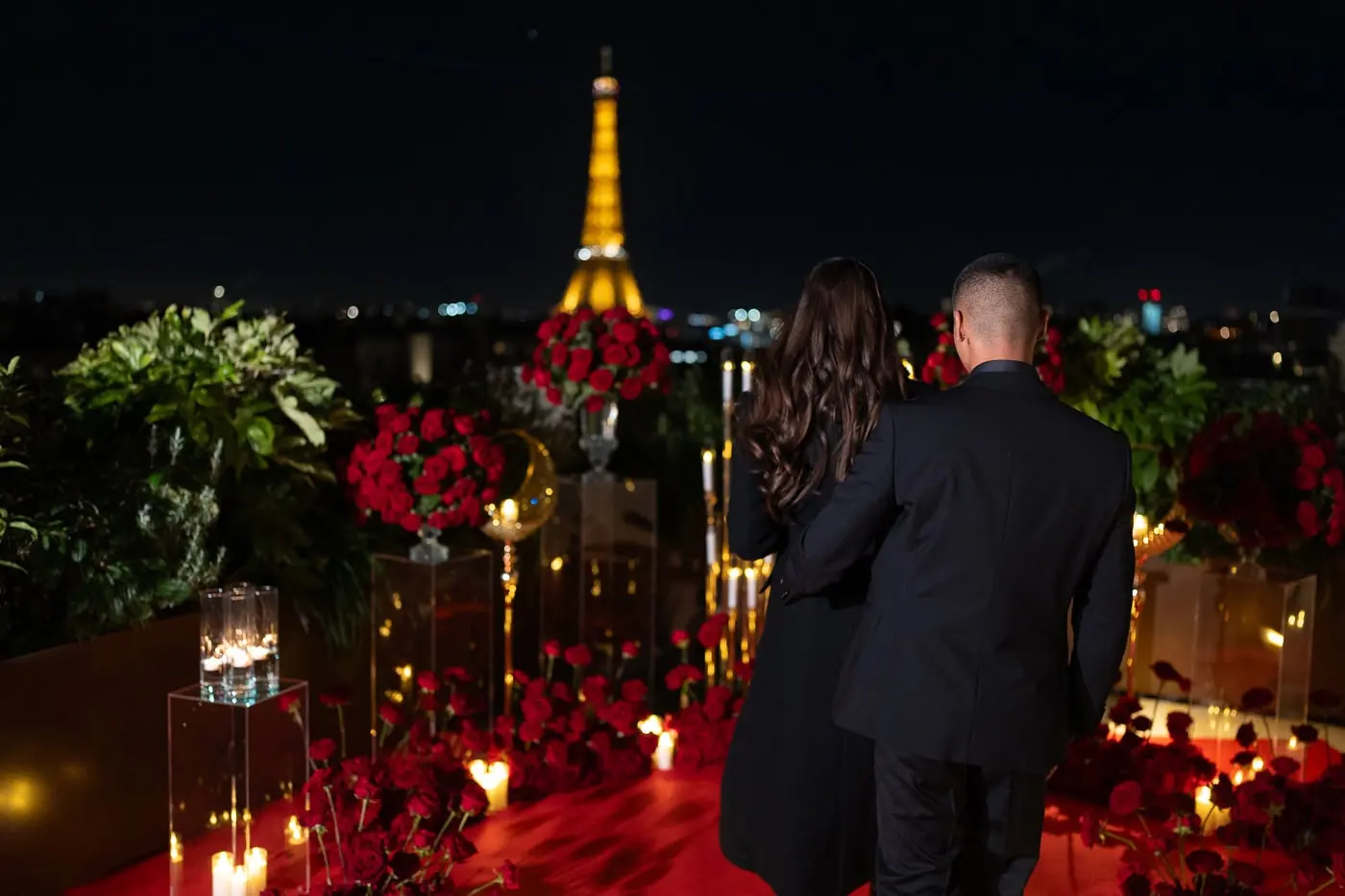
There are two common ways to reserve that privacy. By the time slot, you reserve a rooftop, terrace, Palace salon, gallery, museum, or other private setting for the proposal and, where available, dinner afterward. The Peninsula Secret Table is one example, and you spend the night wherever you choose. For the entire night, you book the hotel room or suite and its private terrace comes with it. Depending on the room category, examples include Shangri-La Paris, the Peninsula Rooftop Garden Suite, Four Seasons Hotel George V, Bulgari Hotel Paris, and Hôtel Marignan Champs-Élysées. That second model can allow the proposal, private dinner, and first night engaged to happen at one address.
Private does not mean unlimited headcount, unlimited vendor access, or automatic weather protection. Those conditions depend on the venue, room category, and plan.
If a rooftop is what you have in mind, our Paris rooftop proposal guide compares the private terraces in more detail.
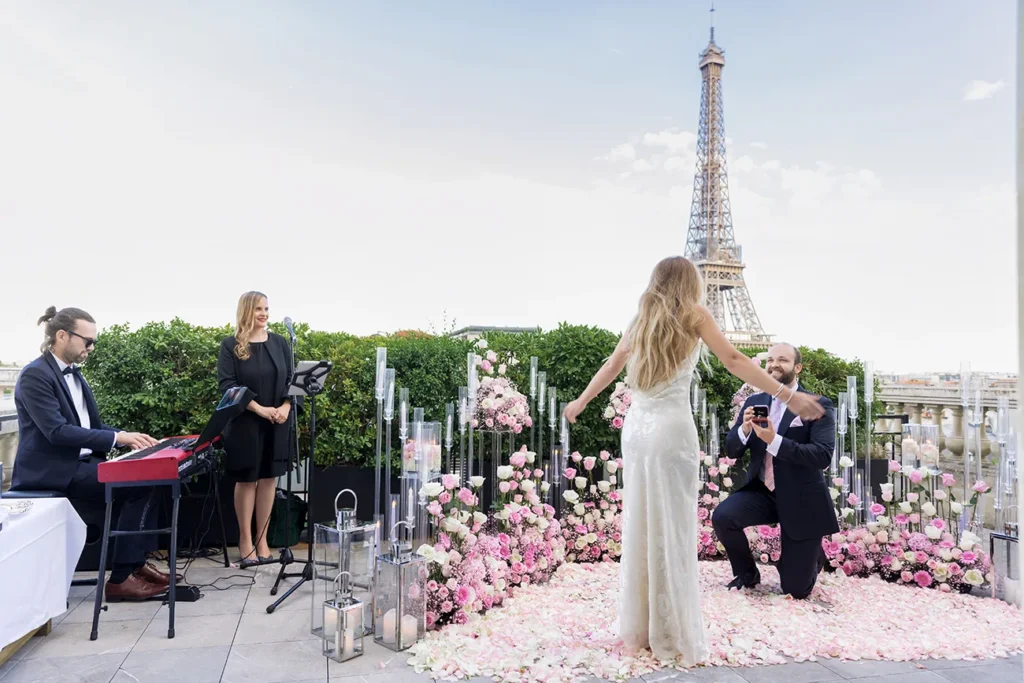
A private Seine yacht gives you privacy, with or without the Eiffel Tower
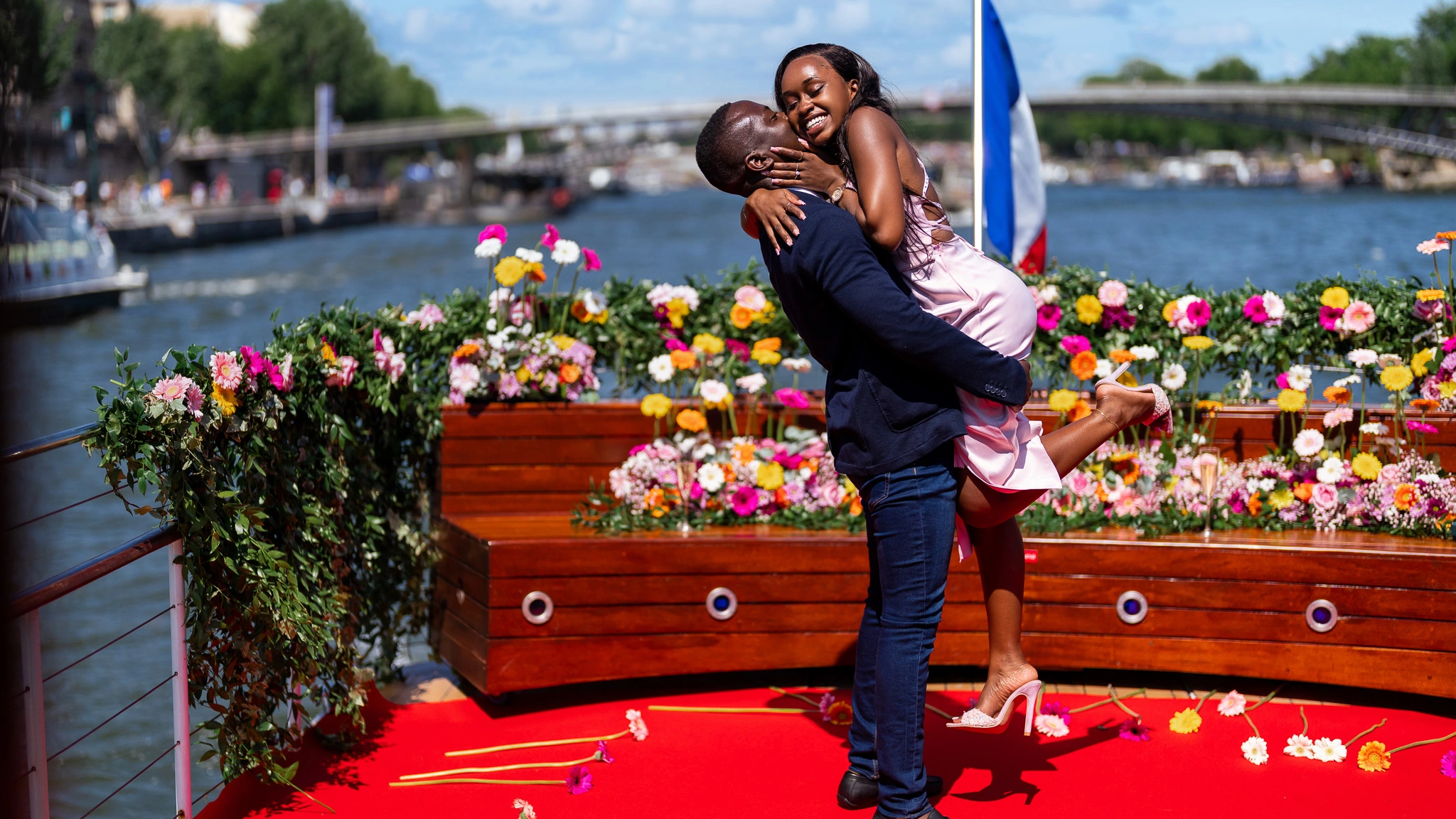
If your partner does not get seasick, a private Seine cruise does something a fixed venue cannot: the view changes while the proposal remains private.
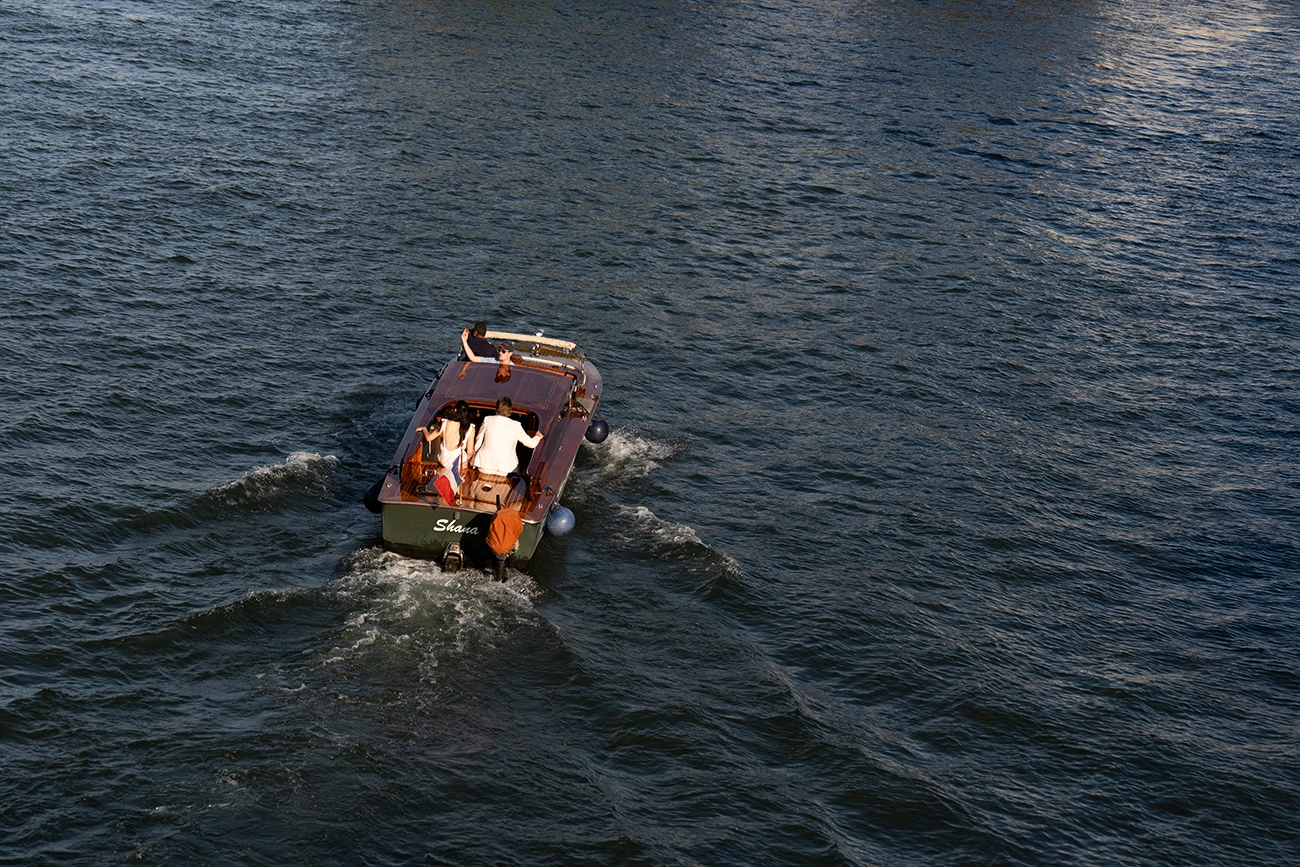
Around 90 minutes is common for a private boat proposal, although the duration depends on the vessel and the plan. You can ask with the Eiffel Tower behind you, then spend the rest of the cruise with Champagne, photographs, and Paris passing by with no other passengers aboard. Or you can propose elsewhere on the Seine and let the Tower appear later. When a fixed Eiffel Tower angle matters, the boat can remain moored for the proposal and leave afterward.
The boats themselves are not interchangeable. A private wooden boat for two and a crewed yacht with several decks, dinner service, live musicians, substantial florals, family waiting out of sight, and room for dancing are completely different propositions. Vessel, duration, headcount, dining, season, and production determine the budget.
See a private Seine yacht proposal
What narrows the shortlist?
Start with these filters, in roughly this order:
• Budget: public location, private time slot, overnight suite, yacht, château, and the production around it
• Date: what is available during your stay
• Headcount: the couple, guests, and everyone working inside the setting
• Space: enough room for florals, music, service, guests, and the camera team to step back
• Eiffel Tower: none, subtle in the distance, or a major part of the backdrop
• Concept: what needs to happen before, during, and after the proposal
• Dinner: in the proposal setting, elsewhere in the same venue, or at another address
• Weather: what the plan becomes if outdoor conditions are poor
• First night: whether you stay where you proposed or end the evening somewhere else
Compare places to propose in Paris · Explore Eiffel Tower proposal settings
Plan the proposal, dinner, and first night as one evening
Once you know where you want to ask, plan the engagement day around three parts: where you propose, where you have your first dinner as fiancés, and where you spend your first night engaged.
All three can happen in one place. The proposal and dinner can happen together, followed by a night at another hotel. Or all three can happen in separate locations. One recent couple proposed and dined at the Peninsula Rooftop Garden Suite, then left by Rolls-Royce for their first night at Plaza Athénée. At a château, another couple might propose and dine on the estate but return to Paris for the night. At the right hotel or château, all three can happen without leaving the property.
We separate them because they are three distinct parts of getting engaged. The proposal is the question and the answer. Dinner is your first meal as fiancés. The hotel is where the day ends and where you wake up engaged. If you plan only the proposal, you have planned the shortest part of the evening.
Should you propose before or after dinner?
Before dinner, unless dinner itself is part of a private proposal concept. We rarely recommend proposing after dinner, and we generally avoid proposing in the middle of a public restaurant meal.
Waiting through dinner with a ring in your pocket is harder than it sounds. You are distracted. She may notice that you are nervous or behaving differently. You are trying to make conversation while thinking about the question, the photographer, the timing, and whether the ring is still where you put it. We have even seen nerves create friction over nothing before the proposal happened.
Ask first and dinner becomes something completely different. You toast your new relationship status. You call the parents who have been waiting for the news. She asks the questions she has been holding in since she realized what was happening. You steal a kiss between courses. You get to enjoy your first dinner in Paris as an engaged couple rather than spend it waiting for the evening to begin.
A private dinner can be different. We have planned proposals where the dinner service, chef, butler, table, and ring reveal were all part of the concept. In that case, the meal is not interrupting the proposal. It is part of it.
Where should you have your first dinner as fiancés?
Once the timing is settled, decide where dinner happens.
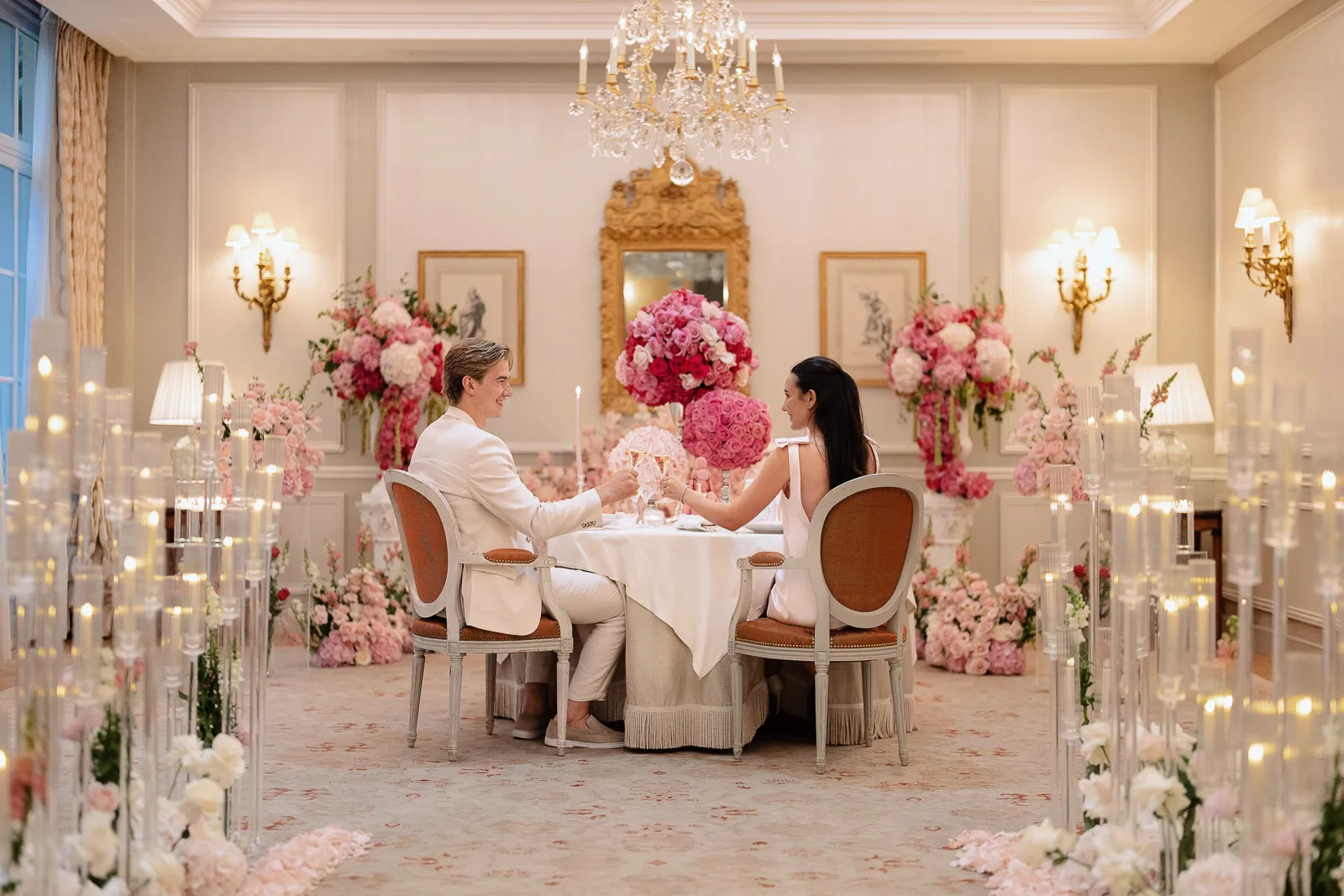
Stay in the proposal setting when the venue allows it. You have already invested thought, design, time, and money into that setting, and instead of dismantling it twenty minutes after she says yes, it can be transformed for dinner. Florals can move around the table, musicians can continue, lighting can change, and Champagne is poured. Or move elsewhere in the same hotel or property, giving dinner its own room while keeping the evening under one roof. Plenty of couples deliberately go somewhere else in Paris, which gives you another place to enjoy together and another surprise after the proposal.
The dining style is another decision. You might have a private butler serve the two of you at the proposal setting, reserve a private salon at Lapérouse, or want a table at L’Oiseau Blanc, Monsieur Bleu, Le Grand Café, Baronne, Verde, Gigi, or another restaurant that suits the evening. There is no hierarchy here. A quiet private dinner and a celebrated Paris restaurant can each be exactly right. A good planner helps with the restaurant, table, timing, privacy level, and how dinner fits with everything that happened before it.
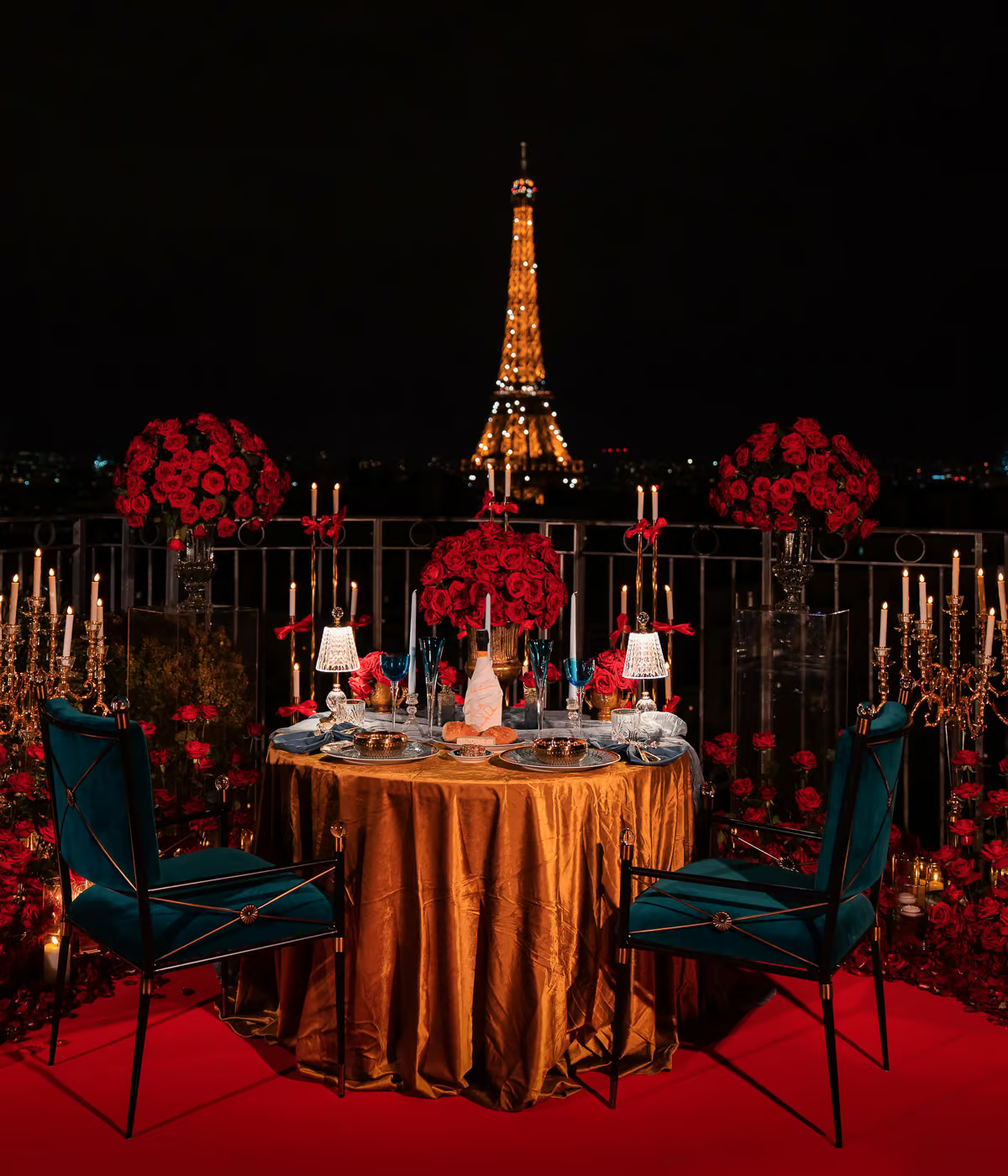
One timing detail matters more than most people expect: sunset and dinner service are connected. Near the longest days of summer, sunset in Paris is very late. If you want a sunset proposal, photographs afterward, and then dinner, some hotel kitchens may already be near the end of service. The answer might be an earlier proposal, a restaurant with later service, room service, or a private chef where the venue permits one. That is worth solving while you are planning the evening, not at 10:00 p.m. with a newly engaged fiancée who is hungry.
How will you move between locations?
If the proposal, dinner, and first night do not all happen at the same property, you will need to move between them. That is part of the experience, and it should be booked accordingly.
A taxi or rideshare can work when the budget is limited and timing is flexible. It becomes less attractive when a private venue, dinner reservation, hotel access window, or another surprise depends on when you arrive. Standing on a curb refreshing an app after she has just said yes is not how most couples want to spend the next fifteen minutes.
A pre-booked chauffeur gives you a known vehicle, driver, pickup time, and route. English-speaking service can be arranged. A V-Class is useful when more people, luggage, or equipment need to move together. An S-Class gives the couple more privacy. A Bentley, Rolls-Royce, vintage car, or another chauffeured vehicle can make the drive part of the celebration: Champagne after the proposal, Paris outside the windows, and time together before the next stop. And if she dressed for the proposal in heels, the plan should not suddenly require a twenty-minute walk because nobody arranged the car.
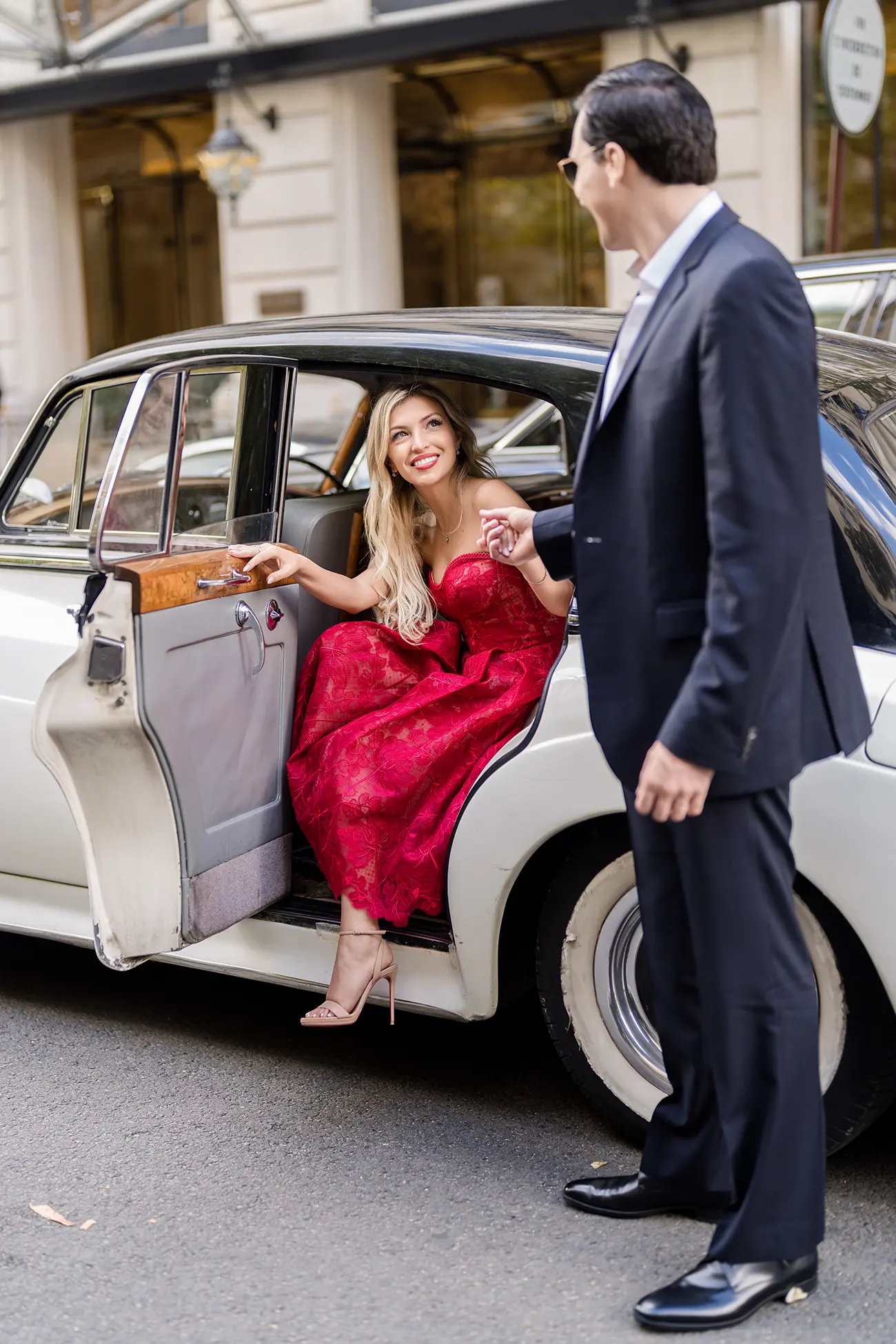
For a château proposal, a helicopter can work when weather, permissions, and the operator allow it. A horse-drawn carriage can suit a slower route through Paris, as it did after one of our private yacht proposals. Several forms of transport can also be combined. In a multi-location proposal, the boat, car, carriage, or helicopter may become part of a scavenger hunt or discovery concept, or simply the way the evening moves naturally from one surprise to the next.
The couple’s transportation is only one part of the schedule. Hotels often require florists, musicians, photographers, filmmakers, and production teams to enter through security or a service entrance rather than the main lobby. On a yacht, vendor boarding and setup can become even more precise. We have had couples board a yacht before the proposal deck was finished, go below for drinks and hors d’oeuvres, and return shortly afterward to florals, lighting, musicians, cameras, and the Eiffel Tower waiting upstairs. That only looks spontaneous to her.
If family or friends are joining
Most of the proposals we plan are just the couple and the vendors. In roughly one in five, family or friends join after the proposal. When they do, decide that early. A table for two in Paris is one thing. A table for twelve during Christmas or another busy period is another. The same applies to cars, hotel access, and venue headcount.
Family may wait out of sight and join seconds after the yes. They may appear at dinner. They may already be on another deck of a yacht or on another floor of a hotel. When they are involved, we plan their arrival, waiting place, dinner, transportation, and how they remain invisible until the right time. They are part of some proposals, not a requirement for a good one.
Where will you spend your first night engaged?
The third part is where the day ends and where you wake up engaged. It deserves more thought than simply booking a comfortable hotel, particularly in winter when Paris gets dark early and more of the evening happens indoors.
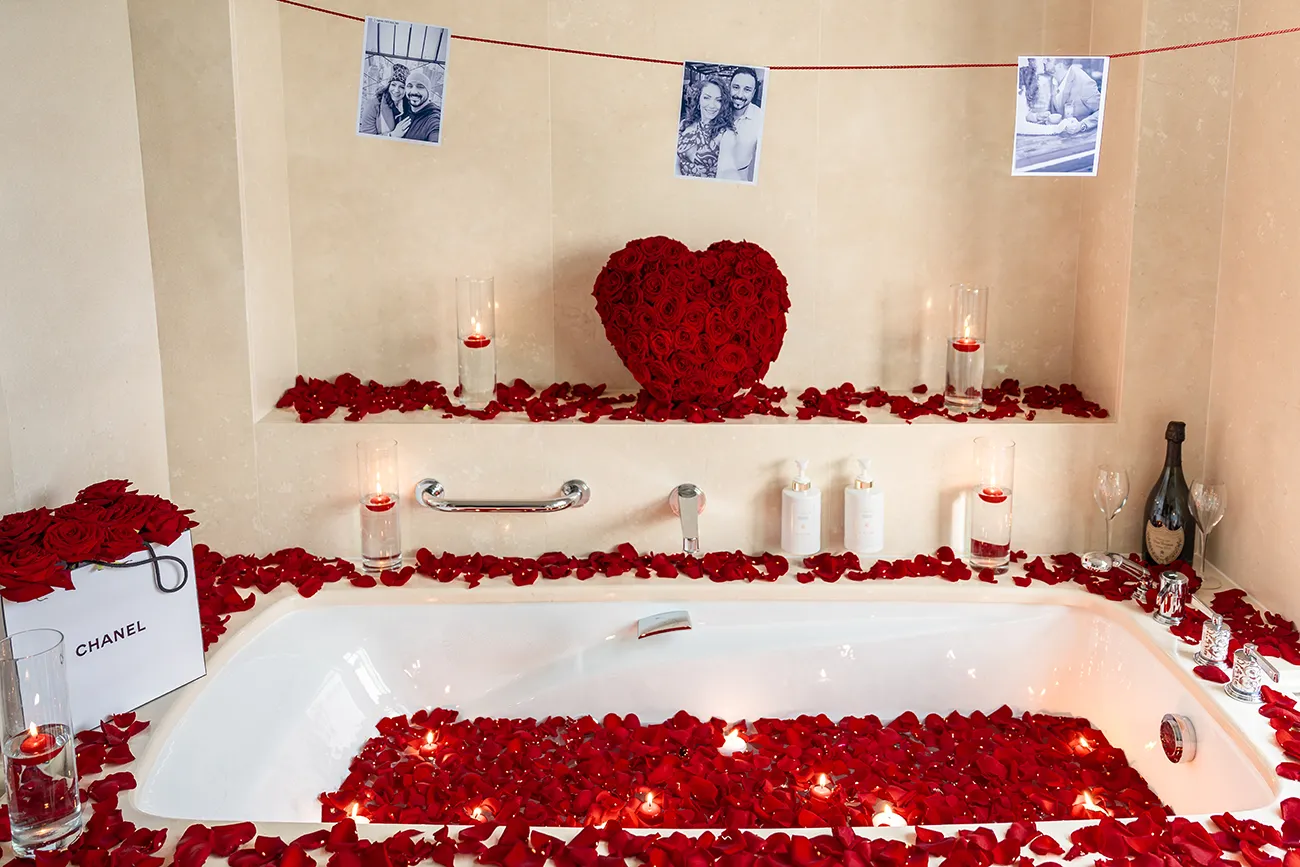
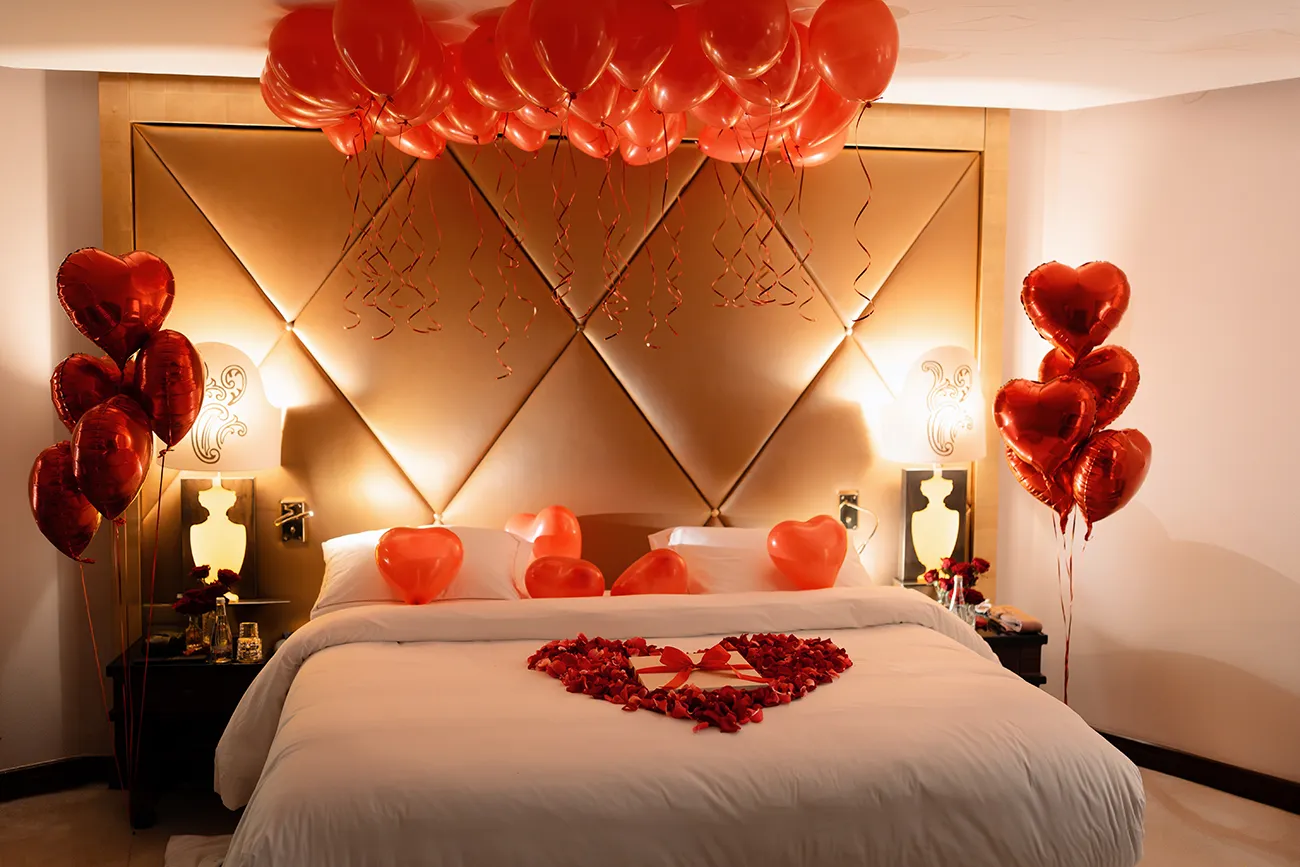
For one couple, that might mean returning to an Eiffel-facing suite at Shangri-La, opening chilled Dom Pérignon, and watching the Tower sparkle from bed. For another, it might mean spending the night at Château de Villette after proposing and dining on the estate. For another, the room is simply where they sleep. All are valid. The useful question is whether the room has a role in the proposal plan.
If it does, access timing becomes operationally important. We need to know when florists and other vendors can enter, when gifts can be positioned, whether something should be waiting when you return from dinner, and whether a final surprise can be prepared while you are elsewhere. When the room has a role, it also belongs in the proposal budget rather than in ordinary travel accommodation.
Choose the proposal concept and setting design
The proposal setting is where you ask. The proposal concept is the plan behind the proposal. It explains what the day or evening is built around, what your partner believes is happening beforehand, how the surprise develops, when you propose, and what happens after she says yes.
A birthday dinner that becomes a proposal can be a concept. So can a private cinema, an art-gallery takeover, a château weekend, or a multi-location discovery through Paris. A private yacht can be either the setting or the larger concept. If you simply board a boat and propose, it is principally the setting. If the plan includes a believable dinner-cruise cover, a moored proposal, family hidden on another deck, dinner after the yes, music, a City of Lights cruise, a carriage at the dock, and a prepared hotel room afterward, the yacht is at the center of the whole concept.
That distinction matters because the concept affects the cover story, sequence, locations, privacy, timing, transport, vendors, dinner, and level of planning required.
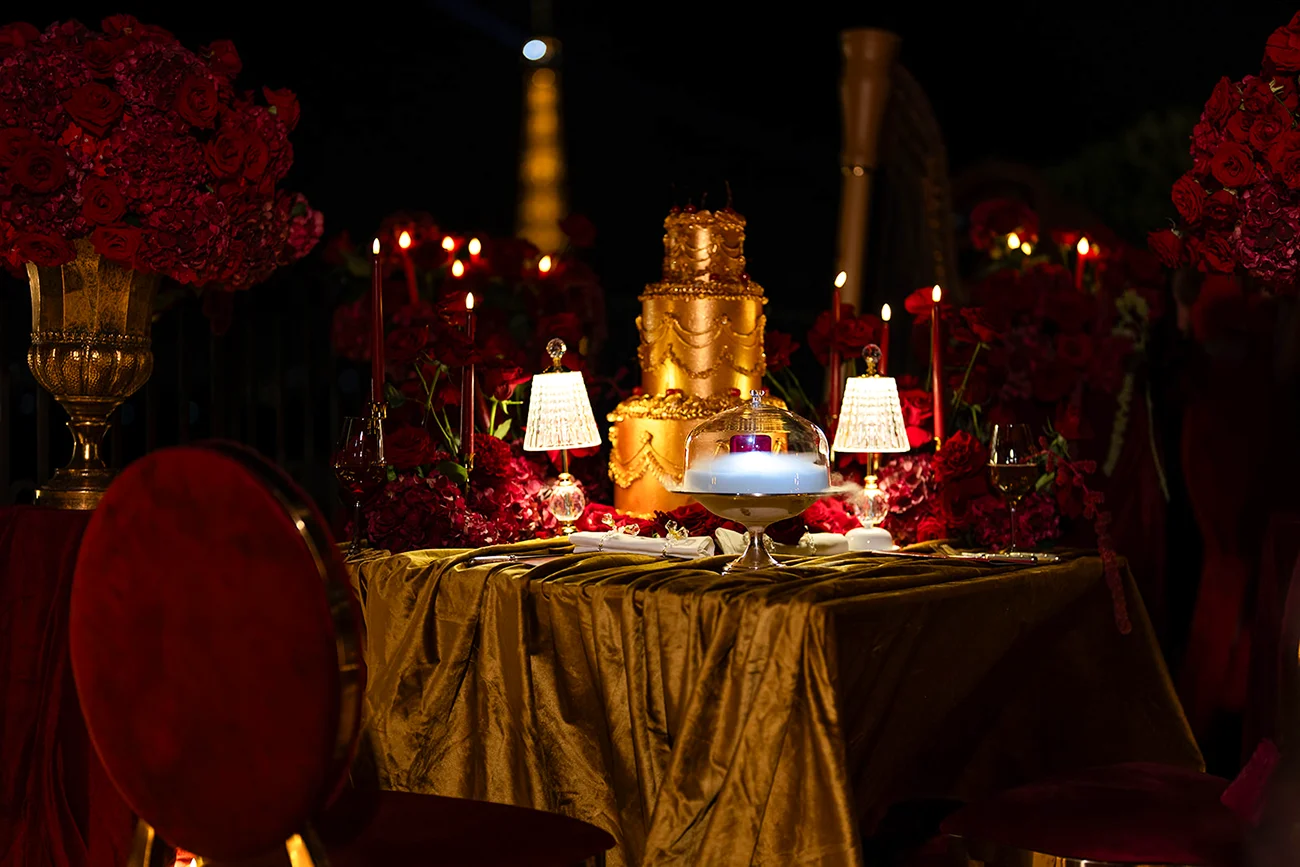
Proposal ideas make the concept personal
Proposal ideas are the individual creative and personal choices inside the larger concept. Some are small: a handwritten letter, her favorite flowers, a musician playing a song that means something to the two of you, custom macarons with your names and engagement date, or a recorded message from her parents.
Others become experiences in their own right: a painter you appear to stumble across on Pont Debilly, a magician or pantomime artist, a film made for her and screened in a private cinema, a blindfolded arrival, musicians dressed for a period setting, a horse-drawn carriage waiting later in the evening, or the proposal flowers quietly moved to your hotel room while you are at dinner.
You do not need ten ideas. The useful ones come from her tastes, personality, family, interests, shared memories, or something she told you that you remembered. A single detail that makes her think, “he remembered that,” can matter more than an expensive addition that could have been ordered for anyone. That is the difference between spending money on a proposal and making the proposal personal to her.
For more starting points, see our Paris proposal ideas.
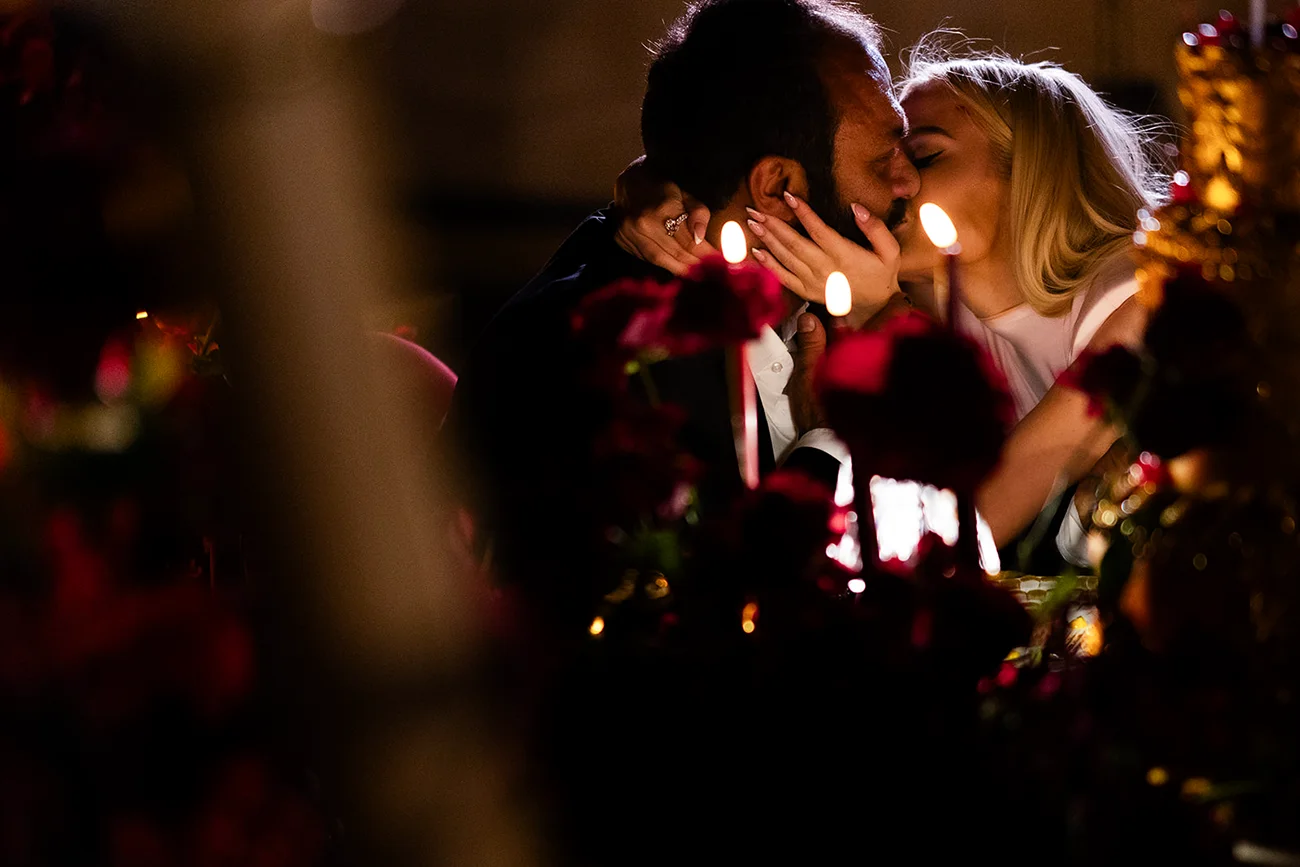
The cover story needs to be believable
The cover story is the explanation your partner receives before the proposal. It has to do two things at once: get her dressed, ready, and in the right place at the right time, while protecting the surprise.
That is more important than it sounds. You may want her wearing what she would choose for some of the most important photographs of the two of you. She may need to leave the hotel at an exact time, get into a chauffeured car, enter another Palace hotel, board a yacht, or travel outside Paris without immediately concluding that you are about to propose.
The cover therefore has to fit her. A birthday dinner works when it really is her birthday. A couple photoshoot works when being photographed together in Paris is credible for you. Family drinks work when family really is in town. A dinner cruise works because there really is a yacht and dinner. What works beautifully for one couple can make another woman suspicious in thirty seconds.
And the cover should survive normal scrutiny. She may look up the restaurant, check the hotel, ask an AI assistant about the place, message her sister, or ask you a perfectly reasonable follow-up question. An imaginary gala that does not exist is a fragile cover. The best covers usually contain enough truth that they are difficult to disprove accidentally.
That does not mean you will suddenly behave like an actor. Most gentlemen are nervous on proposal day. You may check your pocket three times or seem distracted. The cover simply gives the rest of the day a credible explanation and gives you fewer invented details to keep straight.
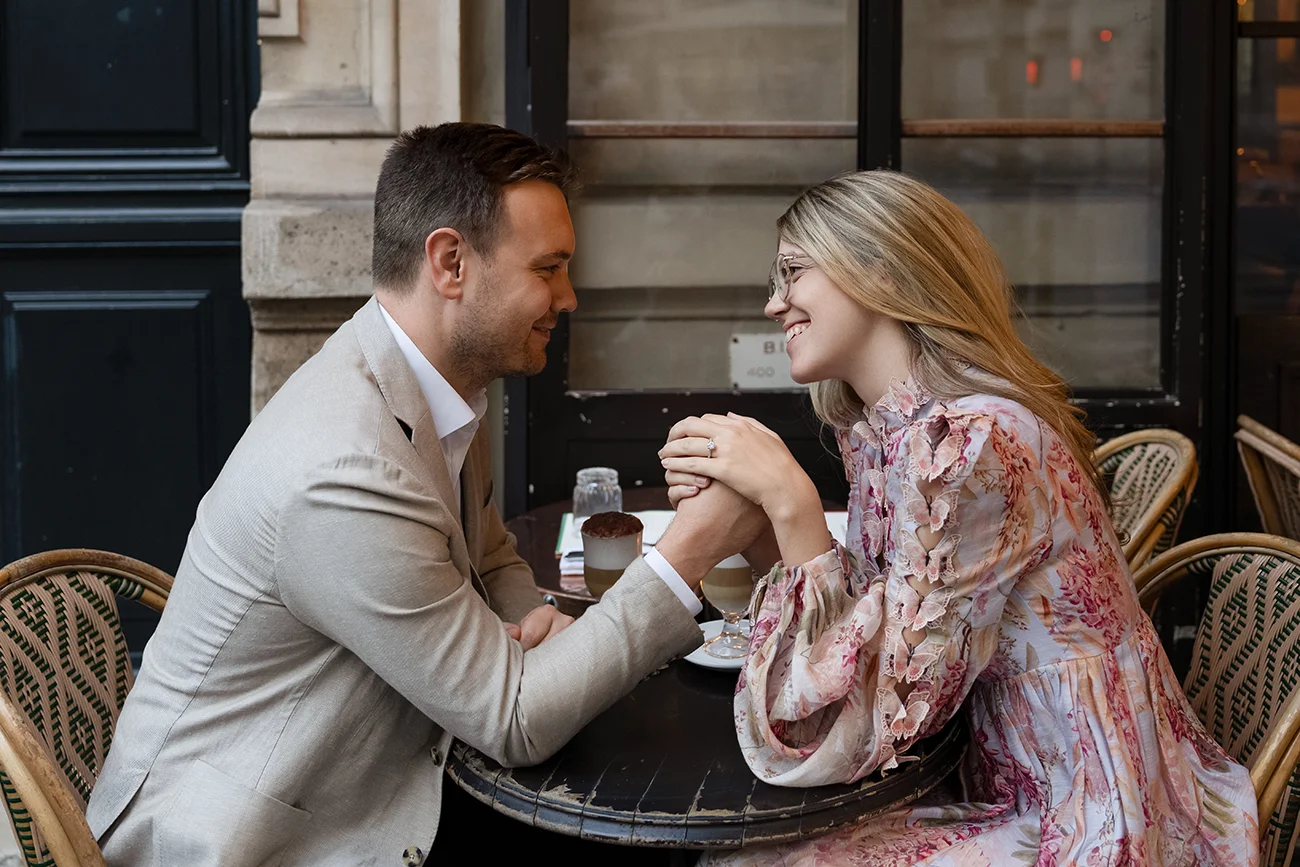
Design the proposal setting around her and the space
Setting design is the physical and sensory part of the proposal. It includes florals, lighting, music, furniture, table design, fabrics, scent, Champagne, food, stationery, personal details, and the route she follows into the setting.
The starting point is her taste and the atmosphere you want to create. Then the design has to respect the space, the view, the production requirements, and what will happen there after the proposal.
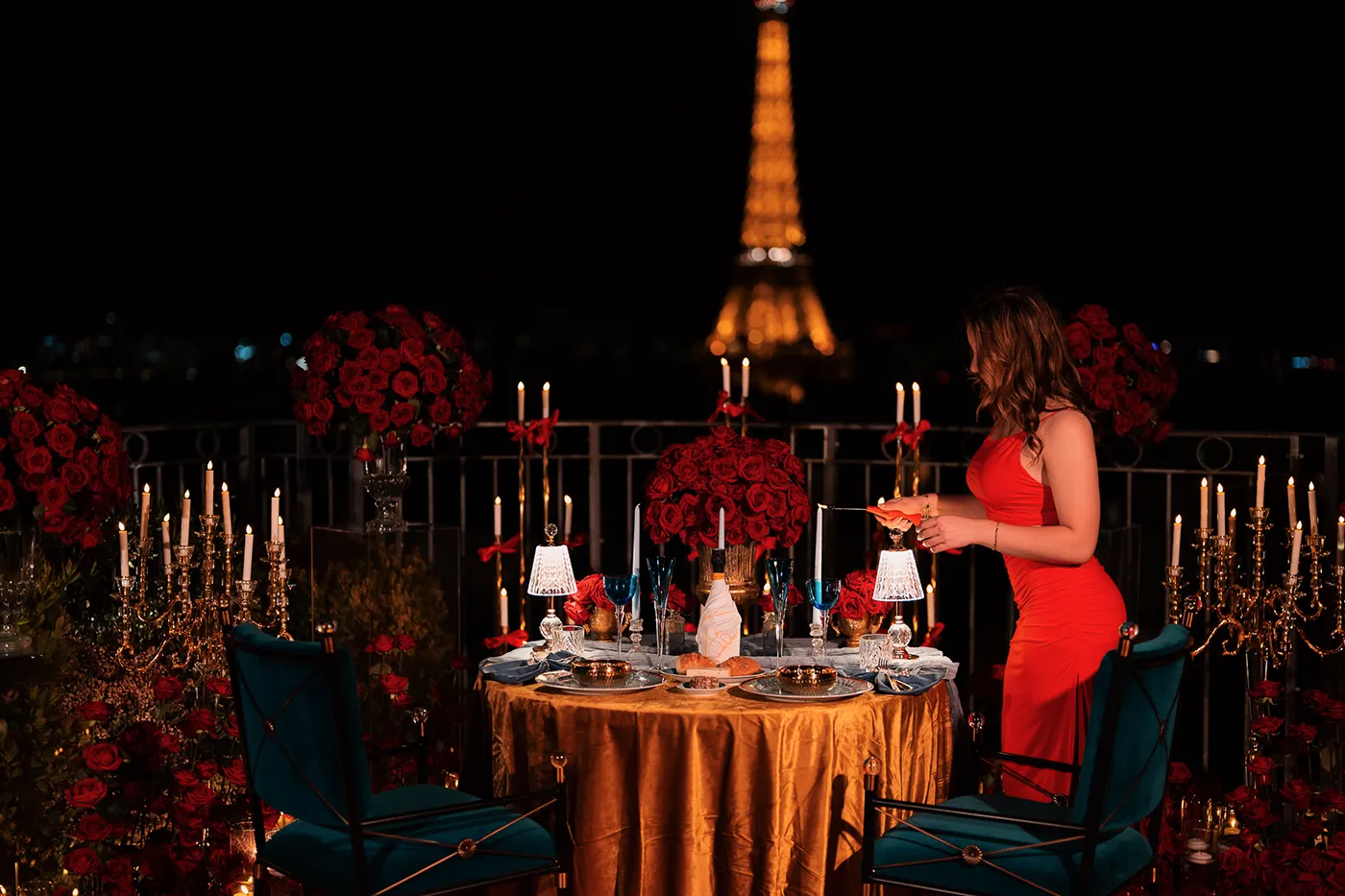
On a private Eiffel Tower terrace, the Tower is one of the principal reasons you paid for the location. The floral design should work with that view rather than build a wall in front of it. A Palace salon already has architecture, artwork, furniture, lighting, and history. Adding more simply because the budget permits it can make the room worse.
Outdoor settings introduce another set of decisions. Wind is not just a yacht problem; Paris rooftops can be extremely exposed. On one of our Peninsula rooftop proposals, a large floral urn tipped twice in the wind, and the cake candle would not stay lit. We used a sparkler instead. That is one reason experienced teams do not promise rows of real candles outdoors without considering the weather, fire rules, and what happens if half of them go out just before the couple arrives. Flameless candles are often the more reliable solution.
Lighting is part of the design too, and it is covered in more detail further down this page, because after dark it decides whether the photographs work at all.
Design also affects production and budget. Fresh flowers at scale can be one of the largest cost drivers in a proposal. Larger installations mean more material, more people, more transport, longer setup, and earlier access. Custom structures, furniture, lighting, and some floral installations may also require venue approval.
So the design has several jobs at once: reflect her taste; create the romantic atmosphere you want; engage the senses through light, sound, scent, taste, and texture; work with the architecture and view; photograph and film well; comply with the venue; and be realistically installed in the time available.
This is where an experienced planner or floral design and production team adds more than flowers. They understand space, proportion, sightlines, lighting, installation, photography, venue rules, and what the setting will look like when she enters rather than when nobody is standing in it.
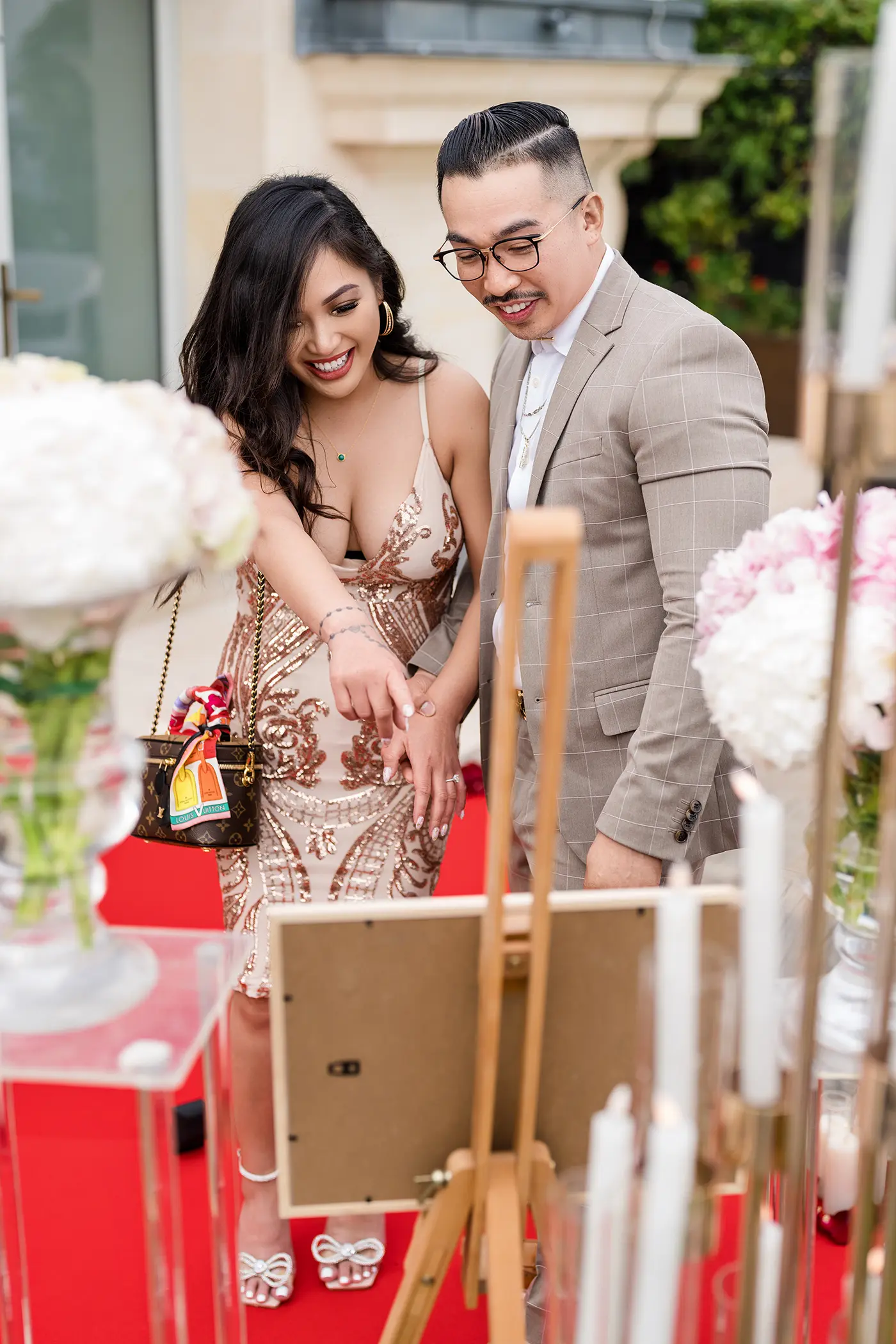
Do you need a Paris proposal planner?
Not every Paris proposal needs a full-service planner. The right level of help depends on how much you are planning, how much time you want to spend managing it yourself, and how many things need to happen correctly at the same time.
A photographer may be all you need
For a simple proposal in a public location, an experienced Paris proposal photographer is often enough. Beyond the photographs, they can help you choose the exact spot and time, send GPS coordinates, and share a live location on the day. When there is one public location and few moving parts, this can be the smartest place to spend the budget.
See how Paris proposal photography works
You can plan it yourself
DIY can work well when the proposal is straightforward, you have the time to research it, and you are comfortable managing the details yourself. You choose the location and vendors, confirm the timing, communicate with everyone, arrange transportation, check access and restrictions, and decide what you will do if something changes.
The advantage is obvious: you save the planning fee and keep complete ownership of the process. The trade-off is that you also own the problems. If a photographer becomes ill, a musician cancels, the weather changes, the restaurant cannot hold your table, or something you assumed was permitted at the location turns out not to be, you are the person finding the alternative. For a simple proposal, that risk may be completely reasonable.
A defined proposal package is the middle option
A package makes sense when you want more than a photographer-led proposal but do not need an entire evening developed from the ground up. The location, main inclusions, design, vendors, and basic timing are already established. An on-site coordinator handles vendor arrivals, setup, the proposal timing, and cleanup. You have fewer decisions to make and someone responsible for the proposal setting on the day, without paying for full-service planning.
When full-service planning makes sense
Full-service planning becomes useful when several things need to work together: private venue access, a hotel room or suite, florals and production, musicians, photography and film, transportation, dinner, several locations, a yacht or château, a room being prepared while you are elsewhere, or family and friends when they are part of the plan.
The value is not simply having someone make reservations. It is having someone understand how one decision affects the others, know the Paris vendors and venues involved, control the working schedule, and have credible alternatives when something changes.
Planning does not stop rain or prevent somebody from becoming ill. It gives the plan more options. A proposal time may be adjusted around weather. A replacement vendor may need to be sourced. If wind grounds the helicopter to the château, the ground alternative needs to exist before your partner is dressed and waiting downstairs.
For a production with several moving parts, that preparation is usually what separates planning the proposal yourself from hiring a professional team to take responsibility for the event.
Explore full-service Paris proposal planning
What should you say when you propose?
Tell her why she means so much to you, why you want to marry her, and what you are excited about when you think about your future together.
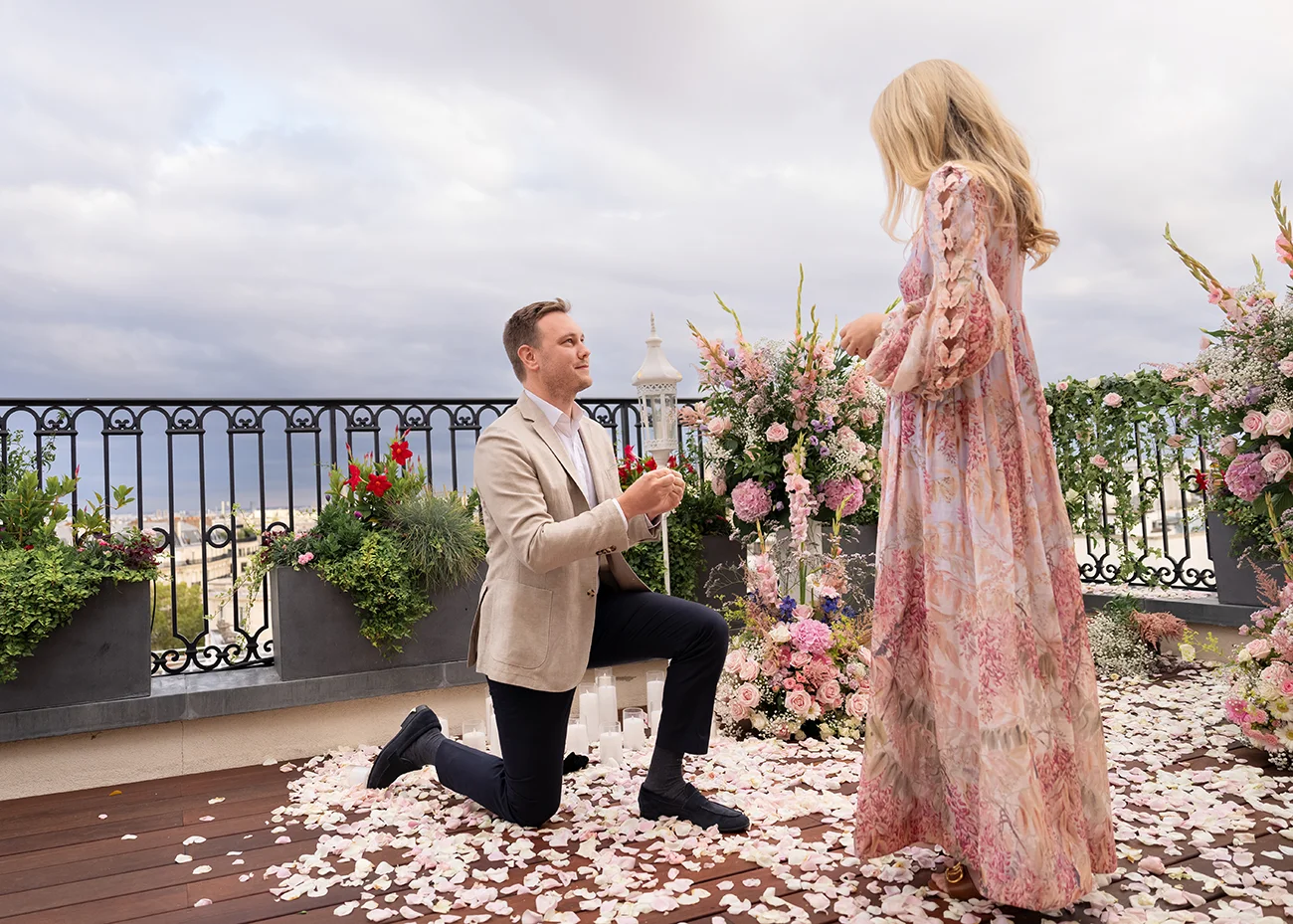
There are two parts to it. The speech is what you want her to hear before you ask. The question comes afterward: Will you marry me? In the traditional sequence, you give the speech while standing together, then take out the ring and go down on one knee to ask. There are other ways to do it, but the distinction matters: the speech and the question have different jobs. The detailed positioning, knee drop, ring exchange, and first minutes after she says yes belong in our proposal-day guide.
What belongs in a proposal speech?
You can draw a line through the relationship: where you started, how the two of you got here, and where you want to go next.
That might include the day you met, what you came to understand about her over time, how she has changed your life or made you better, and what you hope to build together. A home. Travel. Children, if that is part of your plan. Family. Work. Ordinary days. Growing older together. The point is not to cover all of it. Talk about what matters to you and her.
There is no required length. One or two minutes is common. Thirty seconds can be enough. We have heard speeches run ten minutes, including gentlemen who deliberately took their time because they wanted the knee drop to land on the Eiffel Tower sparkle.
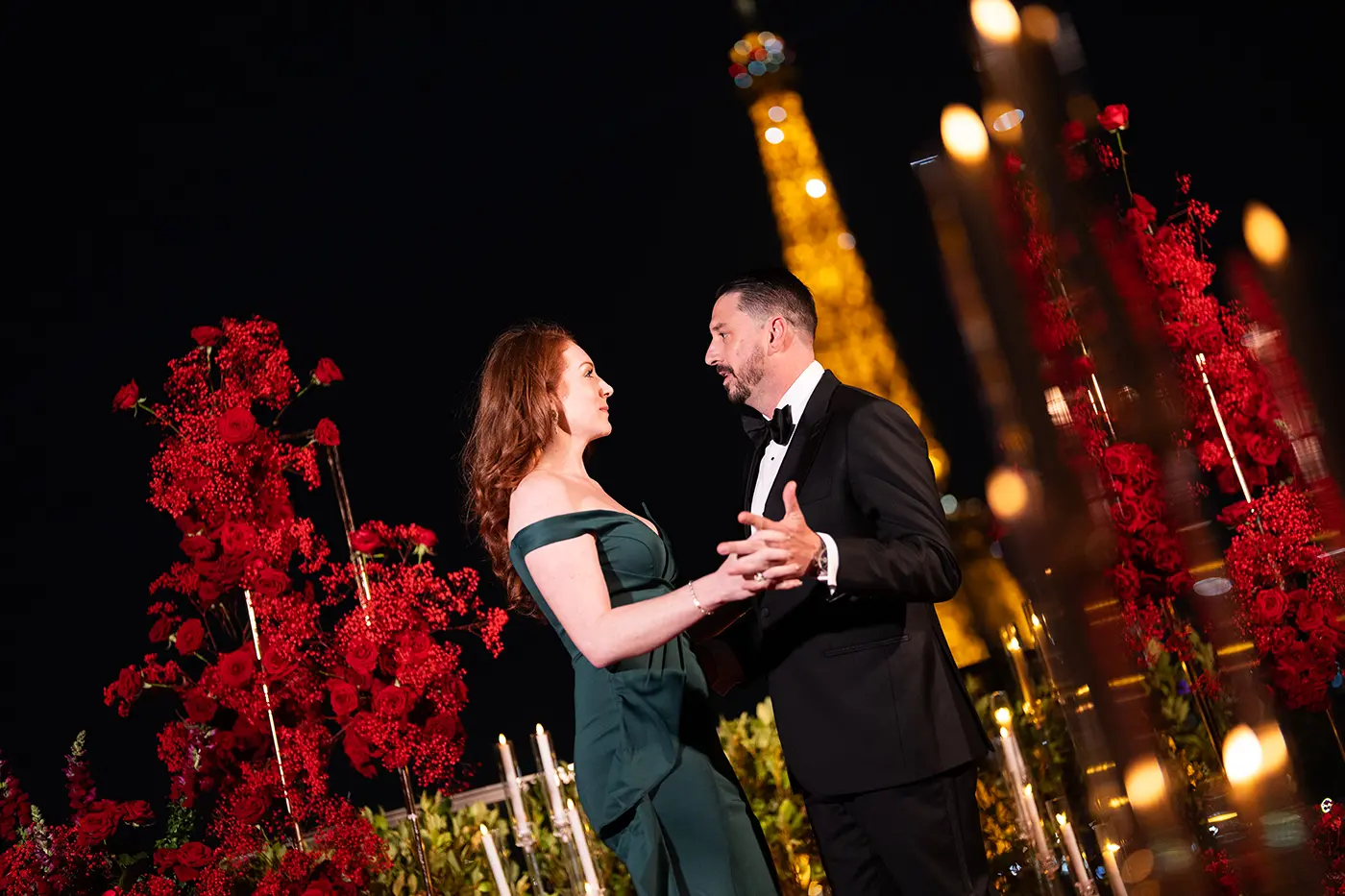
Perfection is not the goal. Effort is non-negotiable.
Gentlemen forget parts of speeches they prepared carefully. Some get so nervous that very little comes out. We have even watched an engagement ring go onto the wrong finger. None of that means the proposal went badly. You are asking one of the biggest questions of your life. Nerves belong there. An imperfect sentence, a long pause, or a shaking hand can become one of the details the two of you laugh about years later.
What matters is that you put thought into what you want to say. You do not need to write like a poet. You do not need polished lines. But if you have spent weeks thinking about the ring, flights, hotel, and proposal setting, set work and your phone aside for a while and think seriously about what you want the woman you love to hear before you ask her to marry you.
How should you prepare?
Some gentlemen memorize the speech. Others learn the main points and speak naturally. Some carry a few notes or read from a handwritten letter.
The words can also become part of the proposal itself: handwritten messages, photographs or paintings, a private film, or a performance. One of our clients used a drone show at Vaux-le-Vicomte to write his message across the sky before ending with Will you marry me?
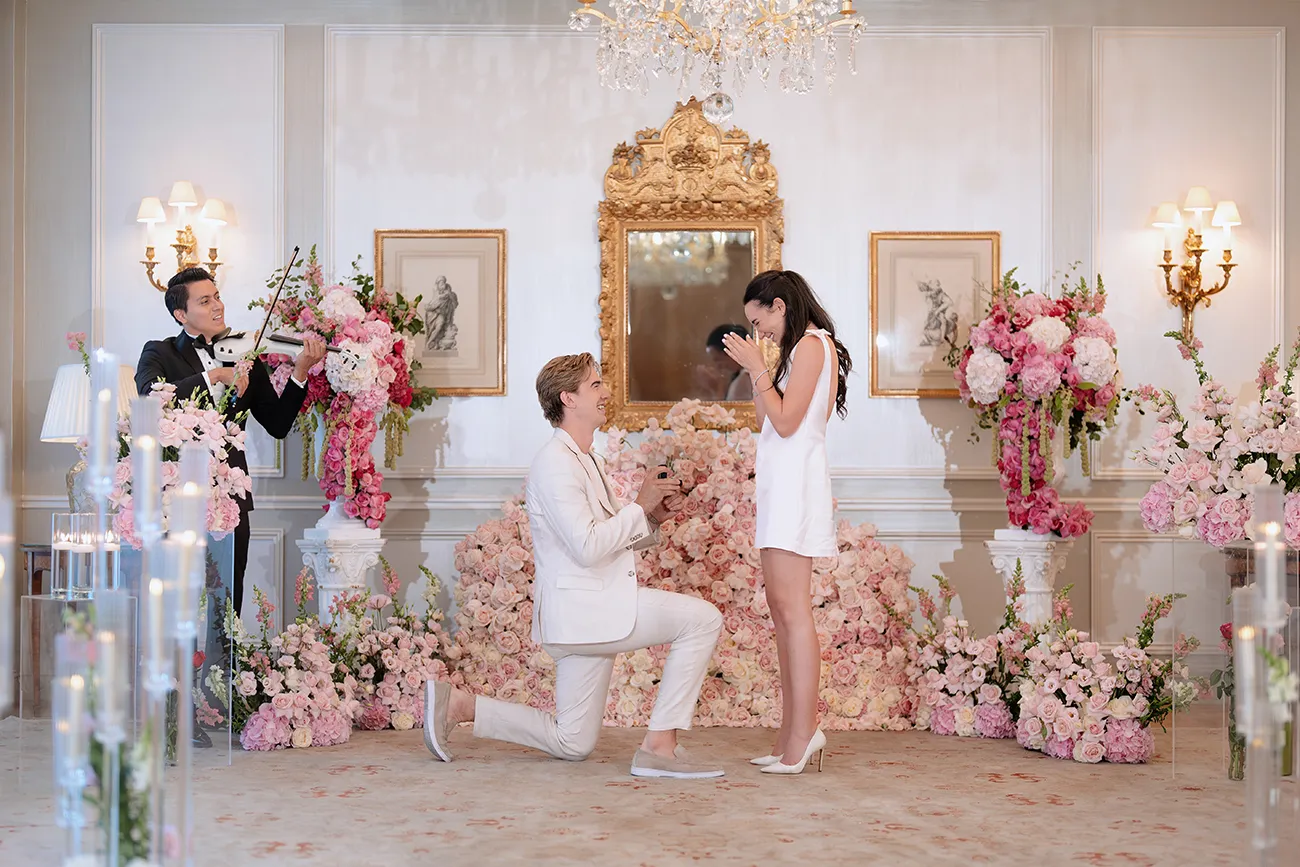
Prepare in the way that gives you confidence. If rehearsing helps, rehearse. If memorizing makes you stiff, do not memorize every word. Some gentlemen practice the complete sequence privately, including taking the ring box from the jacket and presenting it, because knowing what happens next settles their nerves. There are no hard rules here.
The one thing we would tell almost anyone is: take your time. The speech, the pause, the knee drop, and the question may feel much longer to you than they look to anyone else. There is no reason to rush through something you have spent months preparing for.
And when the speech is finished, ask the question clearly and on its own: Will you marry me?
Set the budget and date
Budget and date decide which ideas can move from conversation to booking.
A public location with a photographer, a private terrace, an Eiffel-facing suite, a yacht, and a château weekend are all Paris proposals, and they come with very different levels of privacy, production, transport, dinner, and planning. Most of our clients are working within a number. The useful question is not how to squeeze everything into it, but where the money will matter most to her.
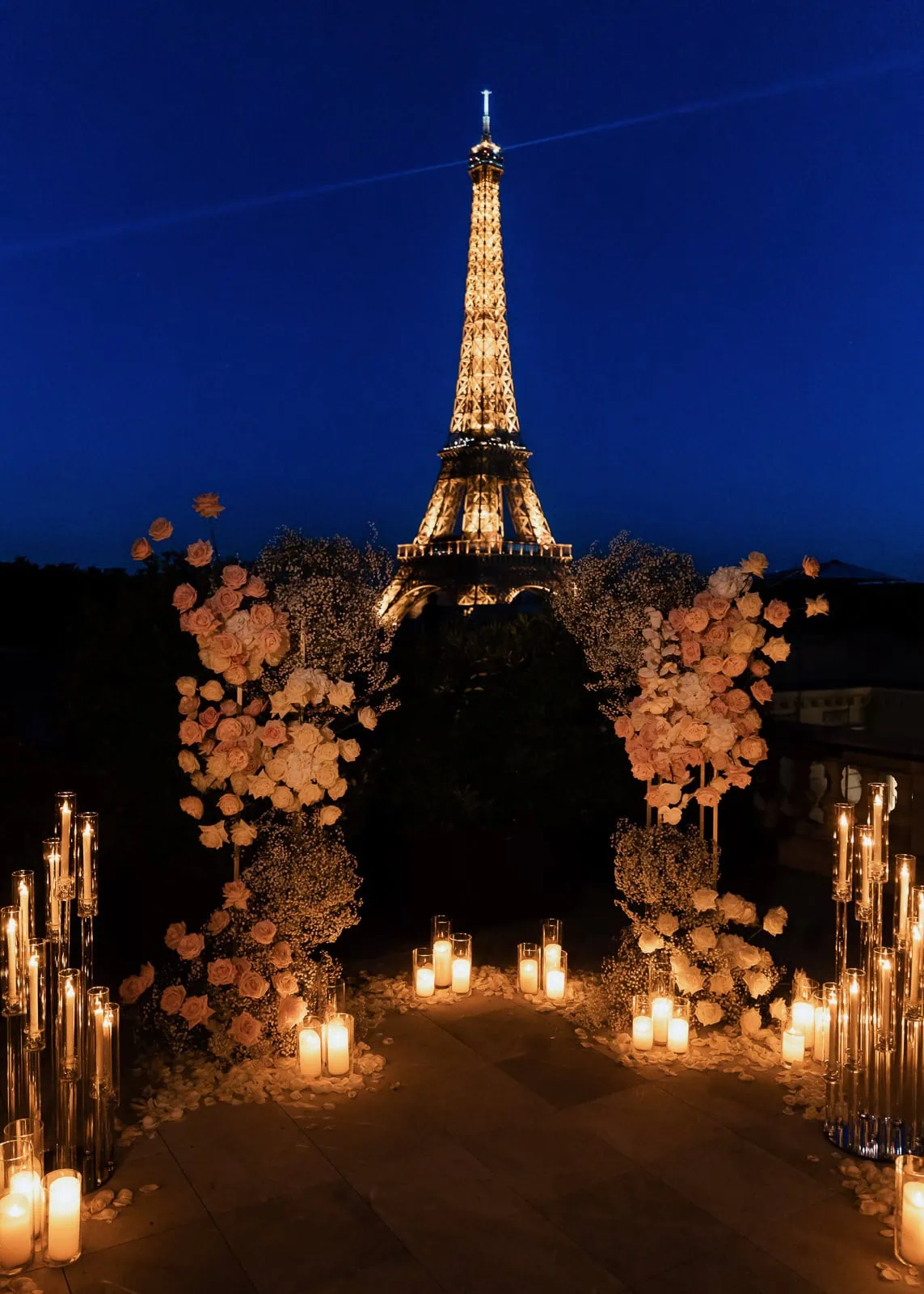
Agree on what the budget includes
There is no universal definition of a proposal budget, so agree on the scope before you start comparing venues, vendors, or packages. The ring, the flights, general shopping, and meals elsewhere on the trip are usually separate.
The proposal-night hotel can be different. If the room provides the setting, needs vendor access for setup, hosts dinner, forms part of the cover, or receives a final surprise while you are out, it belongs in the plan. When we advise on or coordinate that room, it is included in the budget under management.
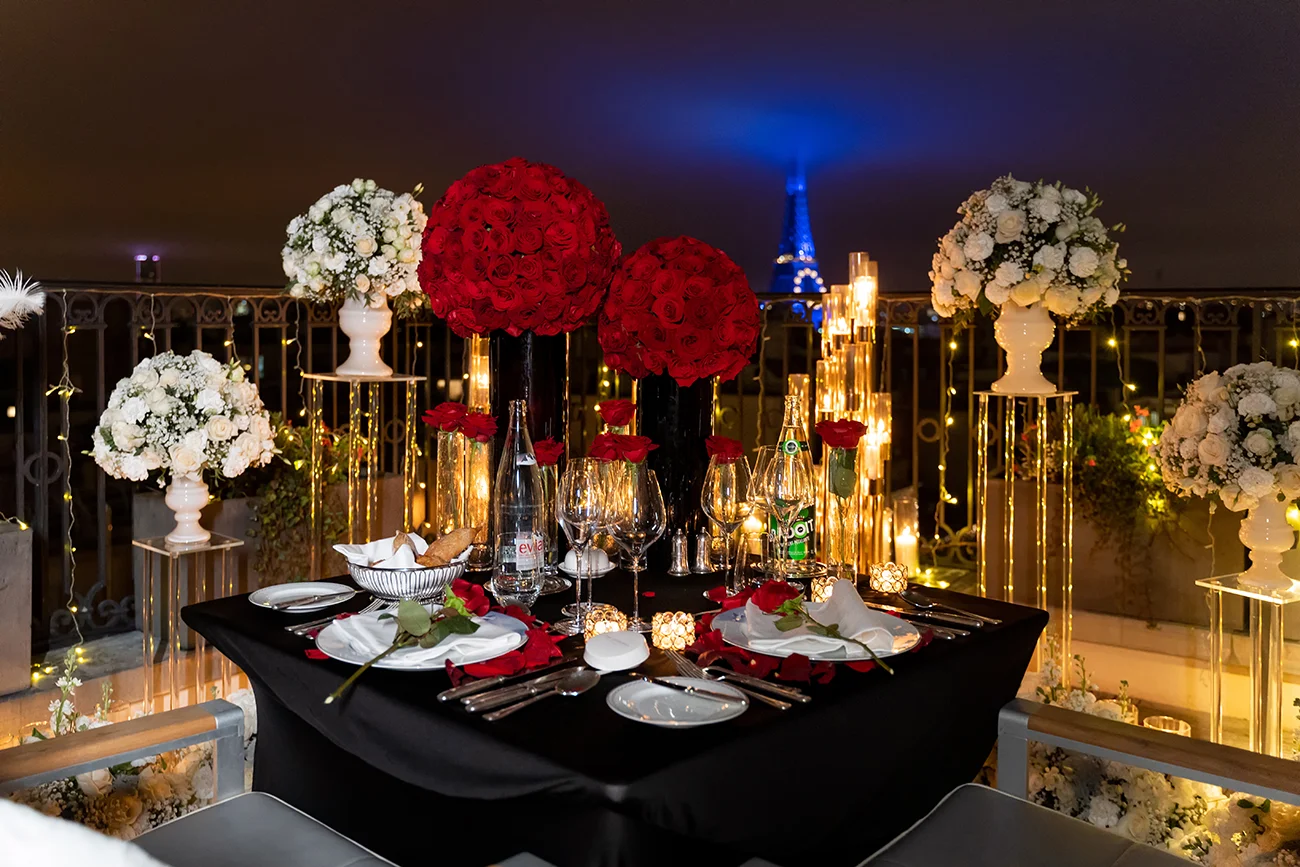
Spend it where she will notice the difference
Most proposal budgets involve trade-offs, so go back to the three parts of the evening: the proposal setting, your first dinner as fiancés, and your first night engaged. Work out which of them she will care about most, and put the money there rather than spreading it evenly and having everything at the lowest possible level.
The weakest part of an expensive plan pulls down everything around it. A €5,000 suit stops looking like one the moment the shoes and the shirt do not work with it, and a beautiful setting that is badly lit, badly photographed, or followed by a car that does not turn up has the same problem. Fewer good choices usually beat a long list of compromises.
And a little perspective while you decide: the proposal is the inexpensive part. You are about to plan a wedding.
Confirm the date early
A budget tells you what to consider. A date tells you what you can book.
Next summer is not a date. The photographer, filmmaker, musicians, venue, suite, yacht, and restaurant all need an actual day before anyone can confirm availability. And the date is not the same as the time of year: June tells you about the light and the weather, but June 21 and June 28 are two different answers when the terrace you want is free on one and taken on the other.
Choosing it early also tells her when to take time off, lets you book the flights, and leaves room to visit her parents beforehand if that matters to you or to them.
Kiss Me in Paris full-service proposal planning starts at €1,200 or 15% of the budget under management, whichever is greater. Production is quoted separately and confirmed only after you approve it.
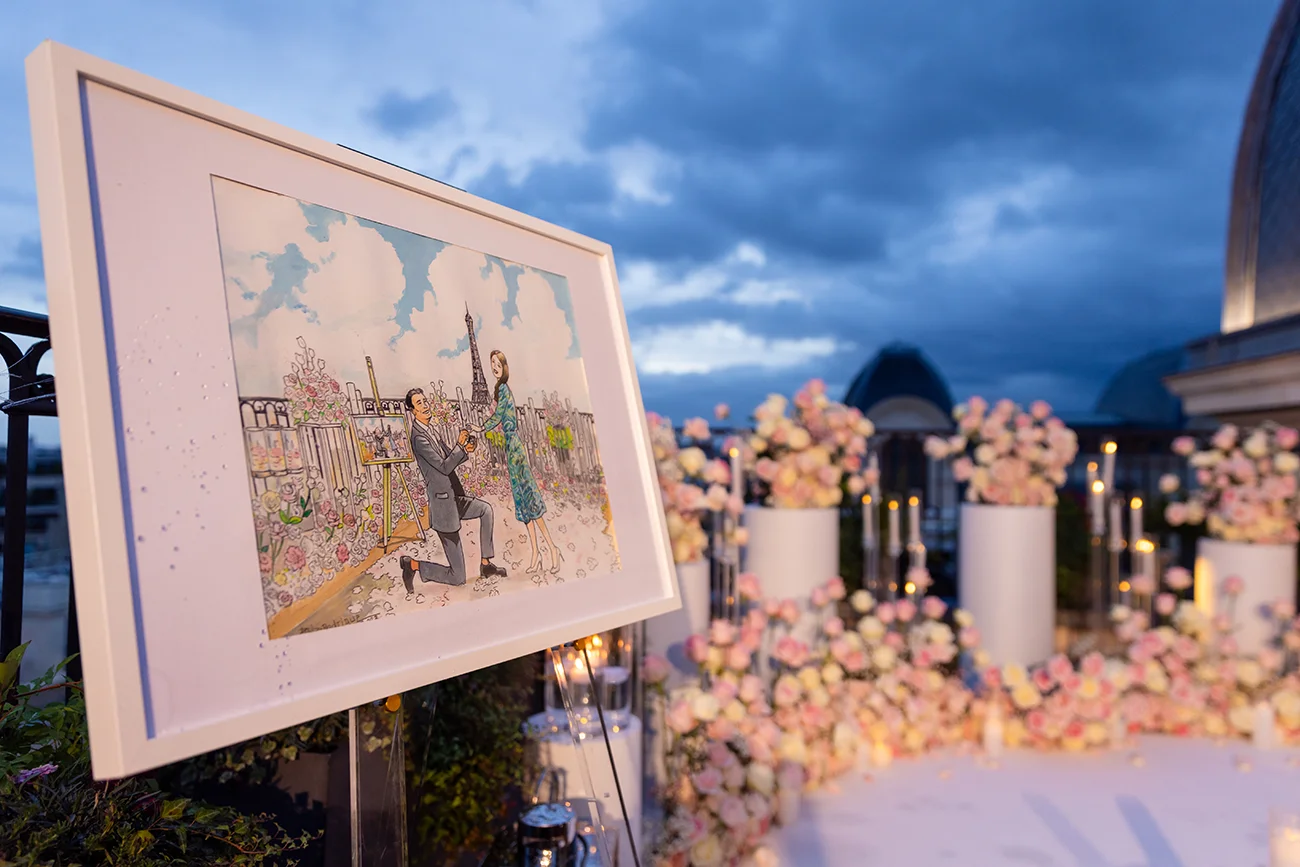
When is the best time of day to propose in Paris?
The proposal time depends first on whether the setting is public or private. In public, the clock is largely set by crowds, light, access, and opening hours. In a private setting, it is driven more by the sequence: blue hour, the Eiffel Tower sparkle, dinner, setup, hotel access, and what happens after the yes.
One thing applies either way: propose when you are both rested. Beautiful light is worth very little if one of you flew in overnight and is trying to enjoy the proposal on four hours of sleep.
In public, early morning has real advantages
At Trocadéro, Bir-Hakeim, the Louvre, or Montmartre, early morning usually means far fewer tour groups, vendors, and other couples competing for the same position, along with soft, flattering light. It also leaves almost the entire day ahead of you as a newly engaged couple and gives you a natural transition into engagement photographs while you are already dressed, happy, wearing a brand-new ring, and with the photographer who just documented the proposal. If you were planning an engagement session before the wedding anyway, this is an excellent time to do it.
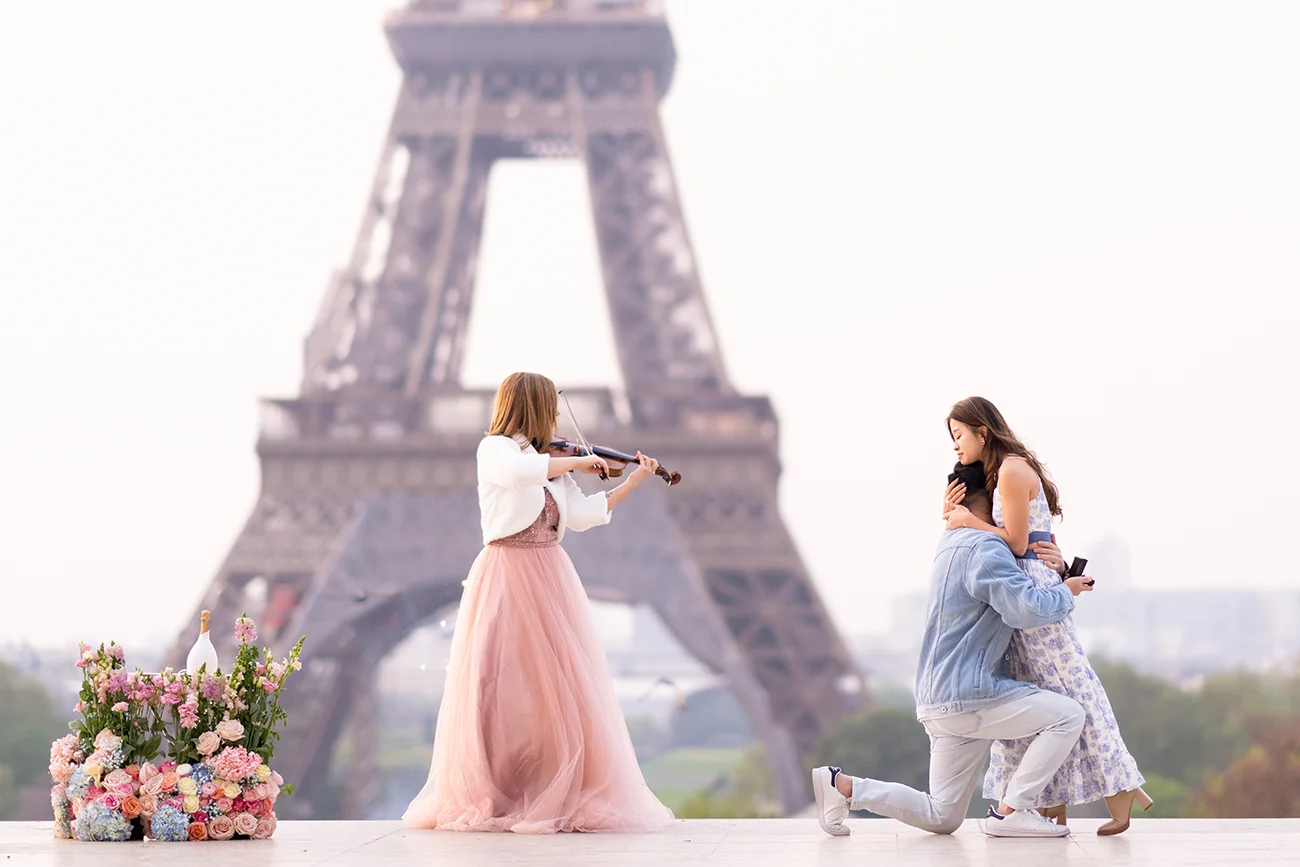
The hard part is getting her there. Around the summer solstice, sunrise in Paris is before 6:00 a.m., around 5:45 a.m. Work backward through hair and makeup, getting dressed for some of the most important photographs of the two of you, and a car across Paris, and the morning starts brutally early. Meanwhile, you are watching the clock because a photographer she knows nothing about is already in position. Without a credible reason for the hurry, a beautiful morning can turn into tension or even an argument in the back of a taxi. A sunrise proposal needs a cover story credible enough to justify the alarm.
Evenings in public work too. Expect more people the closer you are to the Eiffel Tower, Louvre, Notre-Dame, or Sacré-Cœur, especially at popular hours. Check access before you commit as well: the Tuileries, Luxembourg Gardens, Palais-Royal, and other gated spaces publish seasonal opening hours, while bridges, streets, and much of the Seine do not operate on the same park timetable.
In private, work backward from the evening
Start with the fixed point and work backward. That might be blue hour, the Eiffel Tower sparkle, a dinner reservation, the kitchen’s last service, the time vendors can enter the venue, or what you want to do immediately after she says yes.
Long summer days and short winter days create opposite schedules. In June, confirm dinner service before you fix the proposal time. In late December, it is dark before 5:00 p.m. and your table may not be until 8:00, and those three hours should be part of the plan: engagement photographs, a chauffeured drive through Paris, drinks somewhere you chose in advance, or simply time together before dinner.
After dark, plan the Tower and the lighting together
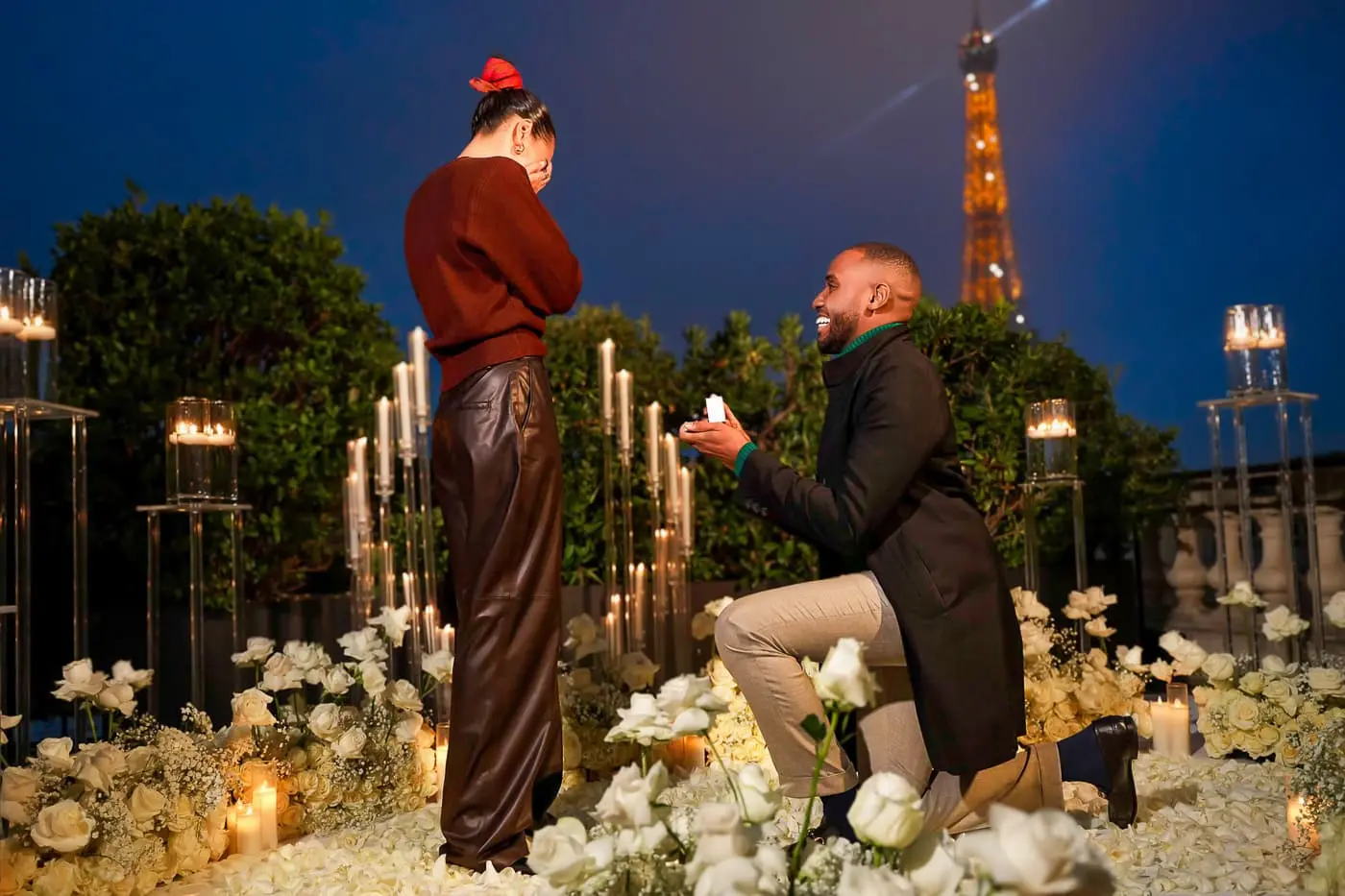
If the Eiffel Tower sparkle matters, do not build the proposal around one assumed minute. The Tower’s illumination responds to ambient light, so on a bright evening the official sunset can pass before the Tower is illuminated enough for the sparkle you expected. If the timing falls close to the hour, leave enough flexibility for the next one. The sparkle also reads more clearly on film than in a single photograph, so tell the photographer and filmmaker beforehand if it matters to you.
Lighting the couple matters just as much. Against an illuminated Eiffel Tower or Paris skyline, faces can fall into shadow. For a simple public proposal, a discreet lighting assistant with a continuous light can balance the couple against the brighter background without becoming intrusive. For a private setting with florals, musicians, and a table, lighting becomes part of the production: two lamps, and someone who knows where the attention should go.
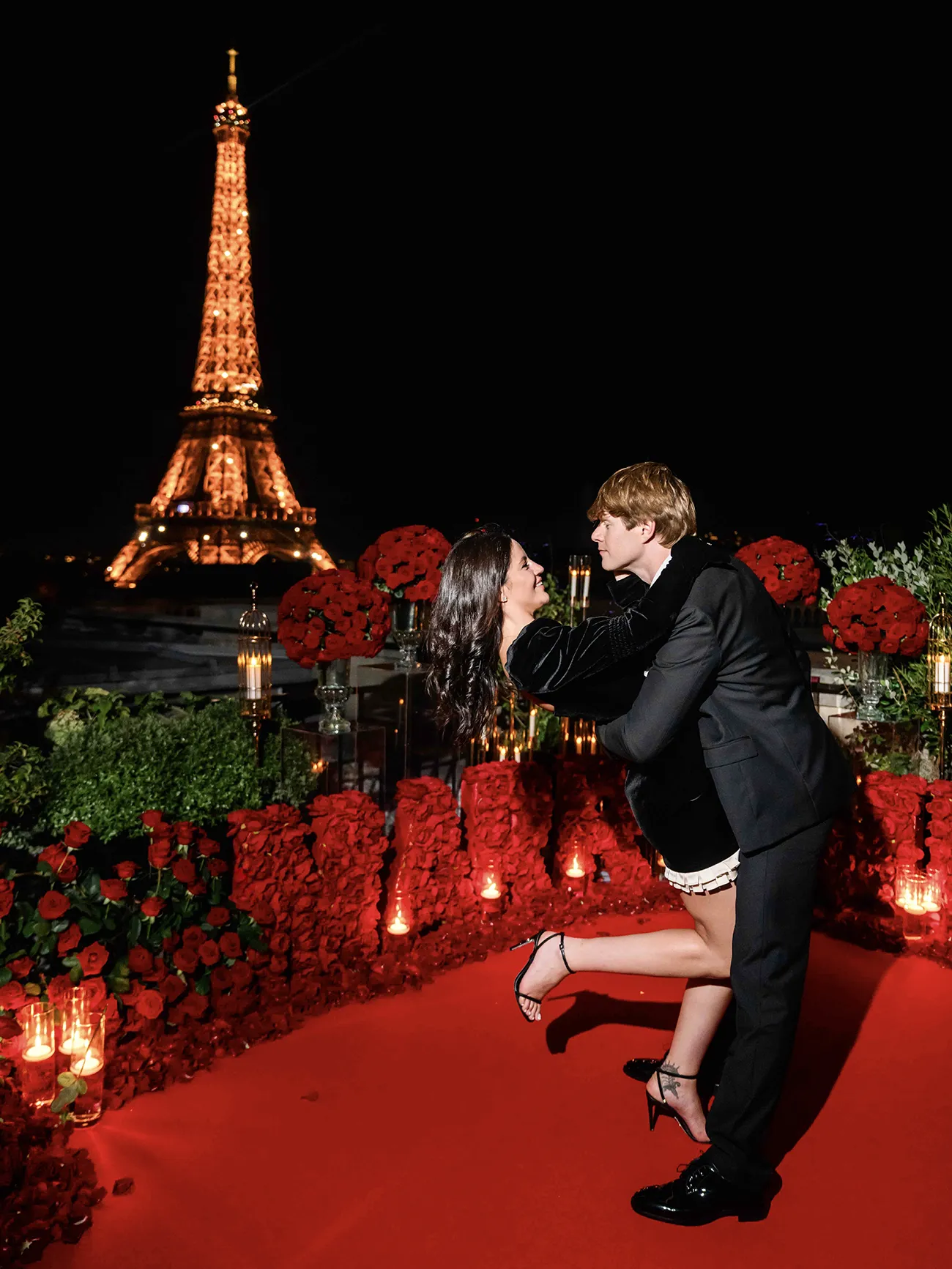
Lighting is also one of the first things people try to cut when a budget tightens. It should not be. The venue, planner, florist, photographer, and filmmaker all depend on it, yet it is remarkably easy for everyone to assume somebody else owns it. Give one person responsibility. There is a reason a Cirque du Soleil tent is not lit like a hospital corridor: light decides what people look at.
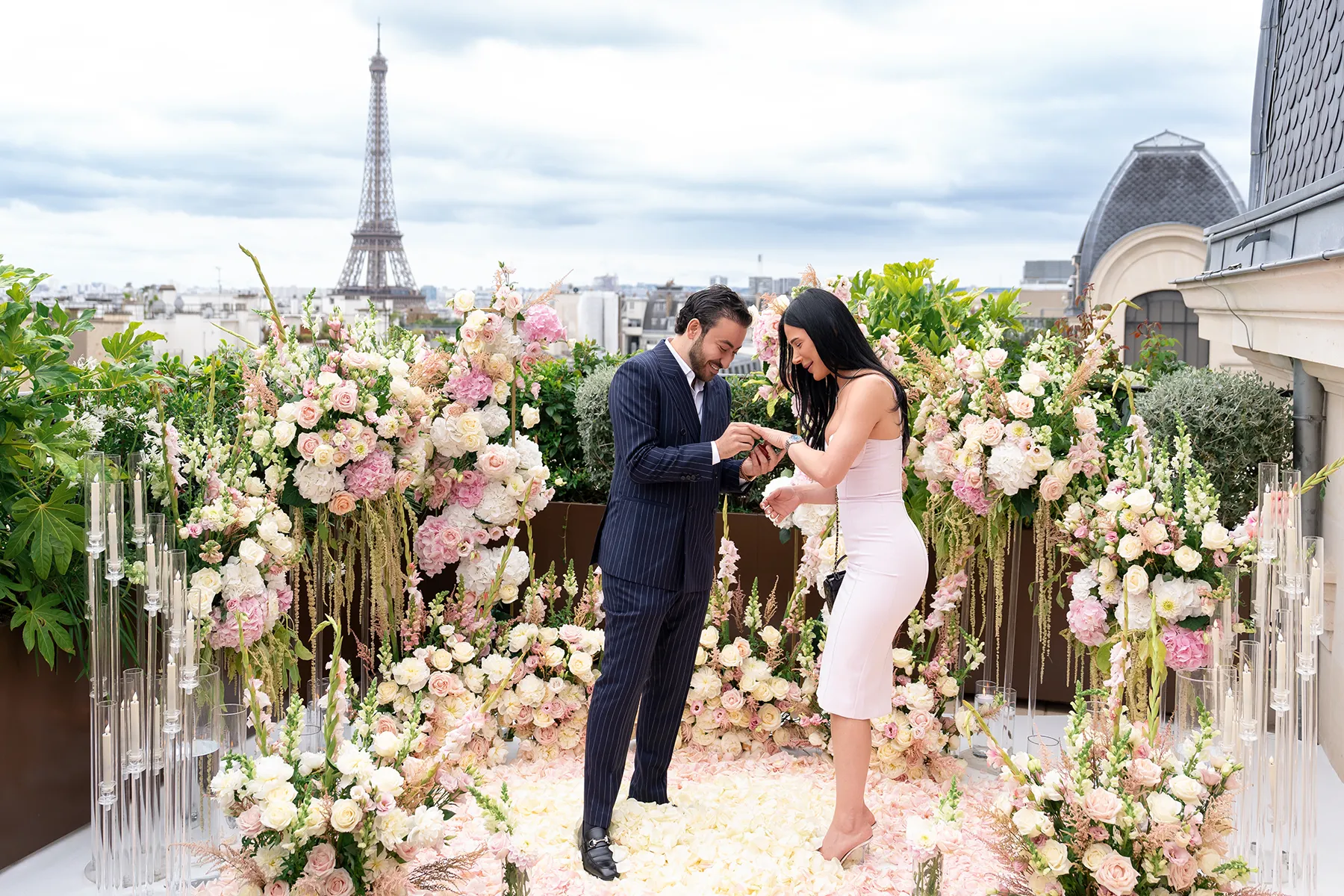
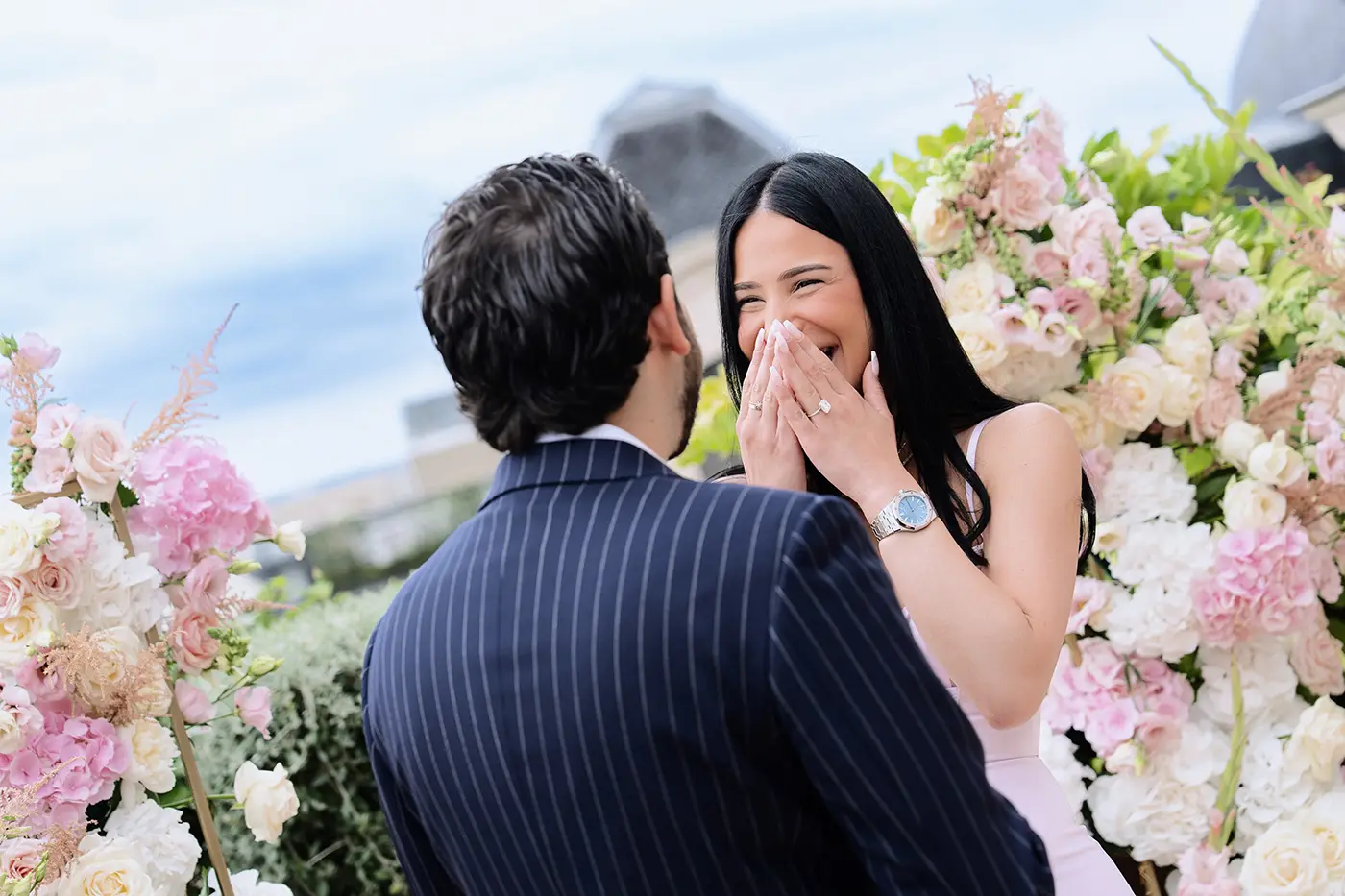
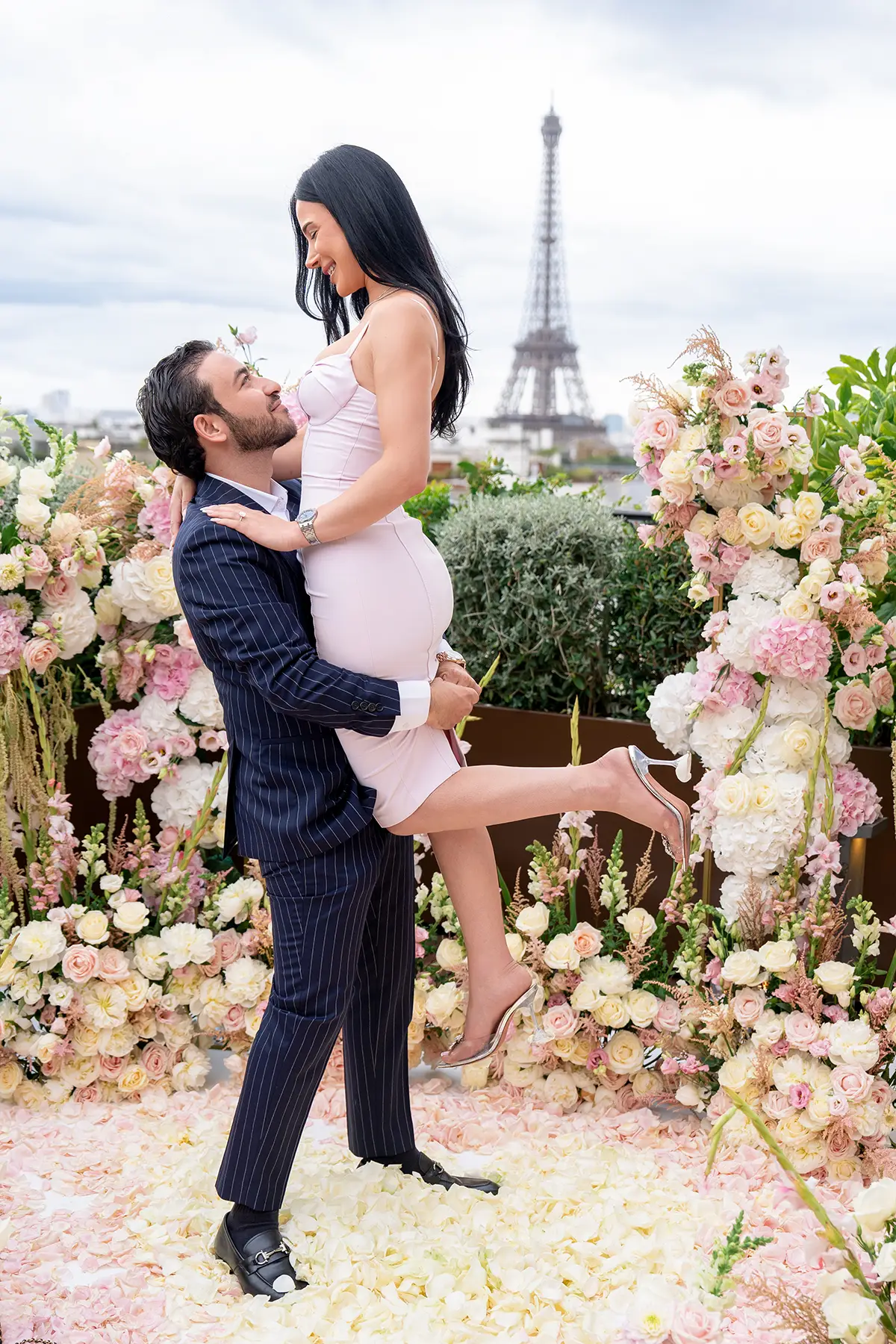
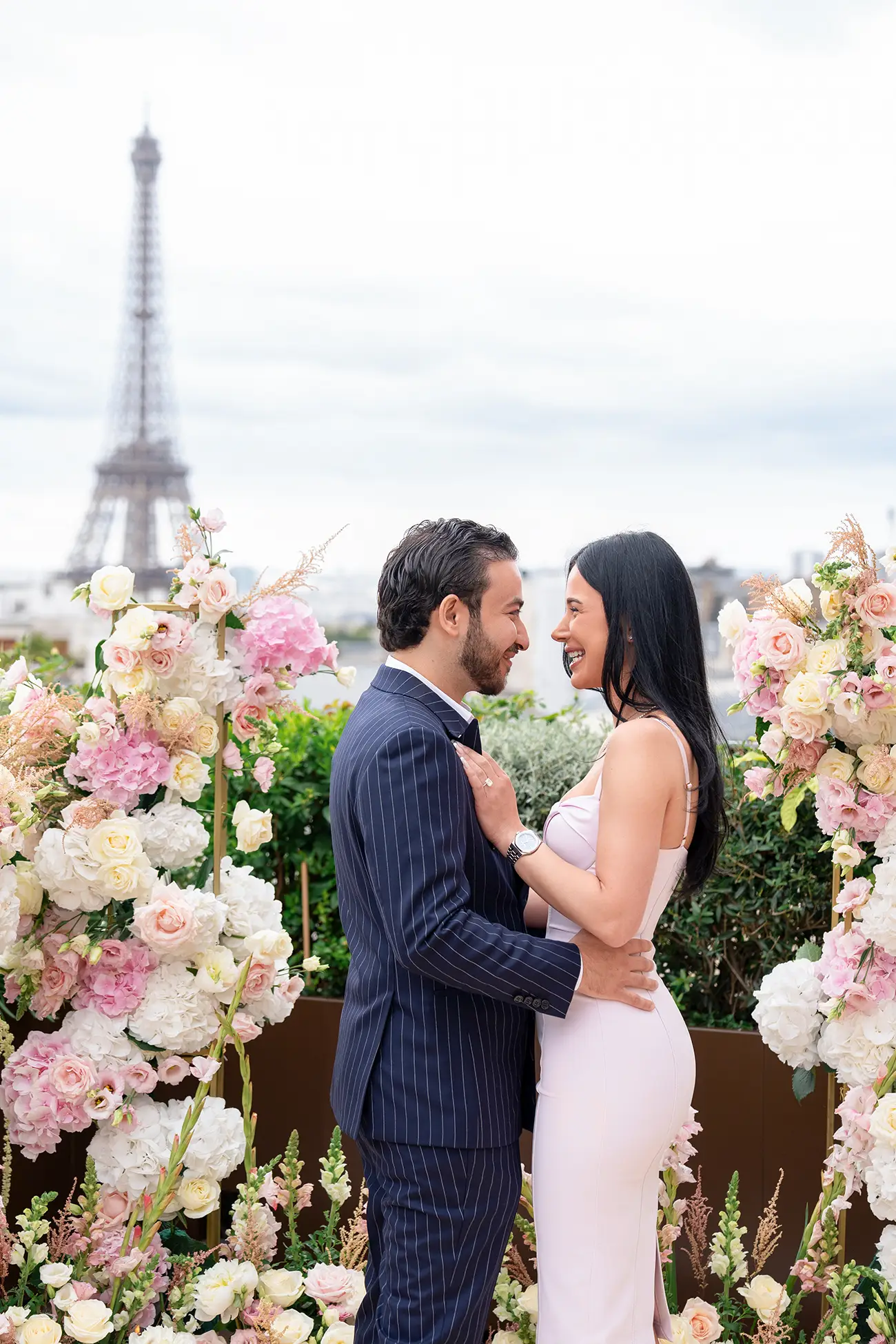
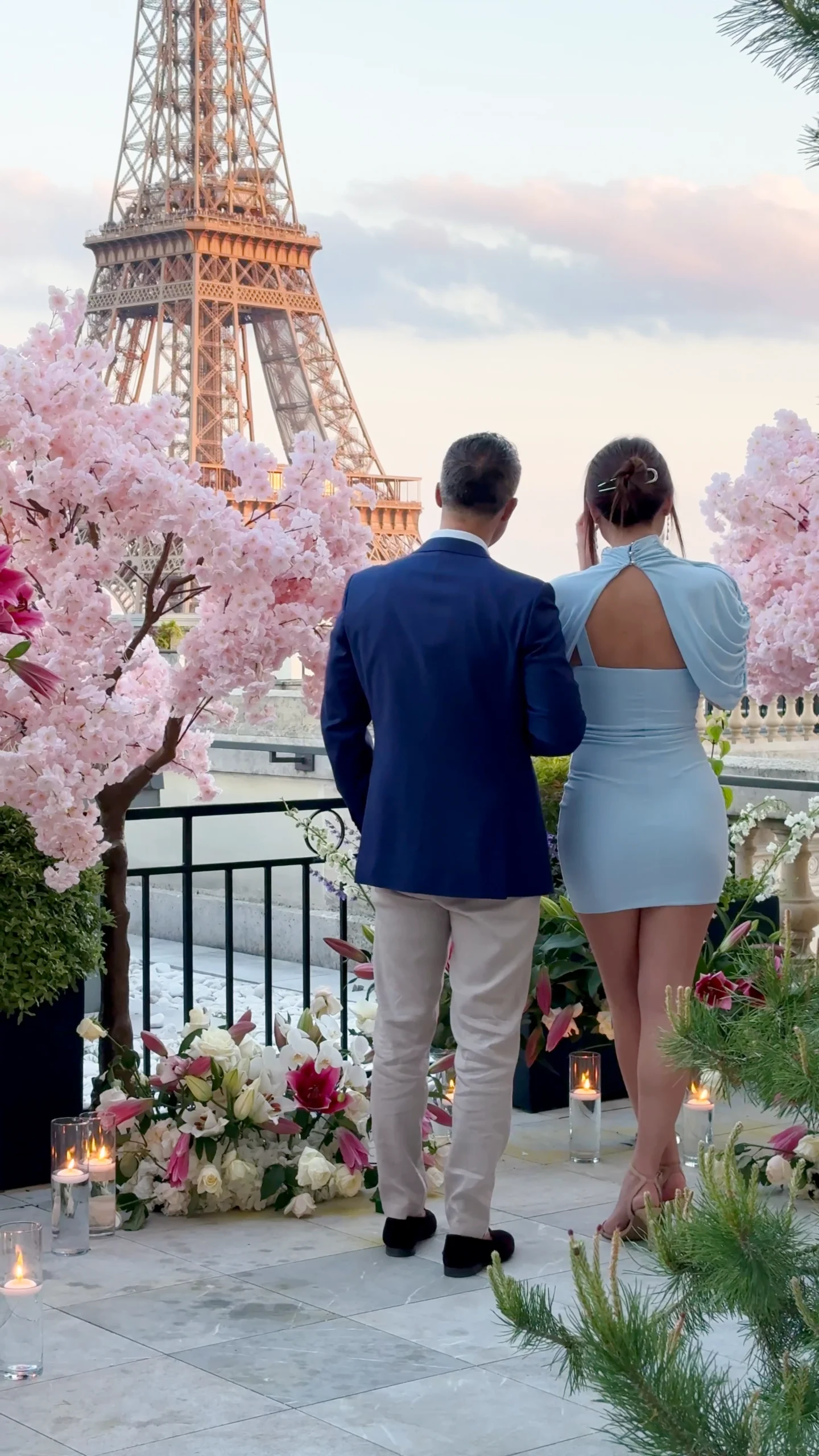
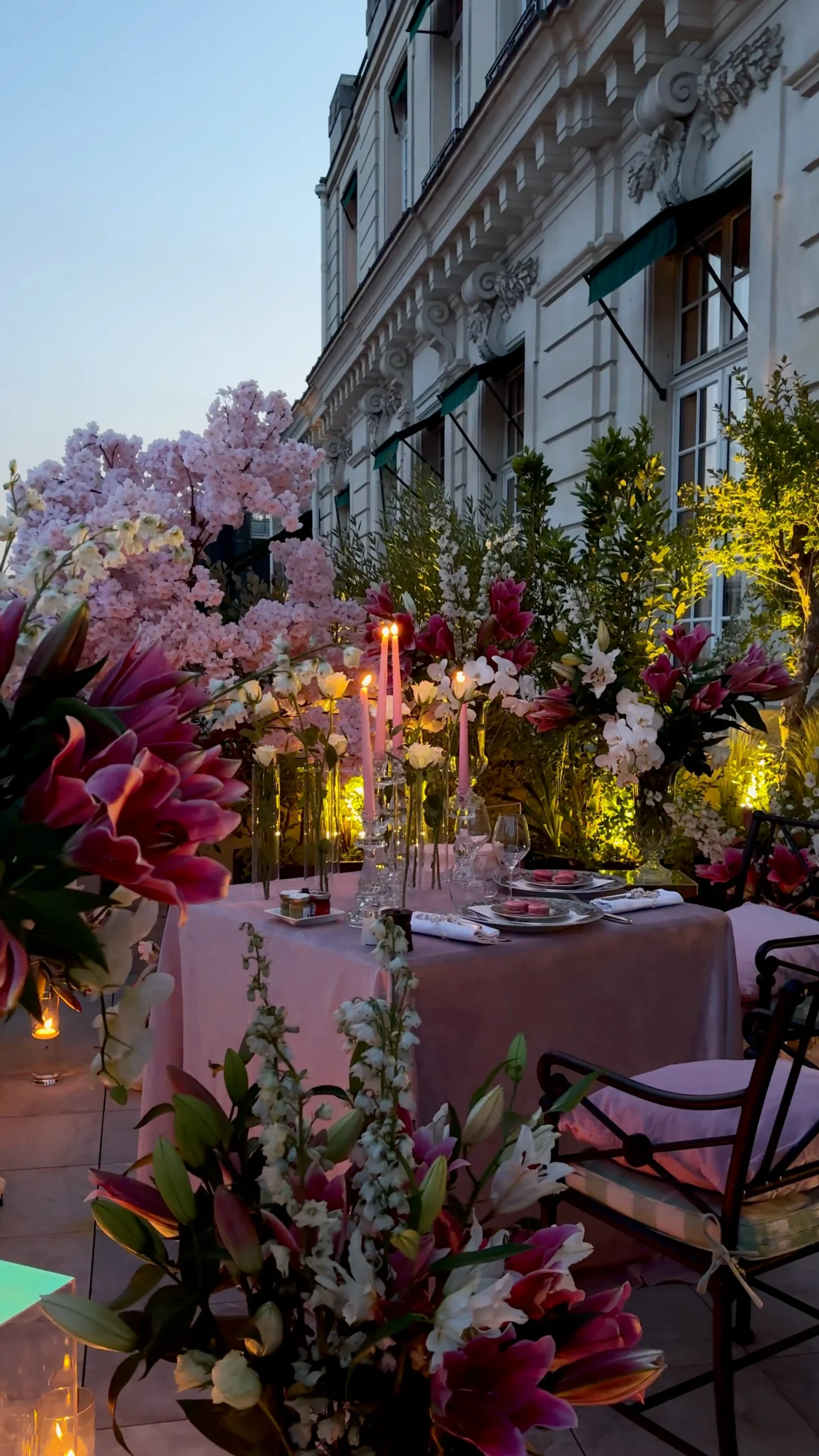
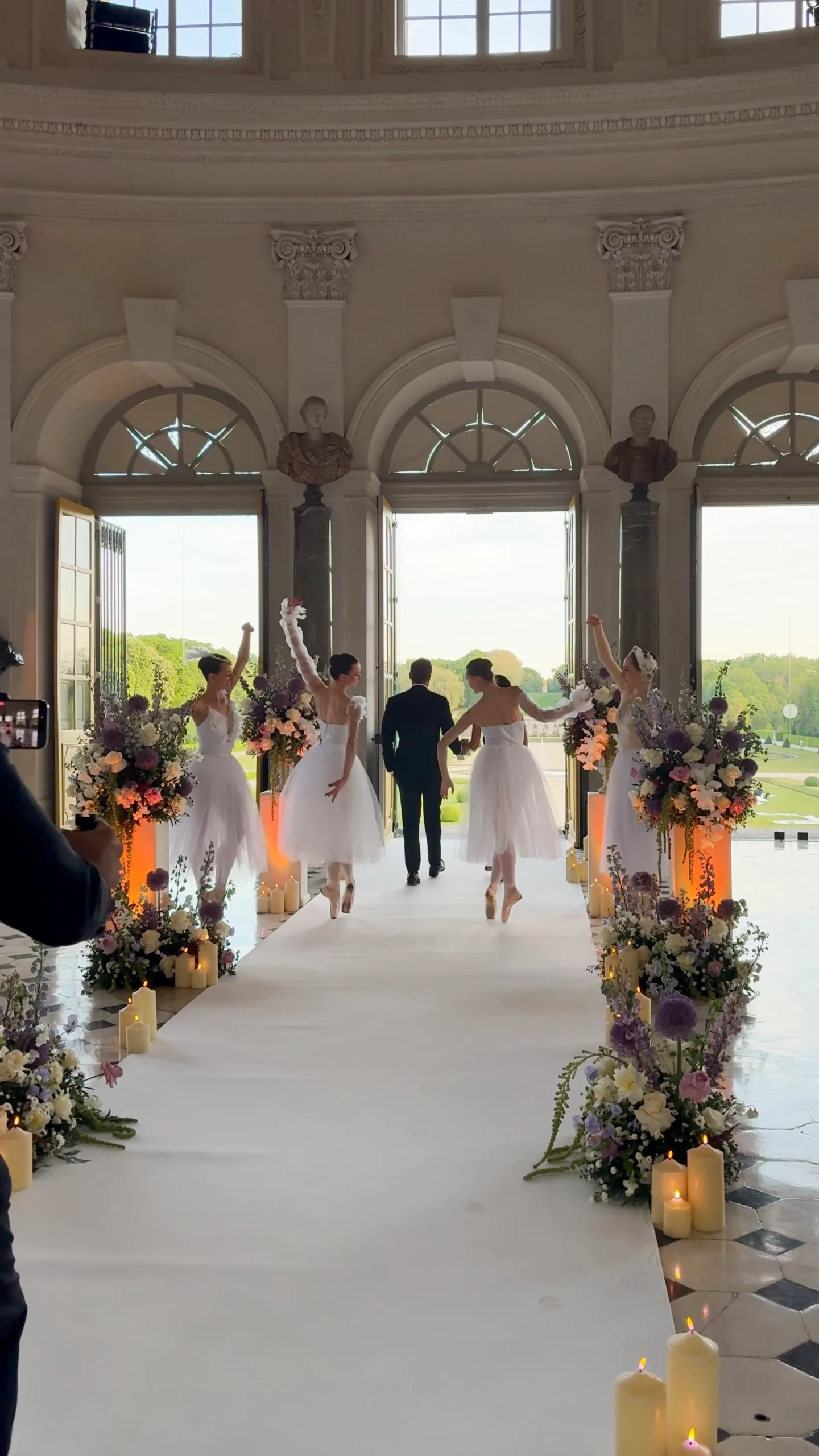
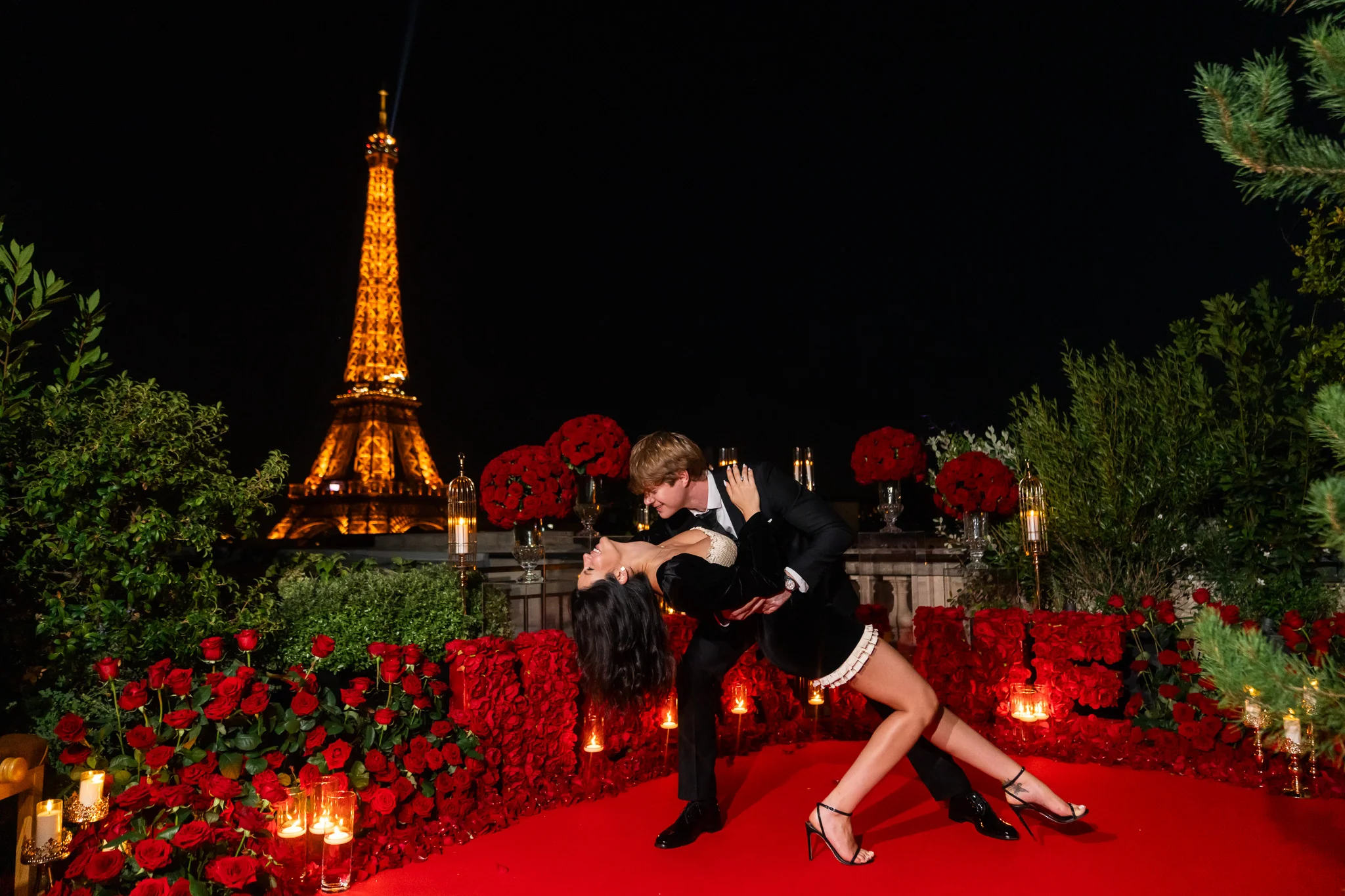
Paris proposal gallery
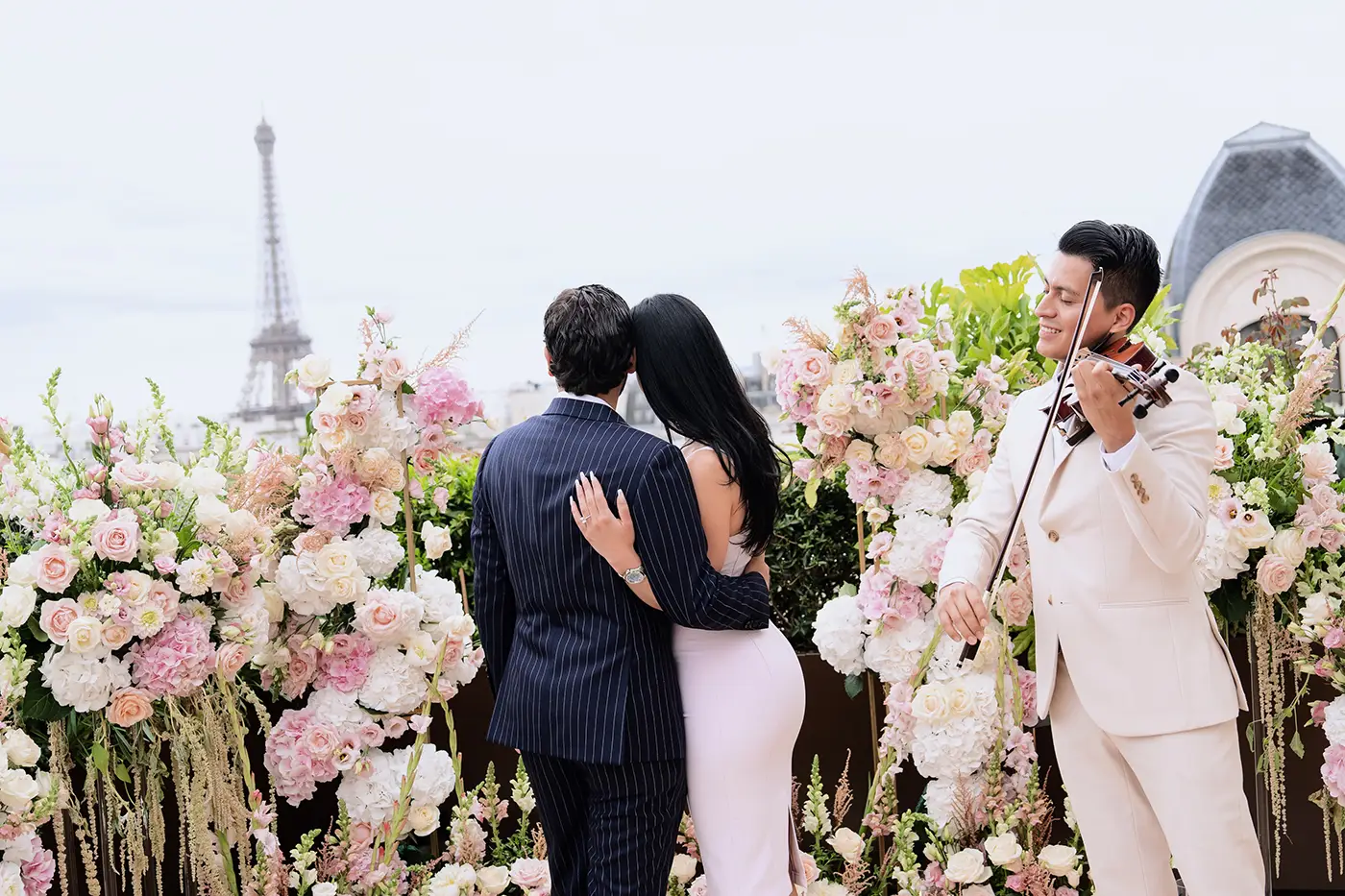
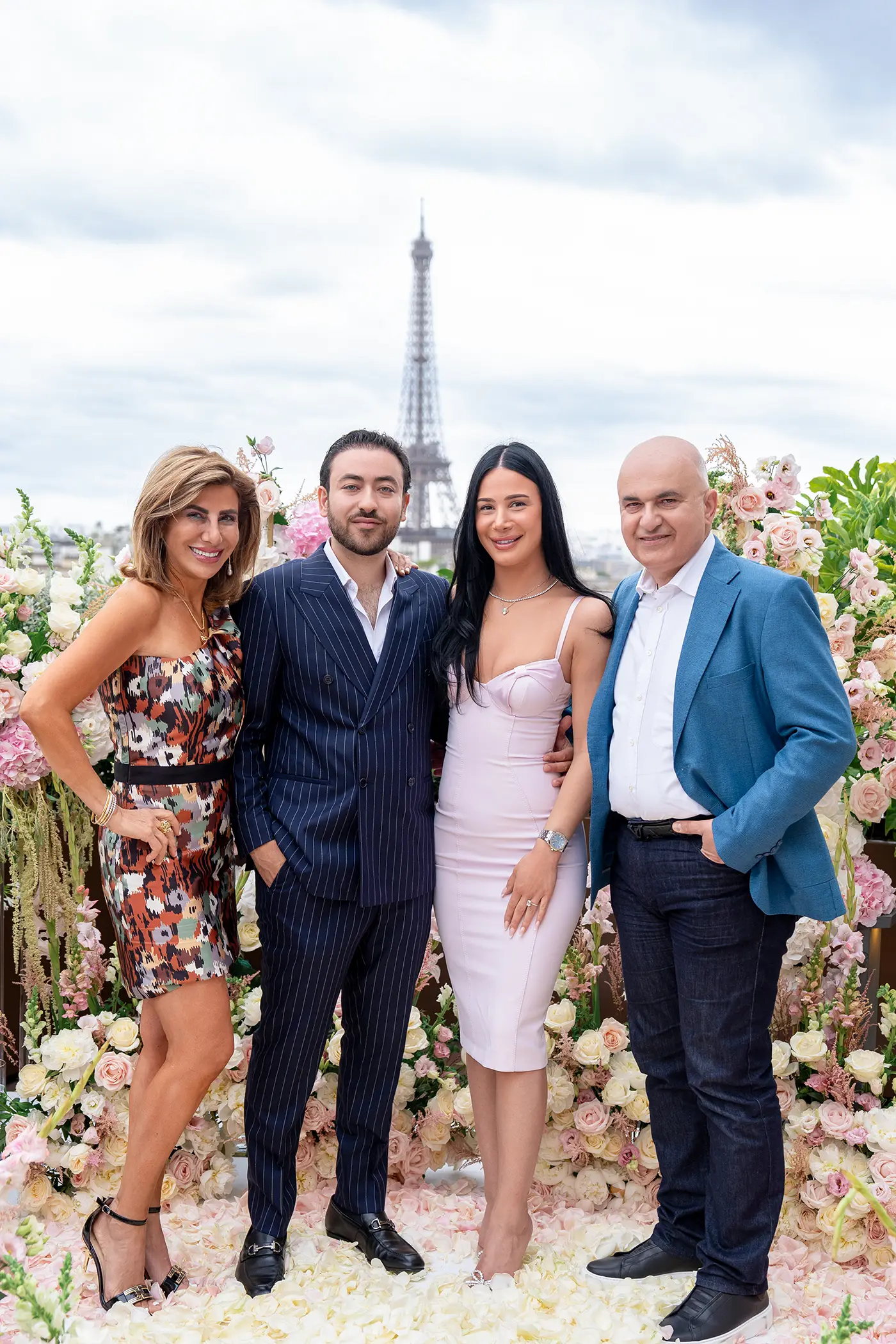

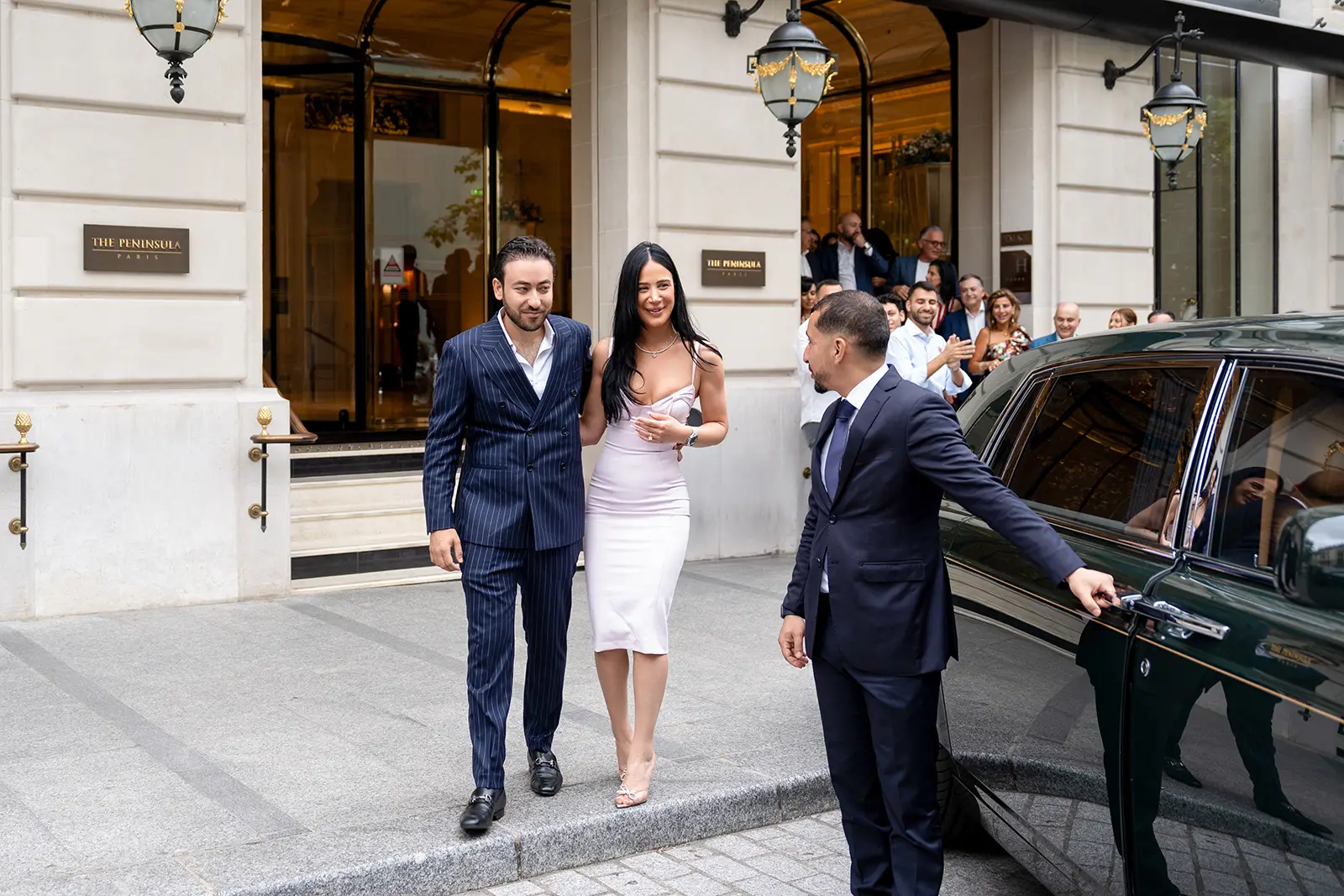
Watch Real paris proposals
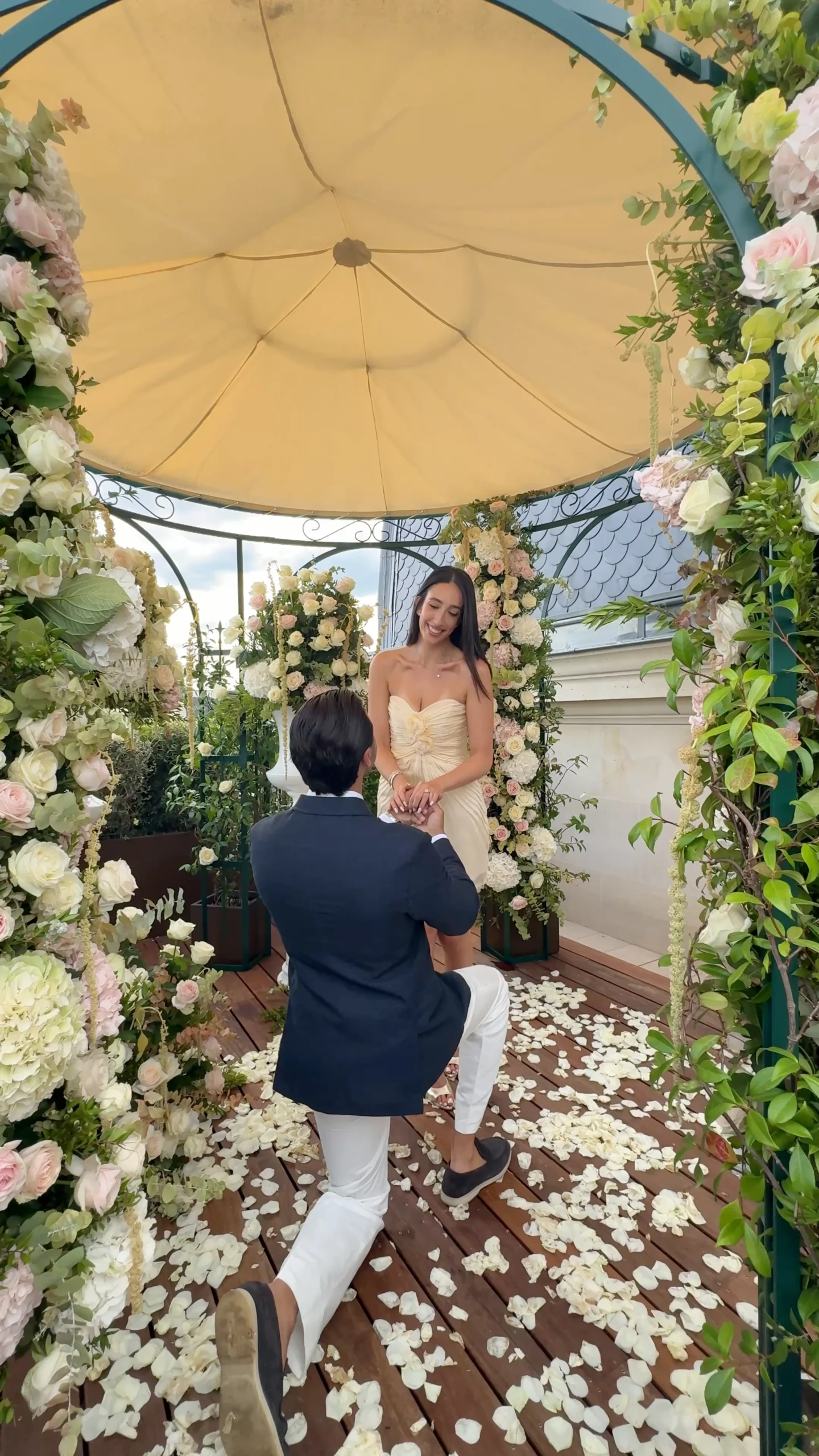
MORE PROJECTS
Shangri-La Paris Proposal
- ● Eiffel Tower
- ● Family
Peninsula Paris Proposal
- ● Secret Table
- ● Eiffel Tower
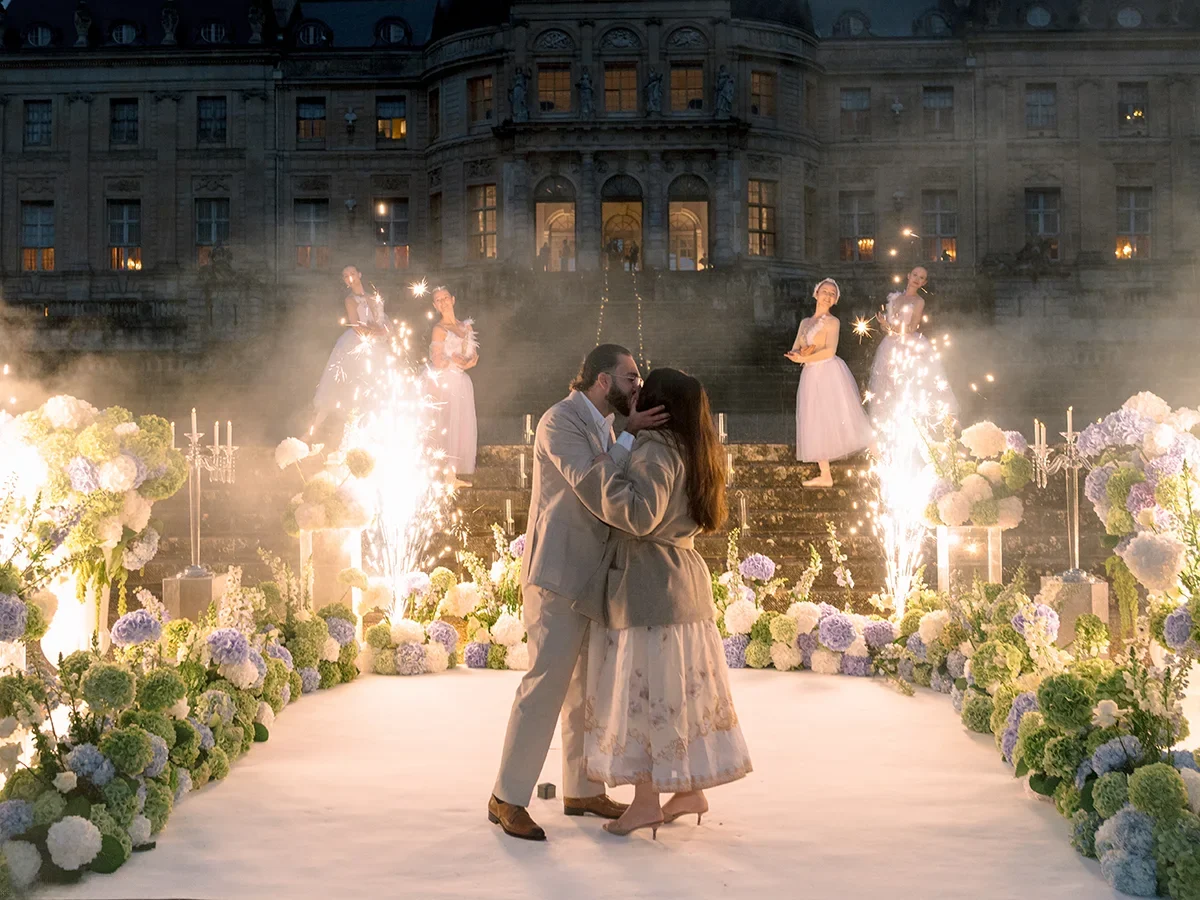
A Rainy VLV Proposal
- ● Château Proposal
- ● Vaux-le-Vicomte
Peninsula Paris proposal questions
CAN YOU PROPOSE AT THE PENINSULA PARIS?
Yes. Kiss Me in Paris plans private proposals at the Secret Table and the Rooftop Garden Suite.
The right setting depends on whether you want a rooftop for two, an overnight suite, family nearby, dinner on site, and a hotel stay after the proposal.
WHAT IS THE DIFFERENCE BETWEEN THE SECRET TABLE AND ROOFTOP GARDEN SUITE?
The decision starts with the booking. The Secret Table begins with a private rooftop dining experience and does not require a hotel stay. The Rooftop Garden Suite begins with an overnight suite and gives the room, staircase, roof garden, and terrace dinner a role in the proposal.
DO YOU NEED TO STAY AT THE PENINSULA TO PROPOSE THERE?
No for the Secret Table. The Rooftop Garden Suite requires an overnight suite booking.
The couple can still leave after dinner and sleep at another hotel.
CAN DINNER FOLLOW THE PROPOSAL?
Yes. Dinner can follow through L’Oiseau Blanc at the Secret Table or on the private roof garden when the
Rooftop Garden Suite service plan is arranged in advance.
The couple can also dine elsewhere and return to their hotel later.
CAN DINNER FOLLOW THE PROPOSAL?
Yes. Family can wait nearby and join after the yes when the guest plan and hotel access are coordinated in advance.
WHAT HAPPENS IF THE WEATHER CHANGES?
The answer depends on the setting. Under the hotel’s current terms, unsuitable conditions lead to another date or a table at L’Oiseau Blanc, depending on availability and the booking. The Rooftop Garden Suite gives the proposal an interior sequence, while the roof garden still needs a weather plan.
HOW MUCH DOES A PENINSULA PARIS PROPOSAL COST?
The Secret Table and Rooftop Garden Suite have different cost structures. One starts from a private rooftop dining booking; the other starts from an overnight suite.
Kiss Me in Paris planning starts at €1,200 or 15% of the budget under management, whichever is greater. Production is quoted separately.
Speak to us.
Your dates, your ideas, your questions — we’ll take it from there.