How to Elope in Paris in 2026
H2: Lorem ipsum is a dummy or placeholder text commonly used in graphic design, publishing, and web development.
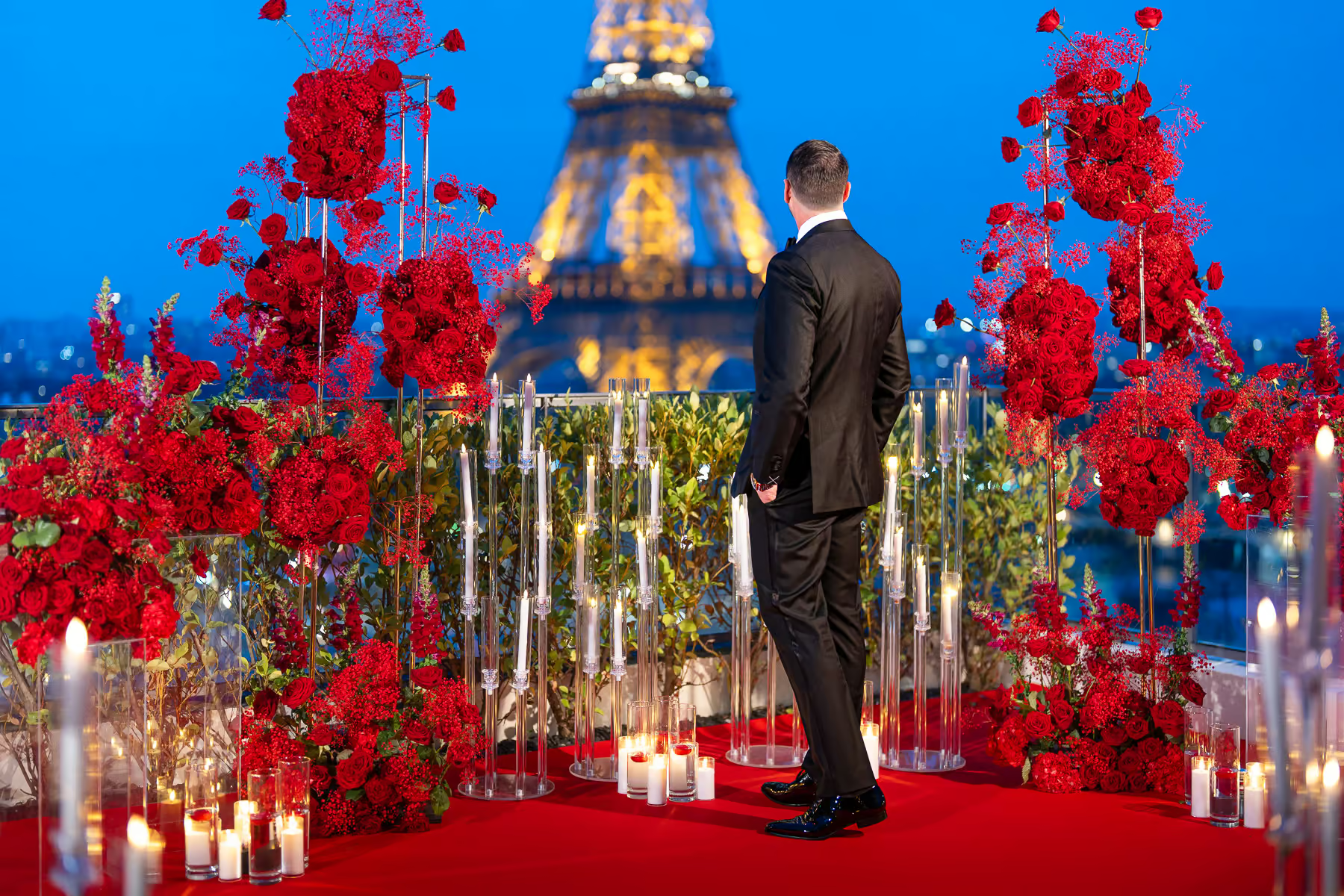
// Quick Answers for 2026
Most international couples legally marry at home, then hold a symbolic ceremony in Paris. That is the cleanest path for a couple flying in from abroad — it removes the residency requirements, gives full control over location and format, and lets the day be built around privacy, pace, and the people you want present rather than French civil paperwork.
The first planning decision is not the photographer, the flowers, or the vows. It is the structure of the day: public location or private venue, just the two of you or a few guests, simple ceremony or a more hosted celebration. Once that is clear, the rest follows.
This guide covers what matters first: where to hold the ceremony, how ceremonies work for international couples in France, what shifts the budget, who needs to be on the team, when to come, and when a planner is worth bringing in. It is written for couples planning from abroad who want clear answers before they commit.
Est. 2013. Full-service planning since 2017. 1,200+ events across Paris and France.
Can foreigners get legally married in Paris?
Yes, if at least one partner qualifies for a civil ceremony at a Paris mairie through domicile or residence in the arrondissement; most international couples marry legally at home and hold a symbolic ceremony in Paris instead. → Full legal guide
Public location or private venue?
A public location gives you Paris’s most iconic backdrops with no venue rental fee, while a private venue gives you privacy, calm, full control over the environment, and a stronger hosting experience at a higher but more predictable minimum investment.
How far ahead should we plan?
Three to six months is the recommended window for a comfortable planning process with strong access to venues, suppliers, and dinner reservations; short-notice elopements on one to two weeks’ notice are achievable for focused public-location formats, while private venues in peak season reward earlier booking.
What does a Paris elopement cost?
From under €3,000 for a focused public-location ceremony with a small supplier team to €15,000–€25,000+ for a private-venue elopement with full production; the single biggest variable is whether you book a private venue. → Investment details
Do we need a planner or will a photographer who coordinates be enough?
A photographer-coordinator is workable for a simple public-location ceremony with photography as the primary deliverable, and a planner becomes essential once you add a private venue, multiple suppliers, or guests you need to host. → What a planner does
Do we have to start at sunrise?
No. Sunrise is mainly useful at the busiest public spots; many other locations and all private venues work well later in the day.
// What Kind of Day Are You Building?
A Paris elopement is a family of formats, not a single template. Knowing which lane you are in early saves time, protects the budget, and shapes every decision that follows.
| Format | Typical guest count | What it involves |
|---|---|---|
| Elopement for two | Just the couple | No guest management, maximum flexibility. Strong fit for public locations, short-notice dates, and couples who want the city itself to be part of the day. |
| Elopement with a few guests | 2–12 close people | Intimate intent, but the plan now includes seating, guest arrival timing, weather cover, transport, and a clear dinner arrangement. |
| Intimate wedding | ~12–20 guests | A hosted occasion with venue access, guest comfort, staffing, and a more structured run of show. It may feel like an elopement to the couple, but the logistics say otherwise. |
| Small destination wedding | 20–100 guests | Venue operations, room blocks, transportation, dinner flow, and guest communications drive the plan. This falls under wedding planning services, not this guide. |
If your plan includes a private venue, a sit-down dinner, and more than a handful of guests, you are likely closer to an intimate wedding even if you still call it an elopement — and that is fine. The distinction matters for planning, not for labels.
// Public Locations vs Private Venues — The First Choice
The first planning decision that shapes a Paris elopement is where the ceremony happens. Everything else — timing, budget, supplier team, and how the day unfolds — follows from this choice.
A public location elopement puts you in front of Paris itself: riverbanks, bridges, gardens, grand viewpoints, and architectural backdrops that are difficult to match anywhere else. There is no venue rental fee, and the views at the best spots — Trocadéro, Bir-Hakeim, Pont Alexandre III, Luxembourg Gardens — can be extraordinary. The trade-off is shared space. There is no way to control who walks into the frame, and at the most popular spots, timing is your main tool. Sunrise works for the busiest locations; Sunday mornings are often the calmest window of the week across Paris; and evening elopements offer warm, flattering light with a natural transition into dinner.
Think in types rather than a long list: major viewpoints (Trocadéro, Bir-Hakeim), elegant bridges (Alexandre III, Pont des Arts), quieter riverbanks along the Seine, and parks or residential streets (Luxembourg Gardens, Palais Royal, Avenue de Camoëns) that feel less exposed and offer more flexibility throughout the day.
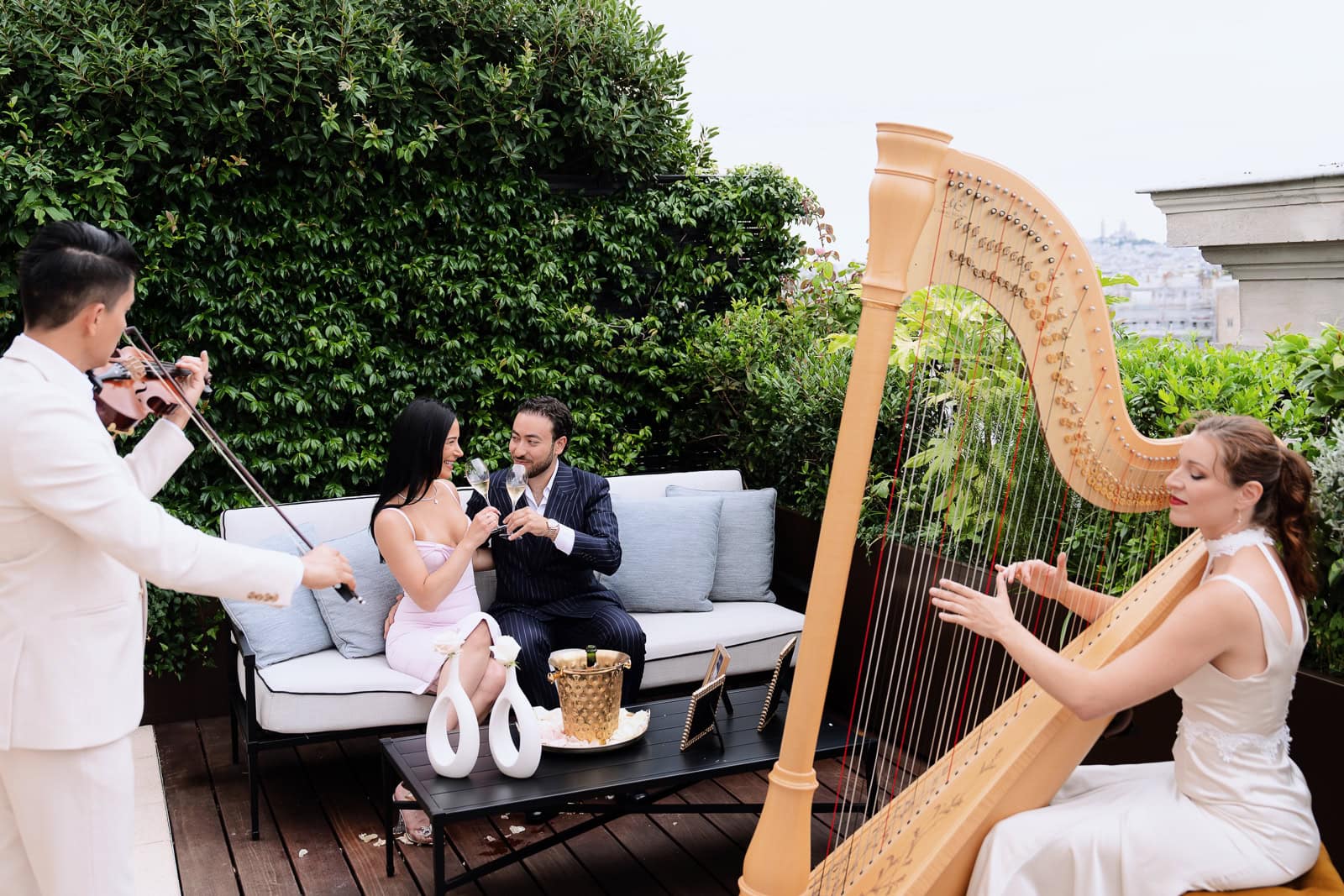
A private venue elopement is a fundamentally different experience built around privacy, control, and hospitality. The guest list is managed, sound and access are controlled, and you decide how long you stay and how the celebration flows into dinner. The cost is higher because the venue is a core line item, but the environment is calmer, cleaner, and easier to host.
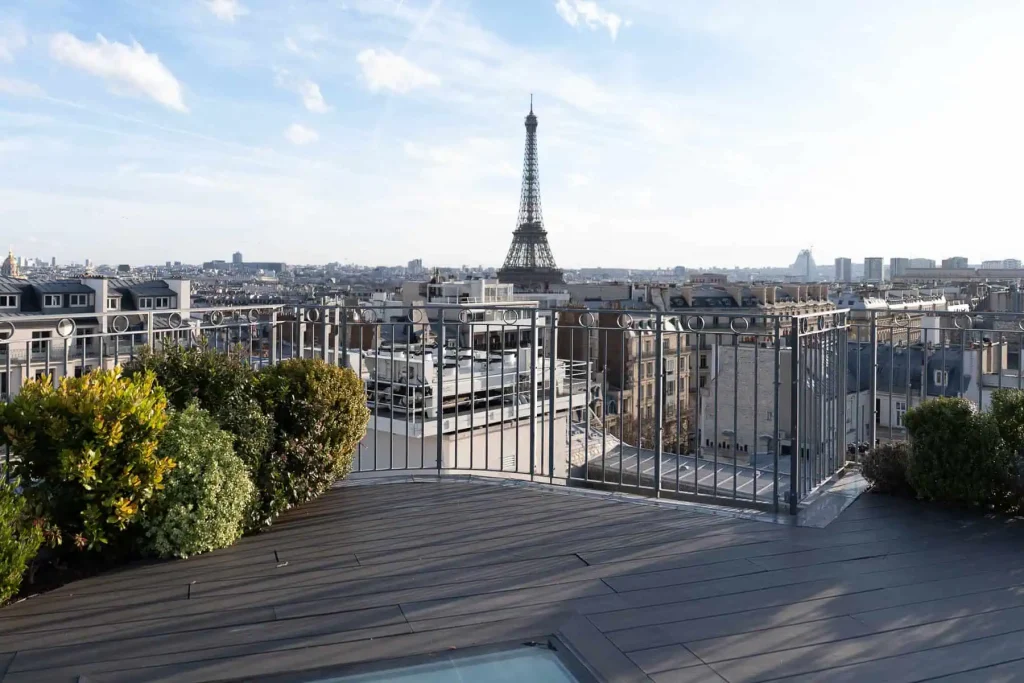
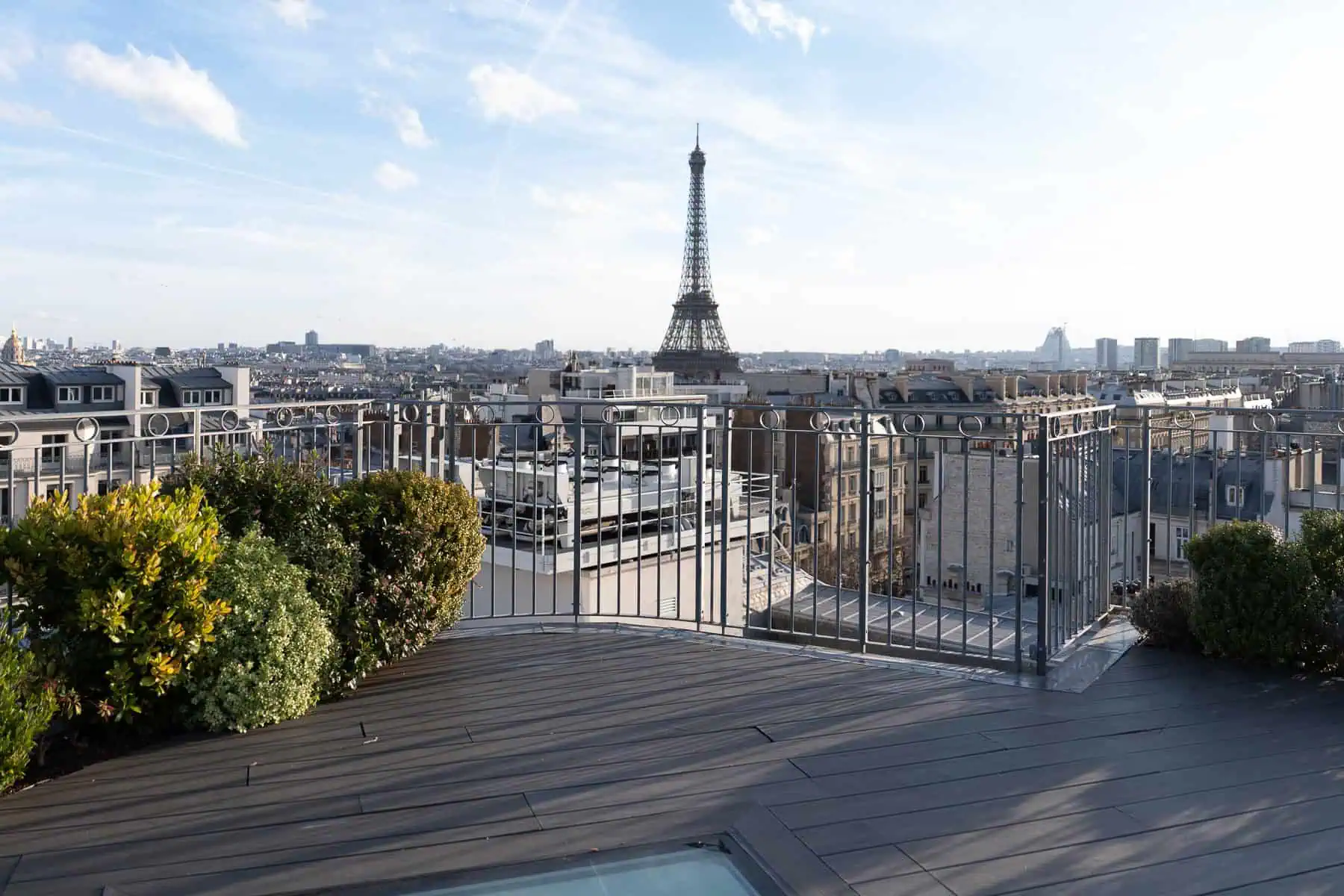
Private venues in Paris operate on two access models, and the distinction matters for budgeting. Time-slot spaces — such as the Peninsula Secret Table rooftop, the Copernic rooftop, residential Eiffel Tower terraces, and private Seine yachts — are booked for a defined window; the Peninsula Secret Table terrace, for example, accommodates up to five people including the couple, with larger groups hosted on the main L’Oiseau Blanc terrace below. Overnight suite venues — such as the Shangri-La Eiffel Tower terrace suites, the Four Seasons George V penthouse, and the Bulgari penthouse — are reserved by the night, with the experience running from getting ready through a private dinner and the next morning.
Beyond Paris, private estates and châteaux — Vaux-le-Vicomte, Château de Villette, Château de Fontainebleau, Château de Bouffémont — add full grounds and interiors, with access ranging from four-to-eight-hour rentals to overnight stays.
Weather at a private venue is managed, not eliminated. With a private space and a well-connected planner, productions can sometimes shift within the window to avoid heavy rain, and in light drizzle the ceremony often continues with a refined backup plan.
| Public Location | Private Venue | |
|---|---|---|
| Experience | Iconic views, city energy, movement between spots | Privacy, calm, full sensory control, prestige |
| What you control | Timing and route | Nearly everything on-site |
| Weather | Managed through timing and backup locations | Managed through flexible scheduling and covered spaces |
| Crowd factor | Managed but never zero | None — private access |
| Ceremony elements | Vows, officiant, photographer, bouquet, simple florals | Same core elements, plus expanded setup and dining |
| Budget driver | Supplier costs only (no venue rental) | Venue rental plus supplier costs |
If you want iconic Paris with movement and flexibility, start with public locations. If you want privacy, hospitality, and stronger control, start with private venues. Neither is inherently better — the right choice depends on what you want the day to feel like.
→ Full venue breakdown: Best Places to Elope in Paris
→ Shangri-La Paris Elopement · Peninsula Paris Elopement
// Symbolic Ceremony vs Legal Marriage in France
Most international couples complete the legal marriage at home and hold a symbolic ceremony in Paris — and there are strong practical reasons this is the dominant approach.
After that, your budget is shaped by what you choose to prioritize: what matters most to your partner, and what you want the experience to feel like. Fresh florals are often the next biggest factor, followed by planning support and the extras — photo, video, musicians, transport, dining, and champagne.
A legal French civil marriage requires that at least one partner establish domicile or continuous residence in the commune, with publication of the marriage bans at the local mairie and a minimum waiting period before the ceremony. For a couple flying in for a short trip, that timeline is rarely feasible. The mairie ceremony itself is conducted entirely in French by a civil officer who reads required articles of the French Civil Code, asks for consent, and declares the marriage. There is no English-style vow exchange.
A symbolic ceremony removes those constraints. You choose the location — public or private. You choose the officiant — English-speaking, multilingual, religious, secular, or someone close to you. The format ranges from fully personalised vows to a traditional repeat-after-me structure, simple ring vows, or a short “I do” response after the officiant’s reading. Most couples choose a combination: an officiant-written ceremony with a short set of traditional vows and a ring exchange. A ceremonial certificate is signed on-site.
Some couples do both — a civil ceremony at the mairie in the days before, followed by a symbolic celebration at their chosen venue. This requires advance coordination with French authorities and is best suited to couples with genuine ties to France.
→ Residency rules, document checklist, and embassy contacts: Legal Requirements for Marrying in Paris
→ Ceremony design, officiant selection, and vow formats: Planning Your Ceremony

// What a Paris Elopement Costs in 2026
The single largest variable in a Paris elopement budget is the venue model — whether you choose a public location with no rental fee or a private venue where the space becomes a core line item.
A focused public-location ceremony — with an officiant, photographer, hair and makeup, a bouquet, and transportation — can come together for under €3,000 in supplier costs when the plan stays tight. Add video, private dining, live music, or a luxury vehicle and the number climbs from there, but the location itself remains free.
A private-venue elopement at a Palace hotel or château — with ceremony florals, live music, a private chef dinner, champagne, and a suite — can reach €15,000–€25,000 or more depending on scope.
For planner-led elopements with private venue access, expect a minimum total budget in the €7,500+ range. The total depends on venue choice, guest count, and which services matter most.
A practical way to think about the budget is five areas: venue access, planning, supplier team, transport, and food and drink. After the venue, the main cost drivers are guest count (seating, transport, service flow), hair and makeup timing (early starts for sunrise carry a premium with Paris-based artists), transportation (number of hours and vehicles for multi-location coverage), and whether you add music, video, or expanded dining.
→ Ready to discuss scope and investment? Paris Elopement Planner
// Who You Need for a Paris Elopement
Even a focused elopement involves several professionals who need to work in sync on timing, locations, and the conditions of the day. The team scales with the format, but the core roles are consistent.
A planner or lead coordinator designs the day, sequences locations, secures venue access, manages contracts, builds the timeline, coordinates suppliers, and serves as the single point of contact from first call time to final departure. This role becomes critical once the plan involves a private venue, a longer timeline, multiple suppliers, or guests. An officiant or celebrant leads the ceremony in English or another language, shapes the pacing, and balances presence with discretion so the experience feels personal rather than rushed — a skilled officiant knows when to step back for the photographer, when to let a spontaneous reaction breathe, and when to move on. A photographer documents the day and guides you through locations and light; for couples without a planner, a photographer sometimes provides light coordination, but that is not a substitute for full planning when multiple suppliers or guests are involved.
Hair and makeup typically starts two to three hours before the ceremony at the hotel, and Paris-based artists experienced with destination clients understand jet lag, early starts, and the premium that sunrise timing carries. A florist provides the bouquet and boutonnière at minimum, then ceremony florals and table arrangements for private venues — repurposing ceremony florals for dinner is common and cost-effective. Transportation is standard for any format: a spacious vehicle such as a Mercedes V-Class with comfort and room for formalwear, which protects timing and allows the couple to make the most of the investment across multiple locations.
For private-venue elopements or formats with guests, the team often expands to include a videographer, live musician, private chef, and additional staff for setup and guest flow. The more people and moving parts involved, the more critical structured planning becomes.
// What a Paris Elopement Planner Does — And When One Is Needed
In Paris, some elopement services are led by photographers who also coordinate the day, while others begin with full-service planning. Knowing that distinction is one of the most useful things you can learn before you book anyone.
A photographer-coordinator centres the day on the photoshoot: sunrise start, a narrow time window, locations chosen for light and angles. They may book an officiant, suggest a florist, and send a basic schedule. This works well for couples who want a focused public-location ceremony with images as the primary deliverable.
A full-service elopement planner starts from a different point. The planner begins with the experience you want and builds the entire day around it: venue sourcing (including private venues that do not accept direct bookings from individuals), supplier selection and contracts, ceremony design, timeline structure, beauty logistics, dining arrangements, transportation, and day-of coordination from first call time to final departure. Photography and video are key parts of the production, but they are not the organising principle.
A planner becomes essential when:
- You want a private venue or a château
- You are hosting guests and care about seating, pacing, and hospitality
- You have multiple suppliers whose work needs to be sequenced on the same day
- You want a structured schedule from getting ready through dinner, not just a ceremony slot and a photoshoot
If the plan is a simple public-location ceremony for two with a photographer and officiant, you may not need a planner. If the plan involves private venue access, a hosted dinner, or more than a handful of guests, you are in planner-led territory — even if you started your search with photography.
→ Process, leadership, and starting investment: Paris Elopement Planner
Ready to skip the research and start planning? Paris Elopement Planner — Process, Team & Starting Investment
// When to Elope in Paris — Season by Season
Paris works year-round for elopements, but each season delivers a different experience — and the right choice depends on which trade-offs matter to you.
Spring (April–June) is the most popular window. Cherry blossoms — typically late March into April, with roughly one week of full bloom — transform the Trocadéro Gardens, areas near Notre-Dame, and Parc de Sceaux. Temperatures are comfortable, days grow long, and by midsummer the sun sets very late. Demand is strong, but availability pressure varies by specific date rather than the whole season. Book key suppliers and private venues early.
Summer (July–August) offers the longest days with generous golden-hour windows into the evening. The trade-off is higher temperatures and more tourists at major locations. August has a hidden advantage: most Parisians leave the city, and some streets feel nearly empty — excellent for photos and movement between locations. Major fashion calendar dates in early July can tighten access near key landmarks.
Autumn (September–November) is underrated. September brings summer-quality light with smaller crowds. October adds amber tones to tree-lined bridges and parks — the Tuileries and Luxembourg Gardens are particularly strong. November gets colder and shorter, but the city feels more intimate. Private venue availability, hotel pricing, and supplier rates often improve.
Winter (December–February) covers two different realities. The period from roughly December 20 through January 1 is one of the busiest stretches of the year — hotels are full, prices peak, and availability tightens. From mid-January through February (excluding Valentine’s Day), Paris is at its quietest: fewer visitors, better availability, and a calm that photographs beautifully. Short winter days limit outdoor ceremony windows, but morning light from roughly 8:30–10:00 AM is soft and flattering.
For any season, check major fashion calendar dates, Bastille Day, and key holidays before locking a date if you want easier access to hotels, restaurants, and popular locations.
// How the Day Unfolds — Three Formats
The couple eloping alone and the couple bringing a small circle of guests share the same impulse — they chose this over the large-scale production — but the logistics are different. These three formats cover most real-world plans.
Format 1 — Public location, two of you (late spring/summer timing)
05:45 — Hair and makeup start at the hotel
06:45 — Meet photographer and officiant, quick walk-through
07:00 — Ceremony and vows at first location
07:20 — Into the car to the next photo location
08:30 — Third location to make the most of the hair, makeup, and dress
09:30 — Champagne, coffee, and a quiet first celebration together
10:30 — Back to the hotel, change, late brunch or early lunch
In autumn and winter, these times shift later — a ceremony closer to 09:00 with softer morning light is more typical.
Format 2 — Private venue, two of you
Late morning — Hair and makeup and getting-ready coverage at the hotel or in-suite
Access window — Ceremony on the terrace, rooftop, in a salon, or in the gardens
After vows — Portraits on-site, champagne
Later — Driver to a second location or straight to dinner
Evening — Private dining and a quiet close to the day
Format 3 — Intimate celebration with parents and close friends
Morning — Welcome coffee and a simple briefing for guests
Midday — Ceremony with seating, musician if desired
Afternoon — Group and couple portraits, champagne, then a structured pause
Evening — Dinner with speeches, champagne or wine, cake, and a clear departure plan for guests
One practical note: a split-day pace — ceremony earlier, a break in the afternoon, then dinner in the evening — works well for couples who want the day to breathe rather than run continuously from dawn.
The real question is what you want the day to feel like, and that is a conversation rather than a package selection.
// Planning Timeline
A clean planning timeline protects availability and reduces last-minute decisions. The phases below apply to most Paris elopements; the pace depends on whether you are booking a public location or a private venue.
Nine to twelve months out is the ideal window for private venues, highly specific dates, or a guest-inclusive plan. Start with the structure — public or private, guest count, overall feel — then lock the core team: planner, photographer, officiant. This is when private venue availability is broadest.
Three to six months out is the recommended window for most couples. Confirm accommodation close to the ceremony location, book hair and makeup, plan transportation for multi-location coverage, reserve dinner (restaurant, private room, or in-suite service), and begin vow drafting if writing personal vows.
One to three months out is for finalising: ceremony script and readings, a working timeline with call times and travel buffers, weather backup details, supplier confirmations, and attire alterations.
The week before, reconfirm all suppliers in one thread, steam attire, confirm beauty call time, walk the ceremony location once in daylight to understand access points, and pack essentials — rings, vow cards, comfortable shoes, umbrella.
Short-notice elopements (under three months, sometimes one to two weeks) are achievable for focused public-location formats, especially when dates are flexible. Private venues on short notice depend on calendar gaps and are tightest in peak season and around major holidays.
Frequently Asked Questions
Can foreigners legally marry in Paris?
Yes, via a civil ceremony at a mairie — if at least one partner qualifies through domicile or residence in the arrondissement. Most international couples marry legally at home and hold a symbolic ceremony in Paris. → Full legal guide
Is a celebrant-led ceremony in Paris legally binding?
No. A celebrant ceremony in Paris is symbolic — personally meaningful, but not a legal act. The legal marriage in France is the civil ceremony at the mairie, conducted in French by a civil officer.
Can we elope with guests?
Yes. Elopements with parents, siblings, or close friends — usually two to twelve guests — are common and keep the intimate character. Once the guest count grows beyond roughly twelve to twenty, venue operations and guest hosting start to resemble a small destination wedding.
Do we have to start at sunrise?
No. Sunrise is recommended mainly for the busiest public spots — the main Trocadéro platforms, the stairs below Sacré-Cœur, the Medici Fountain — where crowds build quickly. Many other public locations work well later in the day, Sunday mornings are often the calmest window across Paris, and evening elopements offer warm, soft light. Private venues operate on their own schedule.
When is the best time of year to elope in Paris?
Spring and autumn are the most popular seasons for mild weather and long light. Mid-January through February (excluding Valentine’s Day) is typically the quietest window with the strongest availability. Late December through New Year is festive but one of the busiest periods. Summer offers the longest days with more tourists at major locations — though August streets can feel remarkably calm.
Do we need permits for a Paris elopement?
A simple ceremony with an officiant and photographer at a public location typically does not require a permit. If the plan includes chairs, décor, amplified music, or a larger crew, check permit requirements for the specific location in advance.
What happens if it rains?
A well-structured plan includes a weather backup before the day arrives. For public locations, that means an alternative route, adjusted timing, or a covered fallback. For private venues, a well-connected planner can often shift the schedule within the booking window to avoid heavy rain, and in light drizzle the ceremony often continues with a refined backup plan.
Do we need to speak French to plan a Paris elopement?
No. The entire process can happen in English with the right supplier team. French fluency on the planning side is what matters — the planner handles supplier communication, venue coordination, and any administrative requirements in French.
What is the difference between a planner and a photographer who also coordinates?
A photographer-coordinator centres the day around the photoshoot and manages light logistics — a good fit for a focused public-location ceremony. A planner designs the full experience, secures venues, coordinates multiple suppliers, manages the schedule, and leads the day from first call time to final departure. → More on this
How much does a Paris elopement cost?
From under €3,000 for a focused public-location ceremony with a small supplier team to €15,000–€25,000+ for a private-venue elopement with full production. The venue choice — public location with no rental fee vs. private venue — is the single biggest budget driver. → Investment details
Ready to Start?
Tell us your date range, whether you’re leaning toward a public landmark or a private venue, and your approximate budget. We respond within 24 hours on business days — often faster.
NEXT STEP
If you have moved past research and you are ready for structured planning — venue access, supplier coordination, and one English-speaking lead from first call time to final departure — continue to the service page.
→ Paris Elopement Planner — Process, Team & Starting Investment
‘I wanted a team that cared—not a transaction. Chantelle made planning exciting rather than stressful, kept my budget in mind, and when rain threatened, assured me they had it handled. Margaux coordinated the surprise discreetly via WhatsApp, and the day turned out better than I imagined—photos included.’
— Erick C., Jan 2026 (edited excerpt)
Edited excerpt. Read the full review on Google »