Paris Wedding
Where to propose in Paris, what it costs, and how to plan it well from abroad — by the team behind 1,200+ proposals.
By Chantelle Streete, Executive Planner · Kiss Me in Paris Updated February 2026 · Est. 2013 · 1,200+ proposals planned · 650+ five-star reviews · Full-service since 2017 As interviewed by Reuters, AFP, CNN, TF1, and French Wedding Style
// At a Glance
Most clients planning a Paris proposal are doing so from abroad — across time zones, languages, and often on their first visit to Paris. And for nearly everyone, it’s their first proposal. This guide covers where to propose, what it costs, and how to plan it well — based on 1,200+ proposals planned and produced over the past decade.
Best time of day
For popular public spots (Trocadéro, Bir-Hakeim, Seine River), sunrise on a clear day offers the fewest crowds and the most flattering light. For private venues, timing is more flexible. Some couples plan for blue hour to coincide with the Eiffel Tower sparkle, then head straight to dinner as newly engaged. Others prioritize afternoon natural light or need to work within venue access windows.
Price snapshot
€300–€500 (photographer only) → ~€1,000 (photo + simple add-ons such as a violinist, champagne, and roses) → ~€1,500 (public location with a styled setup + photography) → €2,100+ (private residential rooftop with setup or an entry-level Seine River boat) → €4,000++ (luxury hotel terrace or custom production, sometimes reaching six figures for full château privatizations).
Crowds at public spots
The most popular Eiffel Tower viewpoints are busiest from mid-morning through blue hour (approximately 20–30 minutes after sunset). For a public proposal in a popular spot, the best window is just before official sunrise on a clear day — you’ll have more space and soft natural light. Choosing a more forgiving setting — such as the Seine riverbank across from the Tower rather than the Trocadéro platforms — also gives you more breathing room and a bit more privacy. Other scenic, typically less crowded options include Luxembourg Gardens, Montmartre, the Tuileries, the Seine with Notre-Dame as a backdrop, and the Palais Royal gardens.
Weather
Overcast skies and light drizzle often create soft, even light with no squinting or harsh shadows, and a bit of rain can thin crowds at public spots considerably — some of the most emotional photos we’ve taken have been during rain proposals. Heavy rain or strong wind is different, and that’s where a Plan B keeps the day on track. Full detail in Step 7 below.
Three levels of support
Photographer-only (DIY) means you plan everything — timing, logistics, and weather decisions. An all-inclusive package with a day-of coordinator means the setup is walk-in-ready, vendors are briefed, and cleanup is handled. A full-service planner typically works for weeks or months to get to know you as a couple, builds a concept around you, creates detailed schedules, briefs vendors individually, and keeps contingencies ready — so she can adapt on short notice (a replacement musician, rerouted transport if a helicopter can’t fly, or a château garden plan moved indoors).
// Start Here — Pick your lane
Three approaches to planning a Paris proposal. The right one depends on your budget, how much involvement you want in the planning, and how complex the production is.
Lane A
Photography-first (DIY + à la carte)
You handle the planning and logistics from abroad. A professional proposal photographer documents the proposal and shares practical guidance to improve both the experience and the photos. You can add simple extras — a master musician, champagne, or a bouquet of roses.
Best for: gentlemen comfortable managing everything themselves who want strong photos in a beautiful public Paris setting — often with a tighter budget and more of it going toward the ring, hotel, or dinner.
Investment: €300–€1,500
Lane B
All-inclusive package (with day-of coordination)
Proven, walk-in-ready concepts. An English-speaking day-of coordinator makes sure the setup and vendors are ready, manages breakdown and cleanup, and sends discreet WhatsApp updates so your partner stays unaware. The coordinator ensures the proposal runs exactly as planned.
Best for: clients who want a polished setup with professional coordination and popular add-ons (musician, transport, video, dinner reservations) — a clear plan from start to finish.
Investment: €1,500–€3,500 (private Seine River boats from €1,500; residential rooftops from €2,100)
Lane C
Full-service planning (custom concepts)
A dedicated planner works with you for weeks — often months — to build a personalized concept around your partner and your relationship. Venue sourcing, vendor team, contracts, production schedules, individual vendor briefings, detailed timelines, privacy protocols, and contingency planning are all owned by your planner. She arrives on the day with the full production confirmed, backup options in place, and the on-the-ground relationships to adapt anything in real time.
Best for: unique ideas, complex productions with multiple moving parts, or clients who want a one-of-one proposal and a hands-on planning process.
Planning fee: €1,200 or 15% of total budget (whichever is greater) · Production: from €4,000++
// Where to Propose
Two early decisions shape everything that follows: whether you want the Eiffel Tower in frame, and whether you want a public or private setting.
If you’re leaning private, book early. Until the venue is locked for a specific date and time, vendors and dining plans stay tentative.
Location decision at a glance
| Public setting | Private setting | |
|---|---|---|
| Eiffel Tower view | Classic postcard framing at no venue cost; crowd level is the main variable | Complete privacy with no time pressure; requires early booking |
| Non–Eiffel Tower | Beautiful Paris backdrops with more flexibility (often quieter than the Tower viewpoints) | Private gardens, period interiors, select hotels, and châteaux; strongest weather flexibility |
Eiffel Tower view — public
Public spots like Trocadéro, Bir-Hakeim Bridge, Avenue de Camoëns, and the Seine riverbank directly across from the Tower near Pont d’Iéna give you the iconic framing at no venue cost. These are the most photographed locations in Paris, so conditions are busiest from mid-morning onward and at sunset, when other couples, photographers, vendors, and tourists converge.
Best timing: arrive a few minutes before official sunrise on a clear day. That’s typically the quietest window with the most flattering natural light. If sunrise isn’t realistic, choose a location with more room — the Seine riverbank across from the Tower is wider and generally easier than the Trocadéro platforms or the Bir-Hakeim island.
Eiffel Tower view — private
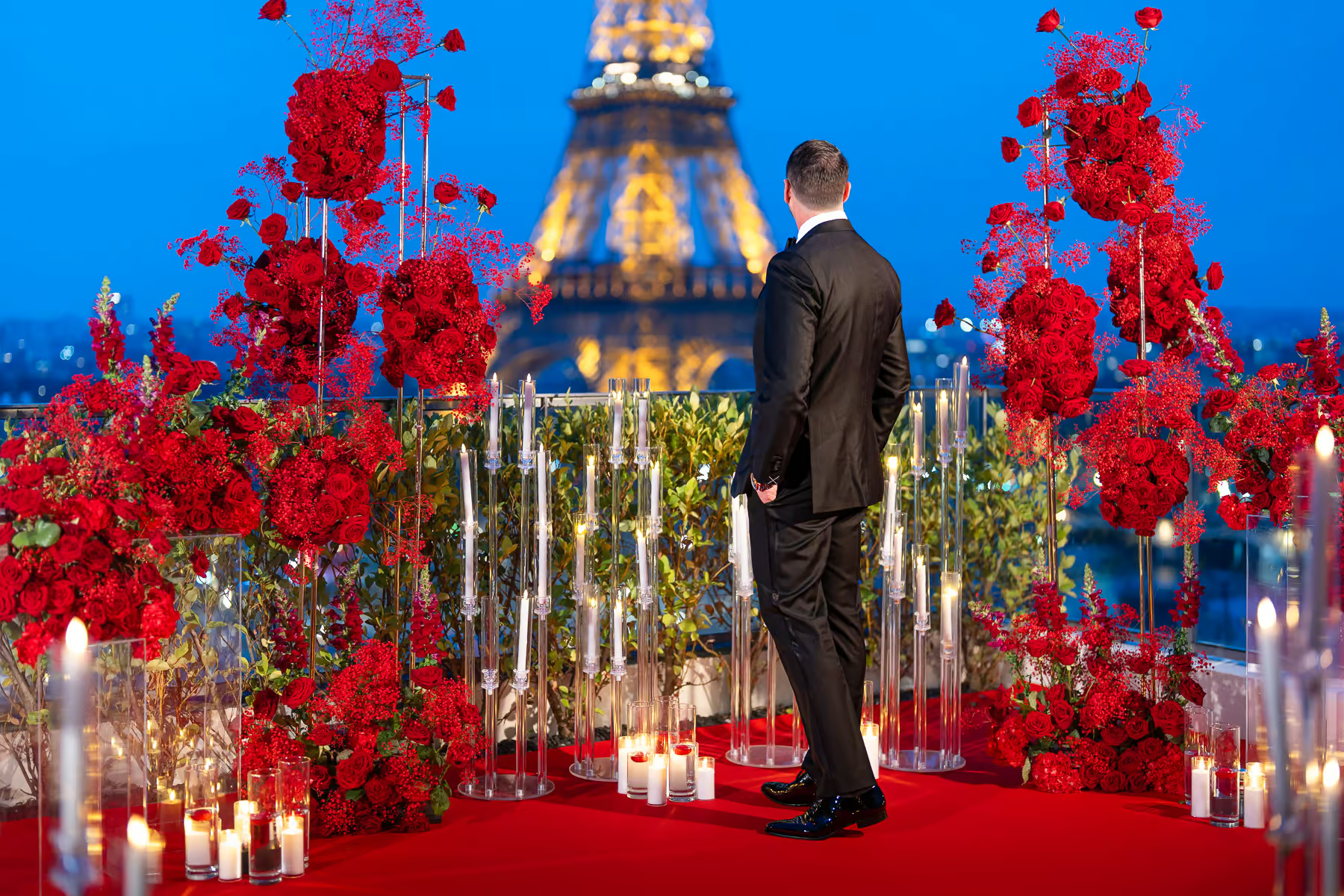
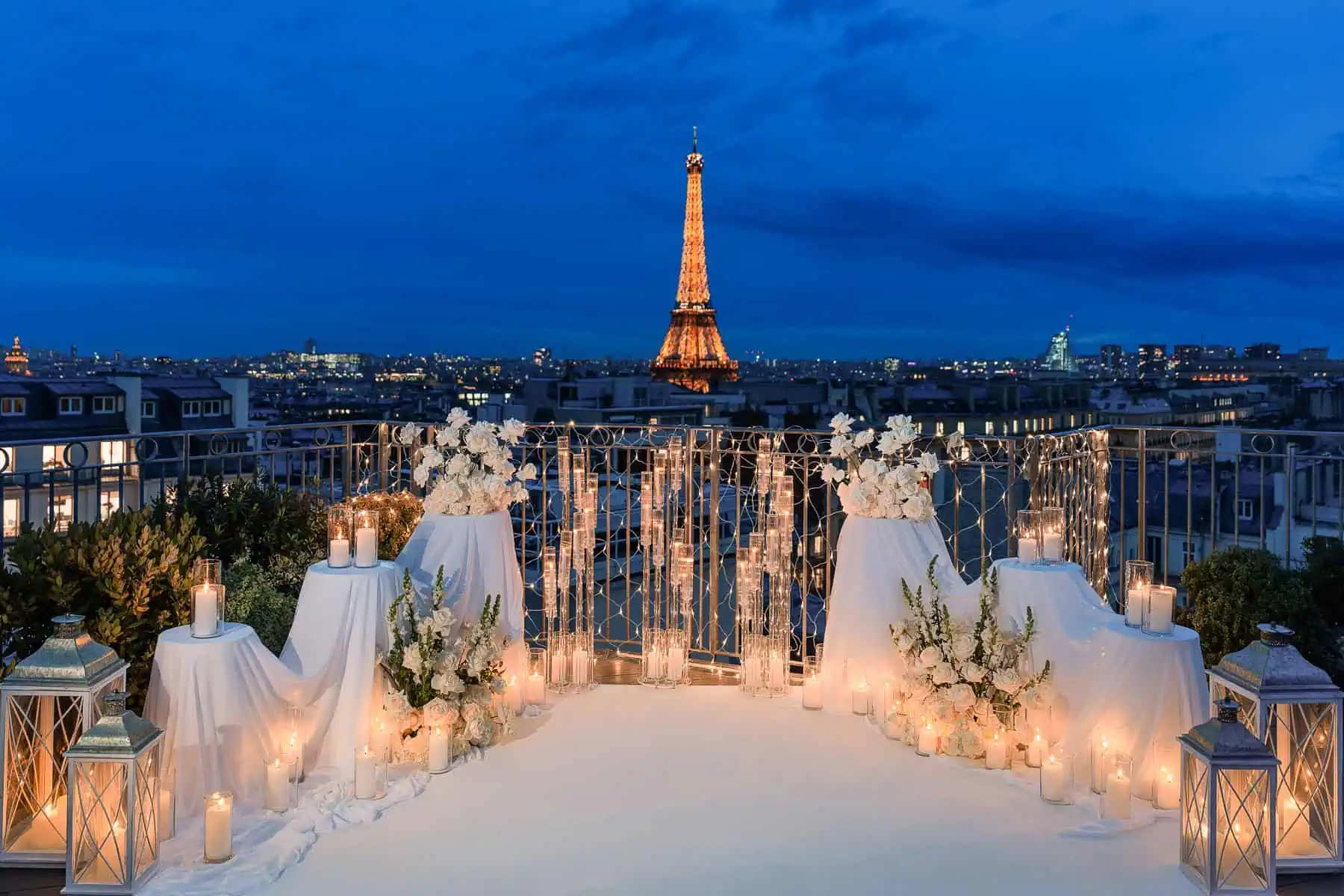
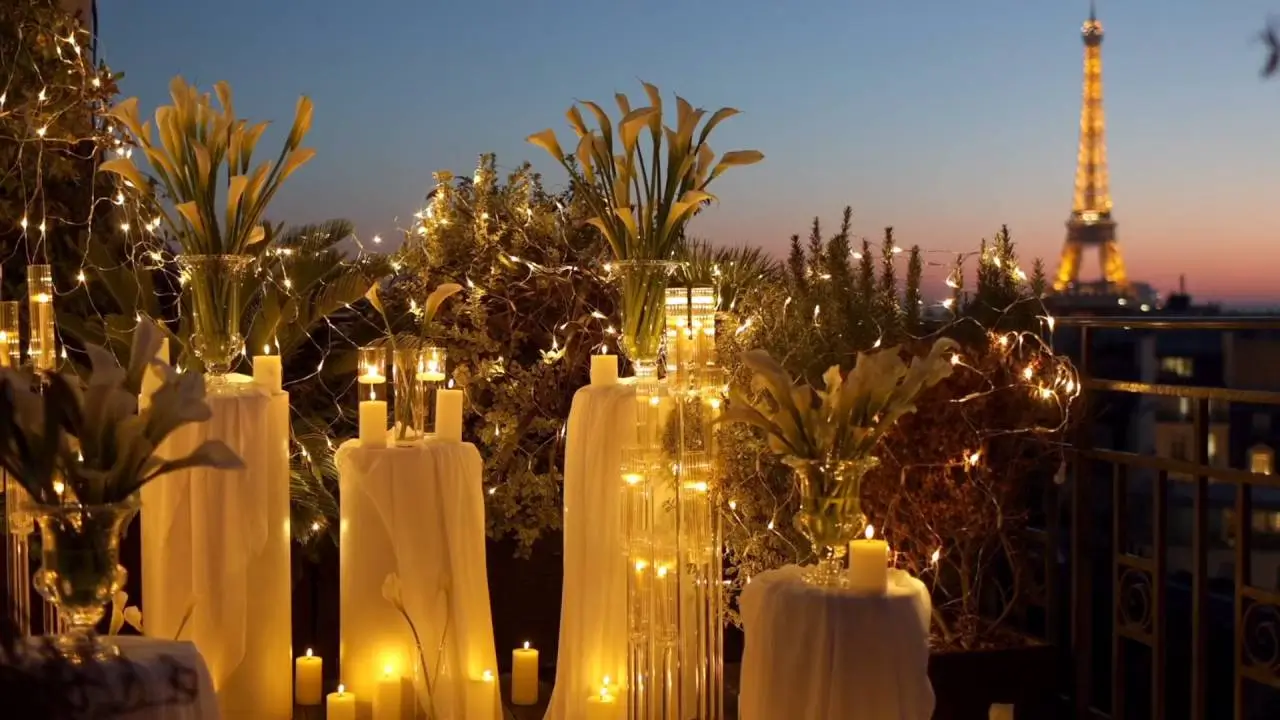
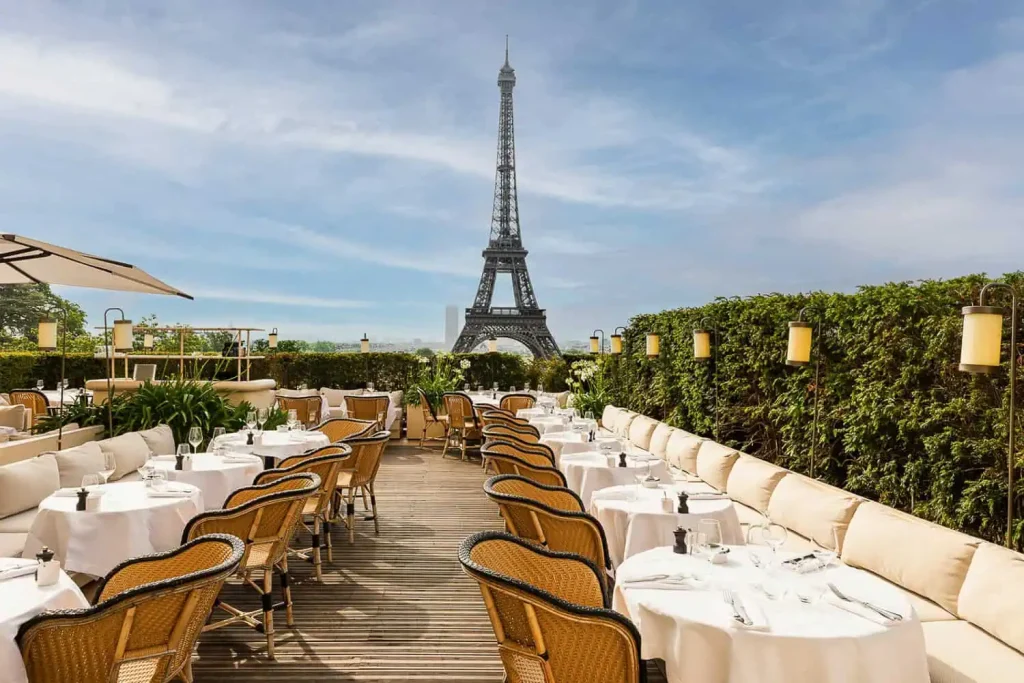
Private venues with Tower views — residential rooftops, luxury hotel terraces, and Seine yachts — give you the venue entirely to yourselves: complete privacy, your own pace, and all the time you want together after she says yes.
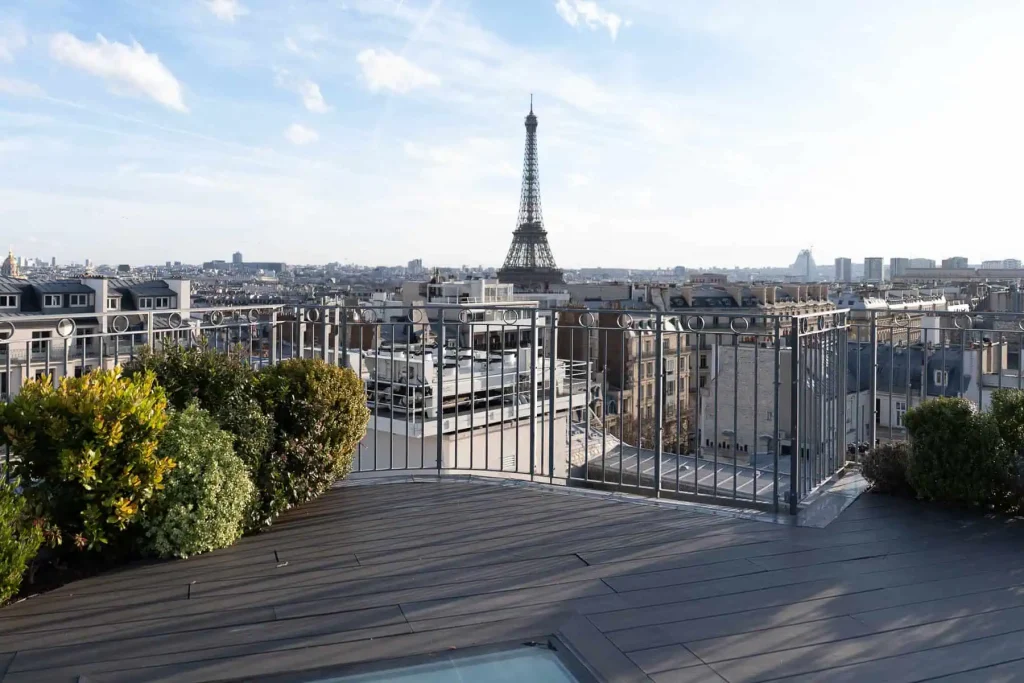
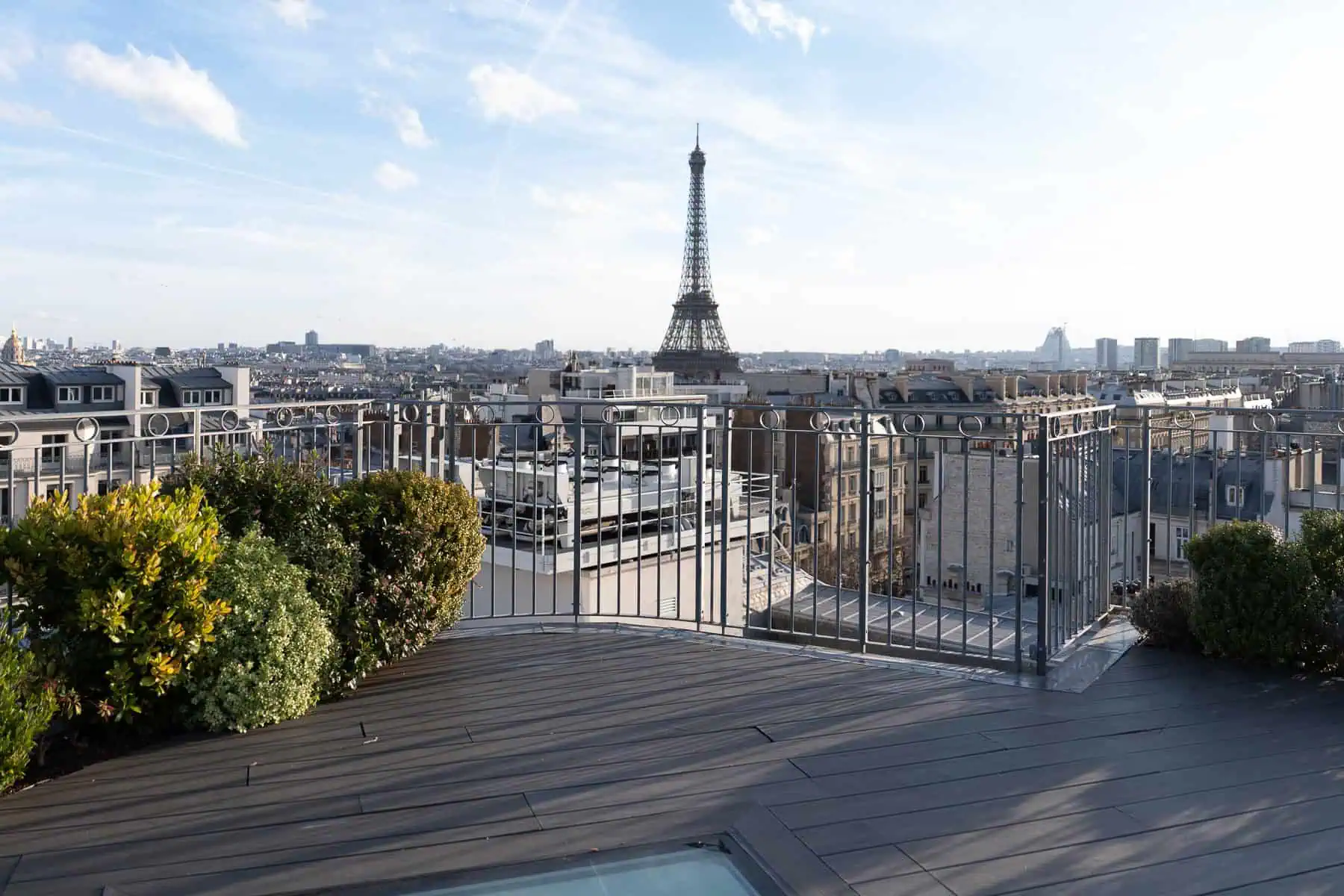
Residential rooftops (from €2,100): strong Tower views, typically closer to the Tower than hotel terraces, at a lower price point. Worth knowing: you’re entering a residential building — digicode, sometimes a small elevator, and potentially walking through an apartment to reach the terrace. That affects your cover story. A hotel terrace (“let’s have drinks at L’Oiseau Blanc before dinner”) is easier to explain; a residential building takes a bit more creativity. We help with that.
Luxury hotel terraces (from ~€4,000+ for the space alone): prestige setting, valet, concierge, and a cover story that’s easy to sell. Most terraces require professional planning and come with vendor restrictions. Production costs (florals, vendors, dining) push most hotel terrace proposals into five figures.
- Shangri-La Paris requires booking its Eiffel Tower terrace suite — €5,000–€17,000+ depending on room category and season — before any production costs.
- The Peninsula Paris Secret Table starts lower but scales quickly.
- Four Seasons Hotel George V Penthouse can run €20,000+ for the space alone.
- Hôtel Marignan Champs-Élysées is another option in this tier.
Beyond the Tower — public
Not every proposal needs the Tower in frame. Montmartre at sunrise, the Seine with Notre-Dame de Paris as a backdrop (cinematic and underused), Luxembourg Gardens, the Tuileries, and Palais Royal gardens all read as unmistakably Paris — often with a calmer feel than the main Tower viewpoints.
Beyond the Tower — private
If you want privacy without the Tower view, this is where Paris opens up: period ballrooms and salons, select hotel interiors and gardens, and nearby châteaux where an indoor pivot is usually possible.
In the city: Ritz Paris (garden or ornate ballrooms), Le Bristol Paris (salons), and Saint James Paris — a château-style property in the heart of Paris. For day trips and full buyouts: Château de Villette, Château de Vaux-le-Vicomte, and the Palace of Fontainebleau, among others, depending on the look, logistics, and budget.
Location comparison
| Location type | Privacy | Crowd risk | Weather cover | Starting cost |
|---|---|---|---|---|
| Public landmark (Eiffel view) | Low | High (sunrise helps) | Limited (Bir-Hakeim partial cover) | Free + €300–€500 photographer |
| Public + styled setup (Marry Me letters, Big Love Heart, floral display) | Low | High | None | ~€1,500 |
| Residential rooftop (private) | Complete | None | Limited (timing flexibility helps) | €2,100+ |
| Luxury hotel terrace (private) | Complete | None | Suite-dependent | ~€4,000+ (space only; production extra) |
| Seine yacht or boat (private) | Complete | None | Varies (cabins available) | Under €2,000 to five figures |
| French château (outside Paris) | Complete | None | Yes (indoor pivot available) | €10,000–€40,000+ (privatization only) |
Access note: Paris is a working city. Public viewpoints can face barriers, filming closures, security sweeps, or seasonal events with little warning. We monitor access and keep alternatives ready.
// What It Costs
Paris proposals range from €300 for professional photos at a public landmark to six figures for a full private production — and most land somewhere in between. If you’re going private, the venue is usually the largest cost driver (public spots are free).
After that, your budget is shaped by what you choose to prioritize: what matters most to your partner, and what you want the experience to feel like. Fresh florals are often the next biggest factor, followed by planning support and the extras — photo, video, musicians, transport, dining, and champagne.
2026 price ladder
Photography-only (public): €300–€500
You handle planning and timing. A professional photographer documents the proposal and guides positioning. Some studios charge more; this is the standard range for 80–90% of the market.
Photo + simple add-ons: ~€1,000
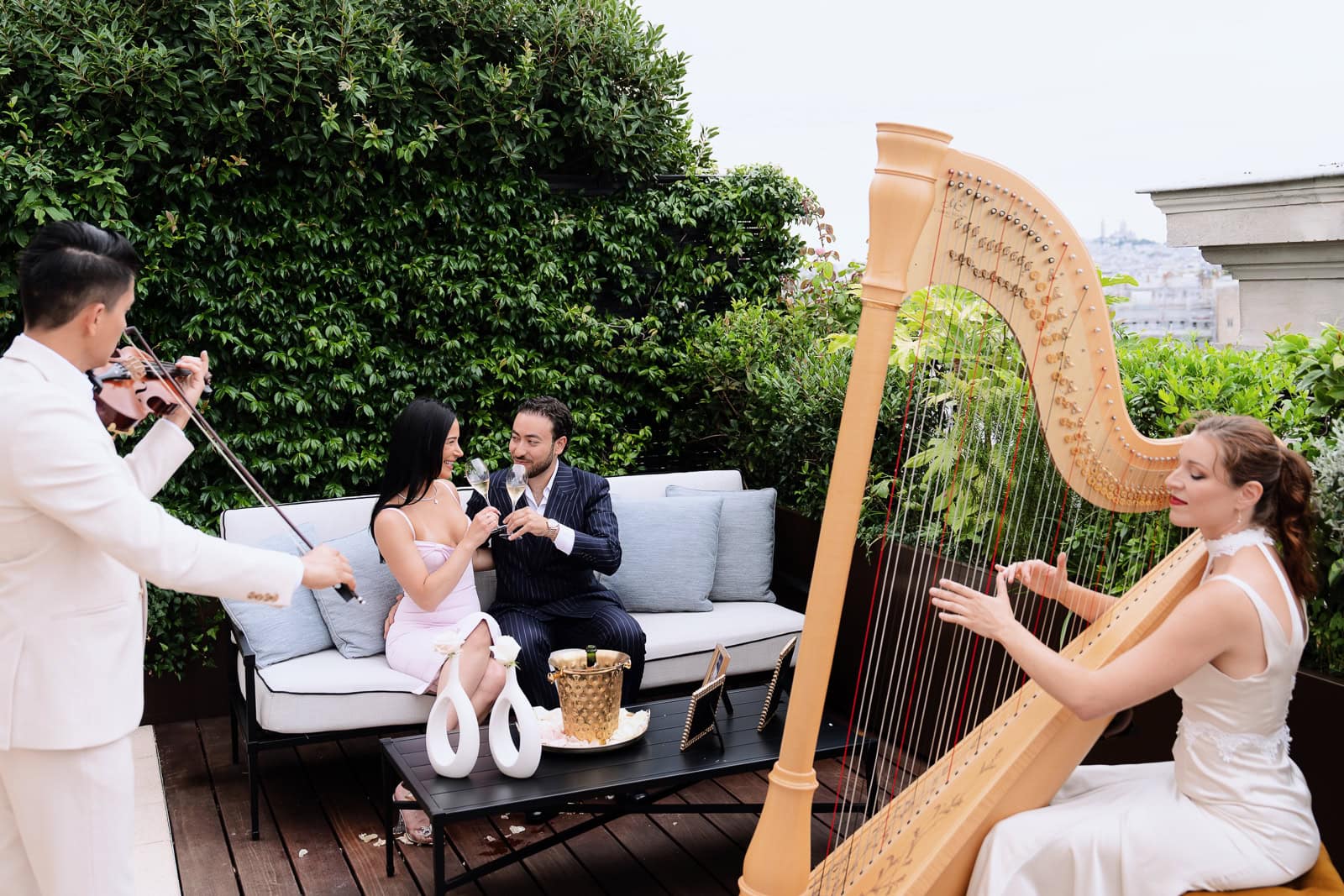
A typical combination: one hour of photography, a master violinist (~€375), plus champagne and a bouquet of long-stemmed roses (~€325). Several elements together at this price point.
Public setup at an Eiffel Tower spot: ~€1,500
A location like the Seine riverbank across from the Tower or Bir-Hakeim Bridge island, with a styled red carpet display (Marry Me letters, Big Love Heart, or silk flower arrangements), photography, and basic coordination.
Private Seine River boat: from ~€1,500
An entry-level boat proposal on the Seine with Eiffel Tower views. The boat is logistically the most involved private option — the couple boards with no décor or vendors in sight, and while below deck, the team comes aboard, sets the deck, and gets into position before the couple emerges. Scales significantly depending on the vessel and production level.
Private residential rooftop: from €2,100
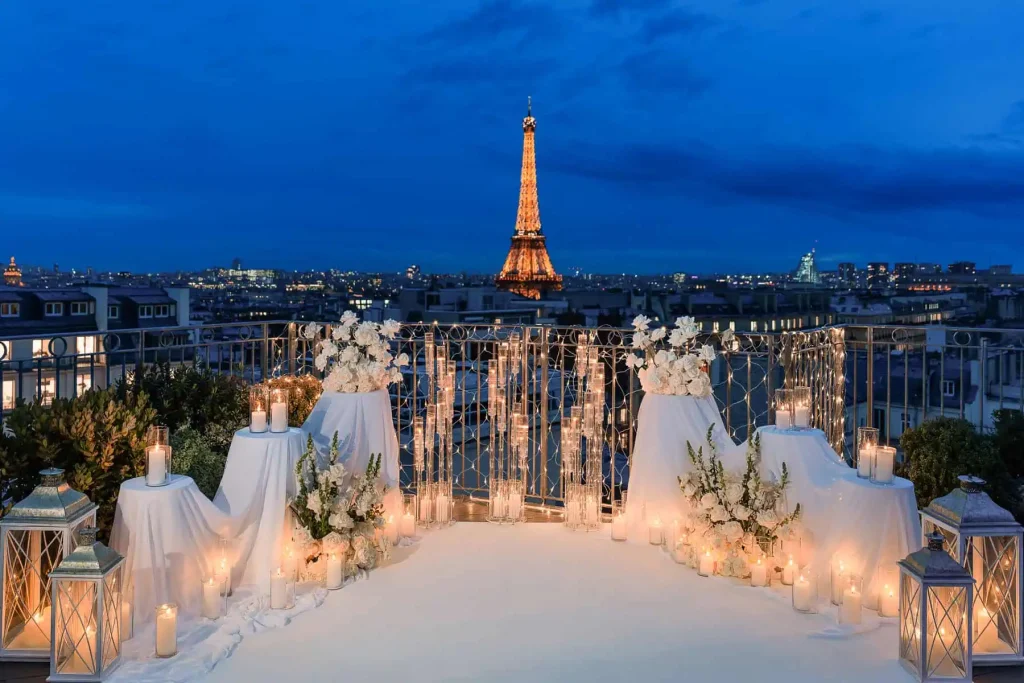
A private rooftop terrace with direct Eiffel Tower views and a styled setup. Photography shifts from one hour to 30 minutes, and basic day-of coordination is included. This is where a significant jump in privacy and experience begins.
Luxury hotel terrace: from ~€4,000 (space only)
Peninsula Paris Secret Table with a simple setup and photos starts around €4,000. Add fresh florals, video, a musician, and a six-course Michelin-star tasting dinner, and the same terrace reaches €6,000–€7,000+. Shangri-La Paris requires booking the Eiffel Tower terrace suite (€5,000–€17,000+ depending on category and season) before any production costs. Hotel terrace proposals with full production typically run into five figures.
Château privatization + production: €10,000–€40,000+ (and up)
Major châteaux outside Paris — Villette, Vaux-le-Vicomte, Fontainebleau — charge €10,000–€40,000+ for privatization alone. Layer on full-service planning, floral installations, dinner, musicians, performers, drone coverage, photo + video teams, and luxury transport (Rolls-Royce, helicopter, or both), plus the logistics of moving the entire vendor team outside Paris.
Professional coordination only: from €500
You bring the plan and vendors. We provide an English-speaking on-site lead to keep everything on schedule and make sure the day comes together cleanly.
What drives the price (ranked by impact)
- Venue — public vs residential rooftop vs luxury hotel vs château
- Florals — bouquet (€100–€200) to full terrace or garden installations (thousands)
- Planning support — €1,200 minimum or 15% of total budget, whichever is greater
- Transport — Rolls-Royce, Maybach, or helicopter (schedule and weather dependent)
- Dining — can be modest or Michelin-level depending on format and venue
- Video — from ~€500 for a single videographer
- Musicians — master violinist ~€375; cellist, pianist, or full ensemble is more
- Photography time — proposal coverage €300–€500; additional hours ~€250/hr
- Champagne and upgrades — standard service included in most packages; Dom Pérignon, Krug, Armand de Brignac (Ace of Spades), or Salon is priced separately. Magnums are more.
‘Chantelle quoted exact costs up front — no surprises on the invoice. When my plans shifted, the team adjusted the full production in 48 hours.’
— Name, Jan 2026 (edited excerpt)
Edited excerpt. Read the full review on Google »
Planning Timeline
Here is the path most clients follow — from the decision to propose in Paris through the day after. Some start months out, others reach out a week before, and some only days before, but the milestones stay the same. This sequence, along with the insights and tips, comes from producing more than 1,200 Paris proposals for couples visiting from abroad.
1. The decision and the ring
Once you’ve decided to propose in Paris, the engagement ring usually comes first. Most gentlemen either have it in hand or already in motion before they contact a Paris-based planner or photographer — because it’s hard to commit to a proposal date if you don’t know when the ring will be ready. If you’re designing a custom ring, build in extra lead time; delays are common and can push things back.
If asking her father or family for their blessing matters to you, schedule that visit well in advance. It’s a conversation that calls for its own space — and while you’re there, consider recording a few short well-wishes to surprise your fiancée after she says yes.
2. Lock in your travel and accommodations
Set Paris dates once you’re confident she can take time off work — without revealing why. That often means working around her schedule with some finesse months in advance. Book flights and your hotel early, especially during peak periods (April–October, late December, and around Valentine’s Day). A planner or coordinator can advise on hotel options if they play into your proposal setting.
A common approach: frame the trip as a birthday celebration, an anniversary, or a long-weekend escape in Paris. The trip becomes the first layer of your cover plan.
3. Choose your lane and book the non-negotiables
With your travel dates set, start the vendor conversation. Share your date (or range), the experience you want, and an approximate budget. It’s natural to hesitate about revealing budget, but honest numbers lead to better recommendations, save time, and reduce the risk of disappointment later. Even if you don’t share the exact ceiling immediately, have a clear idea in your own mind of what you can invest and what matters most to her and to you.
Lane A — photography-only: book your photographer early — the most experienced proposal photographers fill their calendars first. If you want a live musician, champagne, or florals, confirm those add-ons separately, either through your photographer or a local day-of coordinator.
Lane B — all-inclusive package: choose your package, confirm the date, and select add-ons where available. Packages are priced and structured to work on relatively short notice because they are proven concepts with fixed components. Your day-of coordinator handles vendor briefing, setup checks, and discreet communication between you and the core vendors.
Lane C — full-service planning: your planner develops a concept around you as a couple, secures high-calibre venues and English-speaking vendors, and builds and stress-tests the game plan. For complex productions — or when you want a unique concept or a sought-after private space — one to three months offers the strongest options. Very experienced planners can sometimes execute full custom productions in under a week when needed.
For private proposals: book early. Until a venue is set for a specific date and time, it’s hard to plan with confidence — vendors cannot be fully confirmed and dinner plans remain tentative.
4. Book dinner (and transport) once your proposal time is set
Reserve dinner as soon as you know when and where you’re proposing. Prime tables in top restaurants — especially with Eiffel Tower views — book quickly, and dinner timing should support your proposal plan. Some venues allow you to convert the proposal setup into a private dinner space, repurposing florals and candlelight and adding service by a private butler (for example, Peninsula’s Secret Table by L’Oiseau Blanc, a Shangri-La Eiffel Tower terrace suite, or Monsieur Bleu’s Bubble Dome in winter).
One recommendation stands above the rest: propose before dinner — not during — and not in a restaurant. Trying to keep the surprise during dinner is stressful and limits the experience. Instead, arrive at dinner already engaged and let the meal become the second celebration.
Leave a window between your proposal and dinner for engagement photos, a champagne toast, quick calls to family, and a few quiet minutes together. For Lanes B and C, we can organize luxury transport from your proposal location to the restaurant — Rolls-Royce, Maybach, vintage car, or horse carriage when the two locations differ.
5. Build a strong cover plan
Chances are she already suspects something — Paris plus hints from friends is a strong combination. Still, part of the fun is keeping her guessing and creating a happy surprise. She needs a reason to dress up and be at a specific place at a specific time, relaxed and unsuspecting. Three approaches work particularly well:
- “I booked a couples photoshoot for us.” Explains the photographer, the outfit, the location, and why she may need to be at Trocadéro before sunrise.
- “We have a dinner reservation I want to do properly.” Explains the time, the neighborhood, and dressing up.
- “We’re meeting a friend or colleague briefly before dinner.” Explains a specific location — such as a residential rooftop terrace — without raising questions about formality.
A strong cover plan answers, naturally: why there, why dressed up, and why that time. Decide early, keep it simple, and stay consistent.
For Lanes B and C, we help refine the cover plan. Communication — especially on the day — typically runs through WhatsApp; group threads are renamed to neutral topics because she may be sitting right next to you.
6. Prepare your speech
Short and sincere wins. You don’t need a script — just honest feelings: why her, why now, and what you’re excited to experience together. Polish is not the goal; effort, courtesy, and a little vulnerability carry more weight.
If you’re worried about going blank, practice out loud on your own so the words feel familiar. The goal is connection, not polish.
7. Ring logistics
Many partners already suspect that Paris might mean a proposal. A few simple rules protect the surprise.
- Travel: carry the ring on — never check it. Security teams see engagement rings routinely.
- At the hotel: a room safe can be risky if there’s any chance she’ll open it. Keep the ring on you, or for full-service planning, have your planner secure it at the venue in advance.
- Day-of: once you leave the room, the ring stays in your jacket pocket or backpack — no shifting it around.
- Presentation box: if the box matters — and for many clients it does — don’t force a slim travel box. For planner-led proposals, we can collect the original box after you arrive and ensure it reaches the venue safely.
- Insurance: insure the ring before you fly so loss or theft is covered in transit.
8. Positioning and pacing
The most important tip: take your time — often more than you think. Things feel longer to you than they appear on camera.
Positioning
- On arrival: pause together and take in the view.
- Walk to the center of the setup with your arm around her.
- Default: place her on your right when facing the Eiffel Tower or another backdrop, so her left hand and the ring exchange are unobstructed for the camera.
- Exception: if she strongly prefers a side in photos, adjust accordingly.
The sequence
- Deliver your speech standing in front of her, lightly holding her hands. When you’re ready, take a small step back, unbutton your jacket to prevent lapel bulging when you kneel, and produce the ring box — but don’t open it yet.
- Right knee down: left foot flat, back tall, rear foot pointing straight down. Then open the box with the ring facing her and ask.
- Hold the kneel for 20–30 seconds — this is where real reactions are captured. Many partners instinctively move closer, which often makes for powerful footage.
- After she says yes: you can place the ring while still kneeling, or stand and exchange the ring at eye level (our preference). Carefully take the ring from the box, leave the box on the ground, and without blocking the camera’s view, slide the ring to the knuckle of her left ring finger. Look into her eyes as you ease the ring to the base of her finger and seal it with a first kiss as newly engaged.
Resist the urge to immediately turn to your photographer. Those first minutes after you’re officially engaged are some of the most precious. There will be plenty of time afterward for posed portraits, champagne, lifts, and dips. Start with the candid interactions.
Recap: pause together → position her on the right → speech → step back, unbutton → kneel with strong posture → open box → ask → hold → stand and place ring → celebrate → only then acknowledge the photographer.
9. Weather and Plan B
Overcast skies and light drizzle can be excellent: soft, even light, no squinting, and fewer crowds at popular spots. Some of the most emotional photos we’ve taken were in the rain.
Weather affects more than the image. Temperature and wind change how long you’ll want to be outside and how comfortable the experience feels afterward. Wind is a challenge for her hair, video audio, florals, candles, and helicopter departures.
Heavy rain or sustained wind is when Plan B comes in. Moisture and humidity affect hair, makeup, and outfits, and create real concerns for camera gear, string instruments, and performers working on wet or slippery surfaces.
- Public proposals: Plan B usually means shifting location (Trocadéro to Bir-Hakeim, for example) or adjusting timing with your photographer. That shift isn’t always possible and can involve extra costs.
- Private venues (château, rooftop terrace): depending on layout and access rules, you may be able to move indoors, use a covered area, or work under an existing structure.
A full-service planner can often delay or advance a production and has the vendor relationships to do so. A day-of coordinator adjusts within the existing concept and constraints. With a photographer-only setup, having a backup location and a flexible mindset gives you the strongest options.
10. Day-of coordination
On the morning of the proposal, your core team should be aligned and reachable.
Lanes B and C: your coordinator or planner sets up a WhatsApp group with core vendors (photographer, musician, florist, videographer). This is the space for real-time updates: timing, meeting points, weather calls, and last-minute adjustments. Share a quick selfie on the way out of your hotel so vendors can spot you from a distance, and activate live location sharing — essential in a busy city like Paris.
Lane A: you run coordination yourself. Create a WhatsApp thread with your photographer (and any other vendors), confirm the meeting point — with GPS coordinates — the night before, and agree on how you’ll communicate if anything shifts. Decide on a subtle signal so your photographer recognizes you and knows you’re ready.
Day-of checklist (all lanes)
- Ring confirmed
- Phone charged (your coordinator or photographer will message you)
- Pockets emptied — wallet, keys, sunglasses all show in photos. Move everything to her bag or a jacket you leave behind
- Her outfit and timing confirmed via your cover plan
- Dinner reservation confirmed
11. After the proposal
The proposal moment itself can be as brief or as extended as you like. The most memorable proposals look well beyond those initial minutes and instead treat the full day — and even the day after — as part of the experience. Paris has a way of making every shared kiss, macaron, and meal feel even sweeter when you’re on cloud nine.
Immediately after: engagement photos. Most photographers include 20–30 minutes of portraits right after, at the proposal location.
That evening: dinner as a newly engaged couple.
Next day (optional): a dedicated engagement session at a second Paris location — different light, different backdrop, more relaxed pace, and a new outfit. This is a separate session, typically ~€250–350/hr. Popular choices include Montmartre, the Tuileries, Luxembourg Gardens, the Louvre, Palais Royal, Pont Alexandre III, a Parisian café, or Notre-Dame.
Onward travel: many couples continue from Paris to a second destination — the Amalfi Coast, French Riviera, London, or Amsterdam. If you want ideas for hotels, restaurants, or experiences for the next leg, our Private Client Travel arm can help.
Photo delivery: preview gallery within 48–72 hours, full edited set within 1–2 weeks.
- Include: 4–6 bullet summary below + full transcript for
- accessibility and AI parsing.
// Which Level of Support?
If you’ve read Pick Your Lane above and know which approach fits, go ahead and reach out. If you’re still deciding, a 15-minute discovery call typically makes the right option clear — we’ll ask about your dates, budget, and what matters most to you and your partner, and recommend the lane that fits.
Professional coordination (bridge option, from €500)
One option that doesn’t fit neatly into the three lanes: you have the plan and the vendors, but you want a strong English-speaking operator on the ground to bring it all together — vendor communication, walk-in-ready setup, timeline management, and on-site coordination. Built for clients who’ve done the research and want professional execution on the day.
‘I wanted a team that cared—not a transaction. Chantelle made planning exciting rather than stressful, kept my budget in mind, and when rain threatened, assured me they had it handled. Margaux coordinated the surprise discreetly via WhatsApp, and the day turned out better than I imagined—photos included.’
— Erick C., Jan 2026 (edited excerpt)
Edited excerpt. Read the full review on Google »
// Mistakes to Avoid
The patterns we see most often across 1,200+ proposals — and the straightforward fixes for each.
01
Proposing on the Eiffel Tower itself.
The Tower photographs best when it’s behind you — that’s the iconic shot. Propose at a nearby viewpoint with the Tower as your backdrop, then go up together afterward to celebrate.
02
Proposing during dinner at a restaurant.
A dedicated proposal location gives you better lighting, more space to personalize, and privacy for the two of you. Propose first, then sit down to a great dinner as a newly engaged couple.
03
No weather backup
Paris weather can shift quickly. Having a covered alternative ready ahead of time keeps the day relaxed regardless of conditions.
04
Trocadéro at sunset without planning for crowds.
This is the busiest Eiffel Tower viewpoint at the busiest time of day. Sunrise on a clear day, a wider viewpoint like the Seine riverbank, or a private venue will give you a much better experience.
05
A thin cover story.
A strong cover answers three questions naturally: why there, why dressed up, why that time. If any of those feel shaky, refine it early — we’re happy to help.
06
Choosing the concept for your taste instead of hers.
Think about her privacy tolerance, her relationship with music, her comfort on camera, and how she handles surprises. The proposal should feel right to her.
07
Forgetting the ring — or pocket-switching.
Commit to one pocket. Once you leave the hotel room, the ring does not move until you kneel.
08
Pockets full of gear.
Wallet, keys, sunglasses, phone bulge — it shows in photos. Empty everything into her bag or a jacket you leave behind.
09
Proposing the evening you land.
Jet lag shows in faces and energy. Arrive at least one day early.
10
No plan for after the yes.
The proposal is 15 minutes. Pre-book dinner 1–2 hours later. Have champagne ready. Plan the engagement photo flow. The rest of the day matters.
11
Not verifying that a vendor’s portfolio is their own work.
Paris’s proposal industry has grown fast, and some newer operators use images from other companies to represent their own. Before signing: reverse-image search standout portfolio shots (30 seconds), check for the same images on other websites, and ask for recent references you can verify.
// Ideas
Three directions — previews only. The full library with production notes and real examples lives at ideas-paris.
The Cinema Screening. Book a private viewing in a small Parisian cinema. She thinks you’re catching a film. The lights dim, a short film begins — and ends with directions that lead her to you, waiting at the venue.
The Artist’s Painting. Commission a local artist to paint the proposal scene weeks in advance. The painting waits at the venue. When she sees it, you make it real.
The Treasure Hunt. Clues placed across Paris landmarks, tied to your relationship. The final clue leads to you, the ring, and a venue set for the question.
FAQ
Can I propose on the Eiffel Tower itself?
Possible, but we advise against it. Queues, crowds, wind, and limited space work against you — and the Tower won’t appear in your photos because you’re standing on it. Propose at a nearby viewpoint with the Tower behind you. Then go up together to celebrate afterward.
What is the best month to propose in Paris?
May and September offer the strongest balance of weather, natural light, and manageable crowds. January through March is the most affordable window. December has strong demand and a holiday atmosphere.
How far in advance should I book?
The earlier the better — for vendor quality and venue availability. All-inclusive packages can be executed in as little as 48 hours when availability allows; 4–8 weeks gives the best selection. Full-service planning benefits from 1–3 months for complex productions, though rush planning is often possible. Send your date and we’ll confirm what’s realistic.
How much does a private rooftop proposal cost?
Residential rooftops with Eiffel views start around €2,100, including setup, coordination, and photography. Luxury hotel terraces start closer to €4,000 for the space alone and scale significantly with suite requirements and production. Full breakdown on our cost page.
What happens if it rains on my proposal day?
Light rain and overcast skies often work well — soft, even light, no squinting or harsh shadows, and thinner crowds at public spots. Some of the most emotional photos we’ve taken have been during rain proposals. Heavy rain or strong wind is where a Plan B keeps the day on track: a location shift, a timing adjustment, or an indoor pivot at a private venue. Your planner can often delay or relocate a full production; a coordinator adjusts within the existing concept; with a photographer-only setup, having a backup location in mind gives you good flexibility.
Is a Paris proposal possible on a modest budget?
Yes. A professional photographer at a public Eiffel viewpoint starts at €300. Add roses and champagne for under €500 total. The city photographs well at any price point — the key is timing and logistics.
What time of day is best for proposal photos?
For popular public spots, sunrise on a clear day offers the most flattering light and the fewest crowds. For private venues, timing is more flexible — blue hour for the Eiffel Tower sparkle, afternoon for warm natural light, or early evening for a smooth transition into dinner. Your photographer or planner can advise based on the venue and the season.
How do I travel with the ring?
Carry it on — never check it. TSA and EU security officers see engagement rings routinely. Insure the ring before you fly. For detailed handling protocol, see Ring Logistics above.
Sunrise or evening — which is better?
Sunrise gives you near-empty public landmarks, soft natural light, and the most space at popular spots. It requires an early start and a creative cover story. Evening — especially blue hour, about 20–30 minutes after sunset — gives you city lights, the Eiffel Tower sparkle, and a natural transition into dinner. Public spots are busier in the evening, so private venues are especially strong for that window.
Do you plan same-sex proposals?
Yes — with the same care and operational attention. Paris is welcoming, and we have planned same-sex proposals across venues from private rooftops to full-scale productions.
What should I say when I propose?
Keep your speech to 1–3 minutes. Rehearsed polish usually sounds worse than honest nerves. One structure that works: one line about when you knew, one about what you admire, one about the future — then the question. Deliver standing, then kneel.
Ready to Start?
Tell us your date range, whether you’re leaning toward a public landmark or a private venue, and your approximate budget. We respond within 24 hours on business days — often faster.
What happens next:
- A short discovery call (15 min): your dates, budget, privacy preference, and what’s realistic on your timeline.
- If it’s a fit: signed agreement, deposit, and planning begins.
- A brief questionnaire about your partner — what she responds to, what matters to her, and how you want the day to feel.
All planning runs through WhatsApp or email — no unexpected calls. We rename group threads to neutral topics, use low-key subject lines, and time messages around your schedule. She won’t know.
[WhatsApp Us] · [Contact Form] · [Browse Packages] · [Talk to a Planner]
‘I wanted a team that cared—not a transaction. Chantelle made planning exciting rather than stressful, kept my budget in mind, and when rain threatened, assured me they had it handled. Margaux coordinated the surprise discreetly via WhatsApp, and the day turned out better than I imagined—photos included.’
— Erick C., Jan 2026 (edited excerpt)
Edited excerpt. Read the full review on Google »